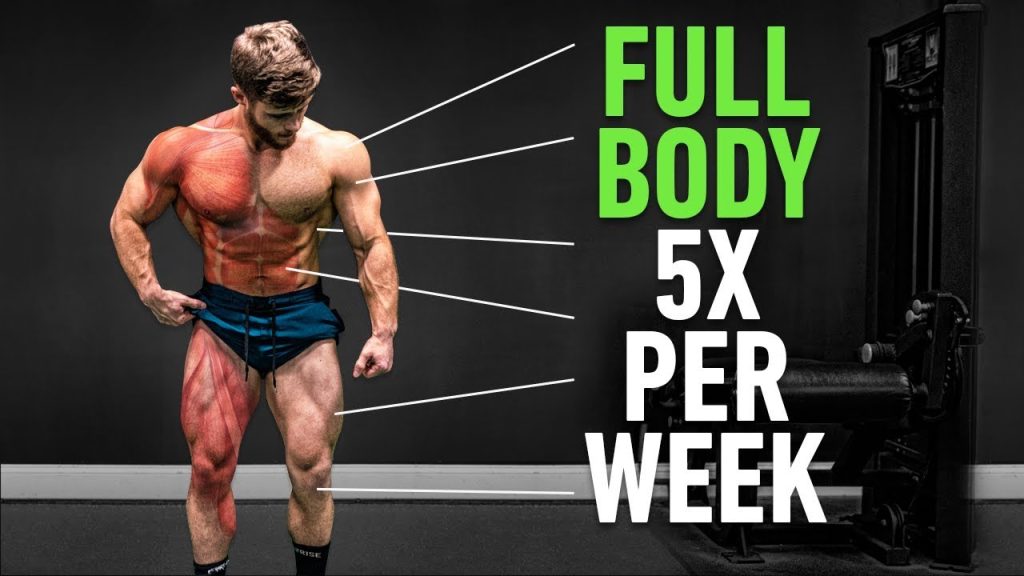
Video by Jeff Nippard on YouTube
Most men who walk into a gym with serious intentions walk out six weeks later with mediocre results — not because they lacked effort, but because they lacked structure. A well-designed weekly training plan isn’t just about showing up and sweating. Research published in the Journal of Strength and Conditioning Research confirms that structured resistance training programs produce significantly greater gains in strength and lean mass compared to unstructured exercise, underscoring the value of intentional programming over random exertion. If you’re serious about losing fat, building muscle, or simply becoming a more capable version of yourself, a 7-day gym workout plan gives you the framework to make every session count.
This plan is built around fundamental principles: progressive overload, adequate recovery, metabolic conditioning, and balanced muscle development. Whether you’re a seasoned lifter optimizing your physique, a guy returning to the gym after years away, or someone who has recently overhauled their diet and lifestyle — this structure adapts to where you are without compromising where you’re going.
The Science Behind a 7-Day Training Split
Training every day of the week sounds extreme until you understand that recovery is built into the design. The key is distributing training stress intelligently so that while one muscle group is working, another is recovering. A landmark meta-analysis in the Journal of Strength and Conditioning Research found that training each muscle group twice per week produces superior hypertrophy outcomes compared to once-weekly training — a finding that directly informs how this plan is structured.
The 7-day split used here follows a push-pull-legs (PPL) framework repeated twice across the week, with one dedicated active recovery day woven in. Push days target chest, shoulders, and triceps. Pull days hit back and biceps. Leg days cover quads, hamstrings, glutes, and calves. This ensures every major muscle group receives two quality stimuli per week, which the research consistently identifies as the hypertrophy sweet spot. The active recovery day on day seven keeps the body moving, supports circulation, and reduces delayed onset muscle soreness (DOMS) without adding meaningful fatigue.
For men focused on fat loss, this volume-based approach also creates a significant caloric burn through excess post-exercise oxygen consumption (EPOC). Studies have shown that resistance training elevates metabolic rate for up to 38 hours post-session, making this style of training far more metabolically advantageous than steady-state cardio alone. Pair this program with a modest caloric deficit and adequate protein, and the body has everything it needs to preferentially shed fat while holding onto lean tissue.
The Full 7-Day Plan: What to Do and Why
Day 1 — Push (Chest, Shoulders, Triceps): Begin the week with a horizontal pressing movement like the barbell bench press for four sets of six to eight reps, followed by an overhead dumbbell press for three sets of eight to ten. Finish with lateral raises, a cable chest fly, and tricep pushdowns. The early placement of heavy compound pressing takes advantage of peak neuromuscular readiness at the start of the week.
Day 2 — Pull (Back, Biceps): Lead with weighted pull-ups or a lat pulldown for four sets, then move into a barbell or dumbbell row for three sets of eight. Cable face pulls, which are critically underutilized, support rotator cuff health and posterior deltoid development. Finish with two sets of dumbbell curls. Research on scapular stability and shoulder health reinforces the value of rear-delt and mid-trap training, particularly for men who spend significant time at a desk.
Day 3 — Legs (Quads, Hamstrings, Glutes, Calves): Squats anchor this session — four sets of five to seven reps with progressive overload as the primary goal. Follow with Romanian deadlifts for hamstring and glute development, then leg press, leg curl, and standing calf raises. Do not skip legs. Lower body muscle mass is among the most metabolically active tissue in the body and plays a central role in hormonal health, insulin sensitivity, and long-term mobility.
Day 4 — Push (Variation): Repeat the push stimulus but vary the exercises to prevent accommodation. Incline dumbbell press replaces the flat barbell. Arnold press replaces the standard overhead press. Add cable crossovers for chest isolation and overhead tricep extension for long-head recruitment. Variation preserves joint health and ensures well-rounded development rather than pattern overuse.
Day 5 — Pull (Variation): Swap pull-ups for a chest-supported row machine or t-bar row to unload the spine while maintaining pull volume. Add single-arm dumbbell rows for unilateral correction, hammer curls for brachialis thickness, and finish with rear-delt flies. This variation also allows for higher rep ranges — ten to fifteen reps — which evidence suggests is equally effective for hypertrophy as heavier loads when taken close to failure.
Day 6 — Legs (Variation) + Core: Replace barbell squats with Bulgarian split squats or hack squats to shift the stimulus and challenge single-leg stability. Follow with stiff-leg deadlifts, walking lunges, and seated calf raises. Dedicate the final fifteen minutes to direct core work: three sets of ab wheel rollouts, three sets of hanging leg raises, and two sets of pallof press. Core training is functional strength work — not aesthetics alone — and is directly linked to injury prevention and performance across nearly every lift you perform.
Day 7 — Active Recovery: This day is not a day off in the passive sense. Walk for thirty to forty-five minutes, swim, ride a stationary bike at low intensity, or do a thirty-minute yoga or mobility session. The goal is blood flow and parasympathetic recovery — not additional training stress. Active recovery has been shown to reduce muscle soreness and restore performance capacity faster than complete rest, making it a strategic investment in the following week’s training quality.
Fueling the Plan: Nutrition That Makes It Work
No training plan outperforms a poor diet. To get the most from six days of structured gym work, protein intake needs to be non-negotiable. A comprehensive meta-analysis in the British Journal of Sports Medicine concluded that protein intakes beyond 1.62 grams per kilogram of body weight per day confer no additional muscle-building benefit — but getting to that threshold is essential. For a 185-pound man, that’s roughly 135 grams of protein daily, distributed across three to four meals.
Carbohydrates are your training fuel, not your enemy. Consuming a moderate carbohydrate meal before your heavy sessions — particularly push and leg days — supports glycolytic performance and training intensity. Post-workout nutrition, specifically protein combined with fast-digesting carbs within two hours of training, accelerates muscle protein synthesis and replenishes glycogen. Men who are eating in a caloric deficit should prioritize keeping protein high and adjusting fat and carbohydrate intake based on personal preference and training demands. Those using GLP-1 medications should pay particular attention to protein density per meal, since reduced appetite can make hitting daily targets more challenging without intentional planning.
Sleep is the final variable men consistently underestimate. A study published in the Annals of Internal Medicine found that sleep restriction reduced the proportion of fat lost during caloric restriction by 55% while increasing muscle loss — a devastating trade-off for anyone training hard. Seven to nine hours of quality sleep is not a lifestyle luxury; it is a physiological requirement for the adaptations this program is designed to produce.
The Takeaway
A 7-day gym workout plan works because it eliminates the guesswork that derails most men’s progress. By training with intention, rotating stimulus, allowing strategic recovery, and fueling the body appropriately, you create a repeatable system that compounds over time. Gains from week one become the baseline for week two. The structure removes the daily decision of what to do and replaces it with the singular focus of executing well. Start this plan, apply progressive overload each week by adding weight or reps where possible, and give it eight to twelve weeks of honest effort. The physique and performance improvements that follow won’t be accidental — they’ll be the predictable result of a plan that was built to work.