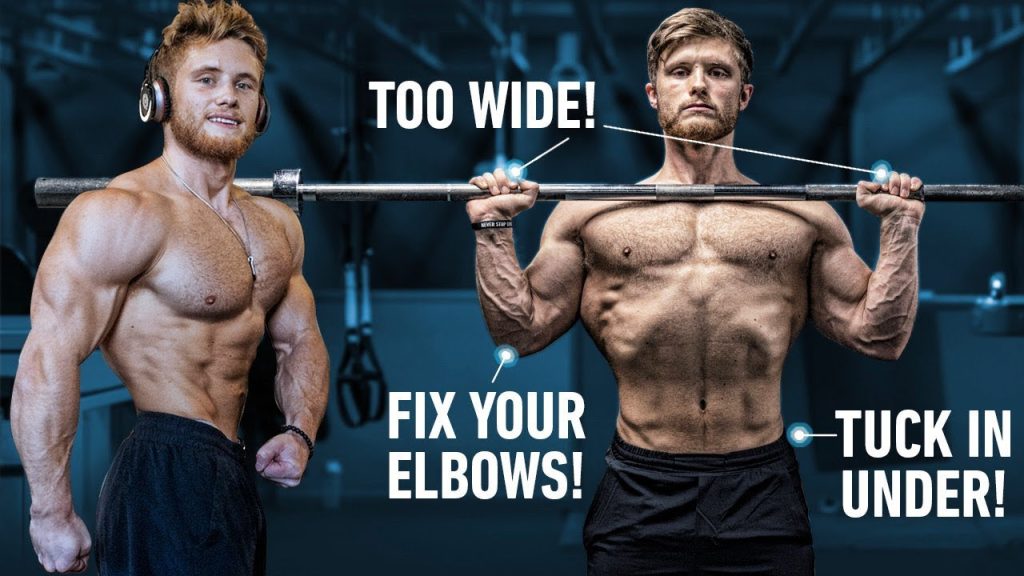
Video by Jeff Nippard on YouTube
Most men treat the dumbbell shoulder press as a straightforward movement — grab the weights, push them up, repeat. But the shoulder joint is the most mobile and, consequently, the most injury-prone joint in the human body. Research published in the Journal of Orthopaedic & Sports Physical Therapy confirms that improper loading mechanics at the glenohumeral joint significantly elevate the risk of rotator cuff pathology — injuries that can sideline you for months and accelerate muscle loss faster than almost any other setback. If you’re training to preserve muscle, build strength, or optimize body composition over the long haul, mastering dumbbell shoulder press form isn’t optional. It’s foundational.
The deltoid is a three-headed muscle — anterior, lateral, and posterior — and the shoulder press primarily targets the anterior and lateral heads while heavily recruiting the upper trapezius and triceps as synergists. Electromyographic analysis research shows that dumbbell variations produce significantly higher muscle activation in the stabilizing rotator cuff muscles compared to barbell pressing, largely because each arm must independently control its path. That independence is a feature, not a bug. It exposes bilateral asymmetries, forces greater neuromuscular engagement, and reduces the compensation patterns that often mask weakness on one side.
Setting Up for Maximum Muscle Recruitment and Joint Safety
Before you press a single rep, position matters enormously. Sit on an adjustable bench set to 90 degrees — straight upright, not reclined. Reclining even slightly shifts the movement toward an incline press, reducing lateral deltoid activation and increasing pectoral involvement. Your feet should be flat on the floor, creating a stable base. Allow your lower back to maintain its natural lumbar curve rather than flattening it against the pad. This isn’t about aesthetics — it’s about preventing your pelvis from anteriorly tilting under heavy load, which transfers compressive stress up the spine.
The starting position of the dumbbells is where many men get into trouble. A fully supinated grip (palms facing forward throughout the entire movement) places the shoulder in external rotation with the arm abducted, which can impinge the supraspinatus tendon against the acromion under heavy loads. A better approach for most lifters is a neutral-to-slight pronation at the bottom, rotating to a more neutral or slightly forward-facing grip as you press. This natural rotation follows the shoulder’s biomechanical path and reduces internal impingement risk. Elbows should start at or just slightly below shoulder height — not dropped so low that you overstretch the anterior capsule, and not so high that you’ve already lost tension before you begin.
As you press, drive the dumbbells up and very slightly inward — converging toward each other at the top without allowing the weights to touch. Biomechanical modeling studies demonstrate that this slight convergence pattern better mirrors the force vector of the deltoid muscle fibers and sustains peak tension through the full range of motion. Stop just before full elbow lockout at the top. Locking out completely at the apex transfers load from the deltoids to the passive structures of the elbow joint and creates a momentary rest — both of which diminish time under tension and long-term hypertrophic stimulus.
Why Form Directly Drives Muscle Preservation
Muscle preservation isn’t just a concern for men on caloric deficits or those using appetite-suppressing medications — it’s relevant to anyone in a fat-loss phase, anyone aging past 35, or anyone who’s ever taken time off from training. Studies on muscle atrophy consistently show that mechanical loading — specifically progressive tension through a full, controlled range of motion — is the primary stimulus for maintaining muscle protein synthesis during periods of dietary restriction or detraining. Sloppy form, ego-driven loading, and partial range of motion all reduce the effective mechanical stimulus your muscles actually receive, even when the weight on the dumbbell looks impressive.
The eccentric phase of the shoulder press deserves particular attention. Lowering the dumbbells under control — targeting a three-to-four second descent — produces significantly greater muscle damage in the anabolic sense, triggering greater satellite cell activation and protein synthesis compared to fast, uncontrolled lowering. Research on eccentric resistance training has repeatedly shown superior hypertrophic outcomes when eccentric tempo is deliberately controlled. Most men rush the descent because it’s harder. That difficulty is exactly the stimulus you need.
Programming-wise, the dumbbell shoulder press works best in the three-to-four set range, using six to twelve repetitions per set for hypertrophy, with two to three minutes of rest between sets. This rep range keeps mechanical tension high while allowing sufficient volume for deltoid growth. If you’re in a maintenance or preservation phase — cutting calories, managing body composition, or returning from a break — prioritize load quality over load quantity. Dropping to a moderate weight and executing perfect form will preserve more muscle tissue than grinding through heavy, compromised reps that accumulate joint stress without delivering the clean mechanical signal your muscles need to stay anabolic.
One often-overlooked variable is breathing. Inhale before you initiate the press, brace your core lightly as though preparing to absorb a punch, and exhale through the concentric phase. This intra-abdominal pressure strategy stabilizes the thorax and gives your shoulder girdle a solid platform to press from. Without it, pressing mechanics become unstable from the base up, forcing compensatory activation in the neck and upper traps that reduces deltoid isolation and adds unnecessary cervical stress over time.
The Takeaway
The dumbbell shoulder press is one of the most effective tools for building and preserving shoulder mass — but only when executed with intent. Joint position, grip angle, tempo, and breathing aren’t coaching minutiae. They are the difference between an exercise that compounds your results over years and one that quietly accumulates injury risk while delivering diminishing returns. Whether you’re cutting aggressively, training around a busy schedule, or simply trying to build a physique that lasts, mastering this movement is an investment in staying in the game long enough to see real results. Load the movement correctly, protect the joint, own the eccentric — and your shoulders will respond accordingly.