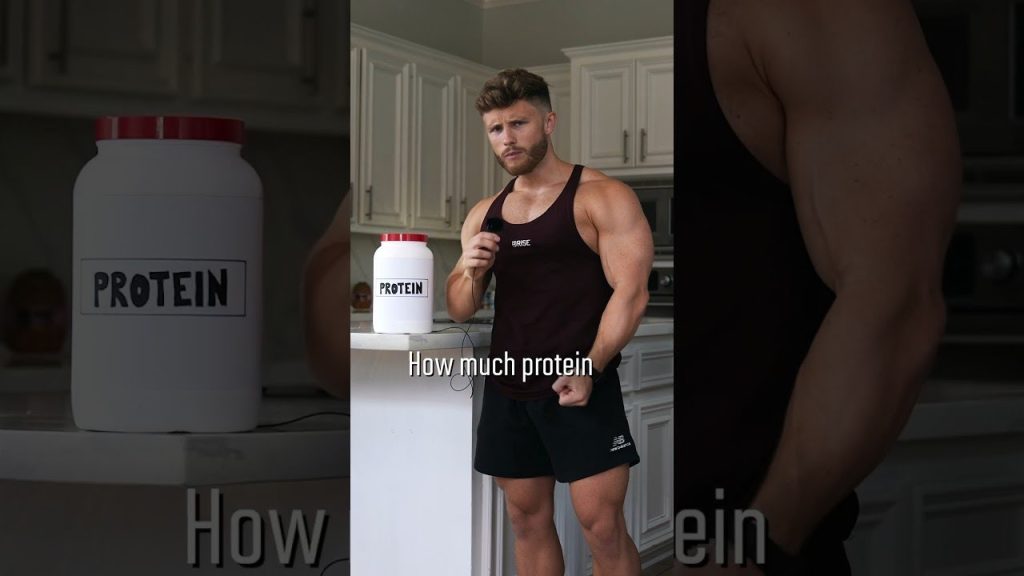
Video by Jeff Nippard on YouTube
Here’s a number worth paying attention to: research published in JAMA found that individuals using semaglutide lost approximately 39% of their total weight loss from lean mass — not fat. For a man over 40 who is already fighting the natural muscle-loss battle that comes with aging, that statistic should sharpen your focus considerably. GLP-1 medications are powerful tools. But without the right training strategy, they can quietly accelerate one of the worst things that can happen to your long-term metabolic health.
This isn’t a problem exclusive to GLP-1 users. Any man over 40 in a significant caloric deficit — whether from medication, disciplined dieting, or both — faces the same fundamental challenge: how do you lose fat without losing the muscle that keeps your metabolism running, your joints healthy, and your body functional for decades to come? The answer lives in the weight room, and it requires a specific approach.
Why Muscle Preservation Demands a Different Strategy After 40
Starting around age 30, men lose roughly 3–8% of their muscle mass per decade — a process called sarcopenia — and that rate accelerates after 60. A review in the Journal of Clinical Medicine confirmed that sarcopenia is driven by hormonal decline, reduced physical activity, and inadequate protein intake, all of which are compounded by aggressive caloric restriction. The solution isn’t to avoid the deficit. It’s to train specifically against muscle loss while the deficit does its job on body fat.
The most evidence-backed tool you have is progressive resistance training — meaning you lift weights and, over time, you lift more of them. A landmark meta-analysis in British Journal of Sports Medicine found that resistance training significantly increases muscle mass and strength even in older adults, regardless of starting fitness level. Three to four sessions per week targeting all major muscle groups — chest, back, legs, shoulders, arms — provides the mechanical stimulus your body needs to hold onto lean tissue when calories are low.
The specific structure matters. For men over 40, training that emphasizes compound movements — squats, deadlifts, rows, presses — performed in the 6–12 rep range at 70–85% of your maximum effort delivers the strongest muscle-preserving signal. Isolation work has its place, but compound lifts recruit more muscle fiber, drive greater hormonal response, and are more time-efficient. Aim for two to three sets per exercise, rest 90 seconds to two minutes between sets, and train each muscle group at least twice per week. Research in the Journal of Strength and Conditioning Research supports higher training frequency as superior for hypertrophy, and preservation requires nearly the same stimulus as growth.
Protein Is the Non-Negotiable Partner to Your Training
No program survives poor nutrition. GLP-1 medications suppress appetite significantly, which is part of their mechanism — but that suppression can make it dangerously easy to under-eat protein. Studies show that protein intakes of 1.6 to 2.2 grams per kilogram of body weight are optimal for muscle preservation during caloric restriction. For a 200-pound man, that’s roughly 145 to 200 grams of protein daily. Whether you’re on a medication or not, hitting that number — from chicken, eggs, Greek yogurt, fish, or a quality whey protein supplement — is one of the highest-leverage things you can do for your body composition.
Sleep and recovery matter more than most men admit. Research from the Annals of Internal Medicine demonstrated that inadequate sleep during a caloric deficit shifted weight loss away from fat and toward lean mass — exactly the outcome you’re trying to prevent. Seven to nine hours of quality sleep isn’t optional recovery; it’s part of the program.
The Takeaway
Whether you’re using a GLP-1 medication, following a structured diet, or simply committed to cleaning up your lifestyle, the physics of fat loss without muscle loss are the same. Lift heavy, lift consistently, eat enough protein, and sleep like it’s your job. The men who come out of their 40s and 50s stronger and leaner than they entered aren’t doing anything exotic — they’re doing the fundamentals with relentless consistency. That’s the program.