When researchers at Pennington Biomedical Research Center published data from the SURMOUNT-1 trial, one number stood out from the weight loss headlines: roughly 40% of the weight lost by tirzepatide users was lean mass. That’s not a small rounding error. On a 50-pound loss, that’s 20 pounds of muscle walking out the door alongside the fat. For men who care about strength, metabolism, longevity, and how they actually look after the weight comes off, that statistic demands a serious response.
But here’s the thing — this problem isn’t unique to GLP-1 receptor agonists. Any aggressive caloric deficit, whether from medication-induced appetite suppression, a crash diet, or extended fasting, carries the same risk. The physiology doesn’t change based on your method. What changes is the severity and how prepared you are to fight back. Men using semaglutide or tirzepatide are often losing weight faster and with less hunger-driven awareness of their protein intake, which can make the problem worse. But the solution is the same regardless of your path: strategic nutrition, purposeful resistance training, and an understanding of what’s actually happening inside your muscle tissue.
That last part — what’s happening inside the muscle — is where intramuscular fat enters the picture, and it’s a conversation most weight loss programs never have.
The Hidden Problem: Intramuscular Fat and Why It Matters
Intramuscular fat, formally called intramyocellular lipid (IMCL) or intermuscular adipose tissue (IMAT), is exactly what it sounds like: fat stored within and between muscle fibers. In small amounts, it serves as a local fuel source. In larger amounts, it becomes a metabolic liability. Research published in Diabetes links elevated intramuscular fat to insulin resistance and impaired glucose uptake in skeletal muscle, meaning the more fat packed into your muscle tissue, the worse your muscles become at doing their actual job.
Intramuscular fat accumulates preferentially in men who are sedentary, insulin resistant, or losing weight rapidly without training. It’s also strongly associated with aging — studies using MRI imaging show that IMAT increases significantly with age and is inversely correlated with muscle strength and functional capacity. The cruel irony is that you can lose subcutaneous fat and look leaner while simultaneously accumulating intramuscular fat, ending up with muscles that are metabolically compromised even if the scale says you’ve succeeded.
For GLP-1 users specifically, the rapid weight loss timeline means muscle quality can deteriorate faster than appearance suggests. But again, any man in a prolonged caloric deficit without adequate protein and resistance training faces this same risk. The goal isn’t just to lose fat — it’s to build or preserve muscle that is dense, functional, and metabolically healthy from the inside out.
The encouraging news is that intramuscular fat is highly responsive to the right interventions. A landmark study in the Journal of Applied Physiology found that resistance training significantly reduced IMAT independent of overall weight loss, meaning you don’t have to lose a pound to start clearing fat out of your muscle tissue. You just have to lift.
The Protein and Training Strategy That Actually Works
The research on preserving lean mass during a caloric deficit has become remarkably consistent over the last decade, and the prescription is less complicated than the supplement industry would have you believe. It comes down to two levers: protein intake and resistance training frequency. Everything else — timing, supplements, meal structure — matters only after these two are locked in.
On protein, the current evidence supports intake well above the standard recommended daily allowance of 0.8 grams per kilogram. For men in a caloric deficit, especially those losing weight aggressively, a landmark study by Longland et al. demonstrated that consuming 2.4 grams of protein per kilogram of body weight during a hypocaloric period led to significant muscle gain alongside fat loss — an outcome most people assume is impossible. Even at more moderate targets, hitting 1.6 to 2.2 grams per kilogram of body weight appears sufficient to meaningfully blunt muscle loss during weight reduction.
For GLP-1 users, this presents a real practical challenge. Medications like semaglutide and tirzepatide suppress appetite so effectively that men often struggle to hit even baseline calorie targets, let alone protein goals. The solution here isn’t to fight the medication — it’s to prioritize protein above everything else in the meals you do eat. Front-loading protein in the first meal of the day, choosing Greek yogurt, cottage cheese, eggs, and lean meats over processed carbohydrates, and using a high-quality whey or casein protein supplement to bridge gaps are all legitimate strategies. Research confirms that leucine-rich protein sources like whey are particularly effective at stimulating muscle protein synthesis, making them a practical tool for anyone eating less overall volume.
On training, the most important shift in mindset is understanding that cardio alone will not protect your muscle. A 2020 meta-analysis in Obesity Reviews found that adding resistance training to a caloric deficit significantly preserved lean body mass compared to diet or aerobic exercise alone. The specific program matters less than the consistency and progressive overload — you need to give your muscles a reason to stay. That means lifting weights that challenge you, tracking your progress, and pushing to add reps or load over time rather than simply going through the motions.
For men who are newer to resistance training or returning after a long break, two to three full-body sessions per week built around compound movements — squats, deadlifts, rows, presses, lunges — will do more for muscle preservation than any five-day split designed for an advanced bodybuilder. Advanced lifters may benefit from maintaining higher frequency and volume, but the non-negotiable is that the iron must be moved, consistently, throughout the entire period of weight loss. Taking a training break because the scale is moving is one of the fastest ways to ensure the weight loss comes at the expense of the muscle you’ve worked to build.
Creatine monohydrate deserves mention here because its evidence base is unusually strong. Research consistently shows that creatine supplementation enhances resistance training adaptations, supports lean mass retention, and improves strength output — all directly relevant to men trying to preserve muscle during weight loss. At three to five grams per day with no loading phase required, it’s one of the most cost-effective and evidence-backed additions to a preservation protocol.
Metabolic Health, Insulin Sensitivity, and the Long Game
Reducing intramuscular fat isn’t purely a cosmetic or performance concern — it’s a metabolic health imperative. Skeletal muscle is the primary site of glucose disposal in the body, accounting for roughly 80% of insulin-stimulated glucose uptake. When muscle tissue is infiltrated with fat and insulin signaling becomes impaired, blood sugar regulation deteriorates and the downstream consequences compound over years and decades. Studies have linked elevated IMAT to type 2 diabetes risk, cardiovascular disease markers, and all-cause mortality in ways that go beyond what visceral fat alone explains.
This is why the approach to weight loss and body composition matters as much as the outcome on the scale. A man who loses 40 pounds through aggressive caloric restriction alone and arrives at his goal weight with less muscle, more intramuscular fat, and a slower metabolism has not won. He has shifted his risk profile in ways the mirror doesn’t reveal. A man who loses the same 40 pounds while maintaining or gaining muscle mass, clearing intramuscular fat through resistance training, and improving insulin sensitivity has genuinely transformed his metabolic health — and he will find it far easier to maintain that state.
GLP-1 medications, when used strategically and paired with the right training and nutrition protocol, can absolutely produce the better outcome. Emerging research suggests that GLP-1 receptor agonists may have direct effects on skeletal muscle metabolism and mitochondrial function, though this area of study is still developing. The medication may even support the preservation protocol if the user is simultaneously training hard and eating enough protein. The problem arises when men take the medication as permission to eat less without addressing training — essentially doubling down on the conditions most likely to produce muscle loss and intramuscular fat accumulation.
Sleep also plays a larger role here than most men account for. A study from the University of Chicago found that restricting sleep to 5.5 hours per night during a caloric deficit reduced the proportion of fat lost by 55% and increased muscle loss compared to participants sleeping 8.5 hours. Poor sleep elevates cortisol, suppresses testosterone and growth hormone, blunts muscle protein synthesis, and increases appetite for calorie-dense foods. For men using GLP-1 medications or managing any form of caloric restriction, sleep quality is not optional maintenance — it is part of the protocol.
What This Means For You
The weight loss industry has spent decades selling the idea that less is the goal — fewer calories, less food, less body weight. The more useful framing is better: better body composition, better metabolic function, better muscle quality. Losing fat while preserving or building muscle isn’t a niche goal for competitive athletes. It’s the only version of weight loss that produces lasting metabolic health rather than a diminished version of what you started with.
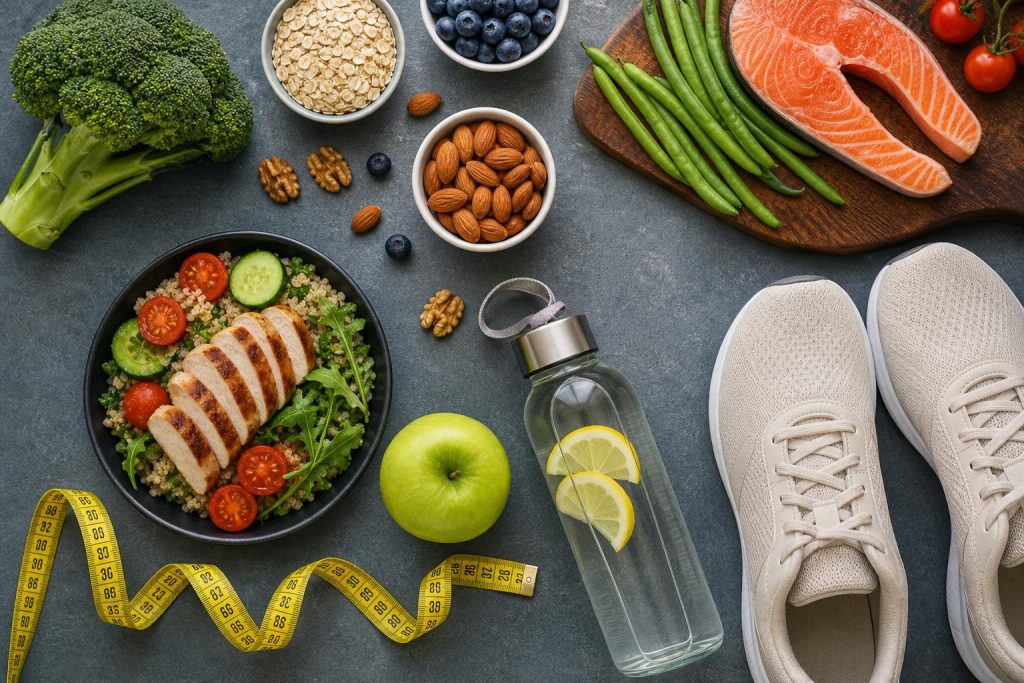
Whether you’re using a GLP-1 medication, running a caloric deficit through disciplined eating, or simply trying to recompose your body through training and nutrition, the fundamentals don’t change. Hit your protein targets aggressively — prioritize it over everything else in your diet. Lift heavy, lift consistently, and give your muscles a stimulus to stay. Sleep like it’s part of your training program. Consider creatine as a low-risk, high-evidence addition to your stack. And measure success not just in pounds lost, but in strength gained, energy improved, and metabolic markers moving in the right direction.
Muscle is expensive tissue — metabolically costly to build and easy to lose. The men who protect it during periods of weight loss are the ones who arrive at their goal looking and functioning the way they actually wanted to when they started.