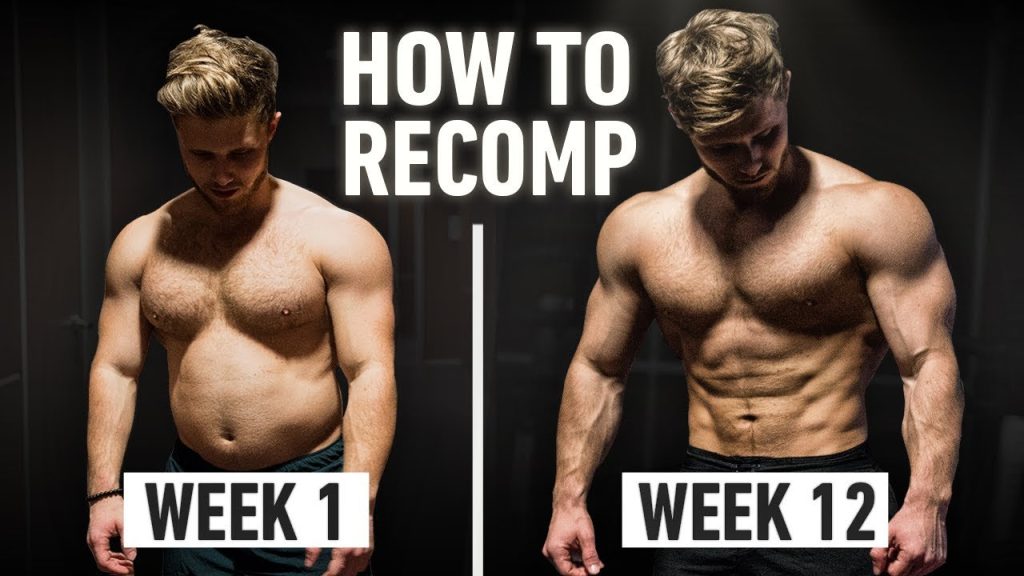
Video by Jeff Nippard on YouTube
Here’s something most men starting on semaglutide or tirzepatide don’t hear from their prescribing doctor: the drug will help you eat less, but it won’t tell your body what to keep. Without a structured resistance training program, a significant portion of the weight you lose on a GLP-1 medication will come from muscle — not just fat. A 2023 analysis published in Diabetes, Obesity and Metabolism found that lean mass loss can account for 25 to 40 percent of total weight lost in patients using GLP-1 receptor agonists without any structured exercise intervention. That’s not a side effect you want to ignore.
The good news is that strength training changes the equation entirely. And if you’re new to lifting — whether you’re on a GLP-1 medication, following a caloric deficit the old-fashioned way, or simply trying to get your health back on track — a beginner resistance training program is one of the highest-leverage things you can add to your life right now. The principles are the same regardless of how you’re managing your nutrition. Build the muscle. Preserve it. Let the fat come off underneath.
Why Strength Training Is Non-Negotiable During Weight Loss
When you’re in a caloric deficit — whether driven by appetite suppression from a GLP-1 medication, a structured diet, or intermittent fasting — your body is in a catabolic state. It’s breaking tissue down to meet energy demands. The question is which tissue. Research from the American Journal of Clinical Nutrition has consistently demonstrated that resistance training combined with a caloric deficit dramatically shifts the composition of weight lost toward fat while preserving or even increasing lean muscle mass.
For men specifically, muscle mass is foundational to metabolic health. Skeletal muscle is the primary site of glucose disposal in the body — meaning more muscle equals better insulin sensitivity, better blood sugar regulation, and a higher resting metabolic rate. A landmark study in Cell Metabolism showed that resistance exercise improves insulin sensitivity independent of weight loss, which matters enormously for men dealing with metabolic syndrome, pre-diabetes, or type 2 diabetes — the exact population most likely to be prescribed a GLP-1 medication in the first place.
Beyond the metabolic benefits, strength training triggers an anabolic hormonal environment. It stimulates testosterone release, growth hormone secretion, and muscle protein synthesis — all of which work against the muscle-wasting effects of a caloric deficit. For a beginner, this hormonal response is actually strongest in the early weeks of training, meaning your first few months in the gym carry disproportionate returns. You don’t need to be advanced to benefit enormously. You just need to show up consistently and train with enough intensity to give your body a reason to hold onto muscle.
The Beginner Program: Structure, Frequency, and Exercise Selection
The most effective beginner strength programs share a few core principles: full-body training sessions performed three days per week, compound movements that recruit multiple muscle groups simultaneously, and progressive overload — the practice of gradually increasing the challenge over time. This is not complicated, but it must be deliberate.
Three full-body sessions per week — say, Monday, Wednesday, and Friday — is the ideal starting point for most men. This frequency allows you to stimulate each major muscle group multiple times per week, which meta-analytic data in the Journal of Strength and Conditioning Research identifies as superior to once-weekly training for muscle hypertrophy and strength gains in beginners. The rest days in between allow for recovery and protein synthesis — the actual process by which muscle is built.
Each session should be built around six to eight compound movements: a squat pattern (goblet squat or barbell back squat), a hip hinge (Romanian deadlift or conventional deadlift), a horizontal push (bench press or dumbbell press), a horizontal pull (cable row or dumbbell row), a vertical push (overhead press), and a vertical pull (lat pulldown or assisted pull-up). These six movement patterns cover nearly every major muscle group in the body and provide a complete training stimulus in under an hour.
For each exercise, beginners should aim for three sets of eight to twelve repetitions, using a weight that feels challenging by the final two reps of each set. Rest ninety seconds to two minutes between sets. The goal in every subsequent session is to either add a small amount of weight to the bar or complete more clean reps than the previous session. This is progressive overload, and it is the engine of all strength and muscle development. Research published in Medicine and Science in Sports and Exercise confirms that progressive overload is the primary driver of hypertrophic adaptation, even in caloric-deficit conditions.
If you’re using a GLP-1 medication, there’s one practical consideration worth noting: your appetite suppression may make it harder to eat enough protein around your workouts. This matters because protein is the raw material for muscle repair. Current evidence supports a protein intake of at least 1.6 grams per kilogram of body weight per day for men engaged in resistance training, with some data suggesting higher intakes up to 2.2 grams per kilogram may be beneficial during aggressive fat loss phases. Prioritizing protein — through whole foods like chicken, eggs, Greek yogurt, and fish, or supplementing with whey protein when appetite is suppressed — is as important as the training itself.
Consistency over eight to twelve weeks is where the transformation becomes visible. Most beginners will experience what’s called newbie gains in the first two to three months — a period where muscle is added relatively rapidly even in a caloric deficit, particularly with adequate protein intake. This is your window to establish both the habit and the physical foundation that will serve you for years. Don’t waste it on excessive cardio or undereating to the point where training quality collapses. Lift, eat enough protein, sleep seven to nine hours, and repeat.
What This Means For You
Whether you’re on a GLP-1 medication or not, the calculus is the same: weight loss without strength training is a gamble with your muscle mass, your metabolism, and your long-term health. A beginner resistance training program — three days a week, compound movements, progressive overload, adequate protein — is the single most effective tool available to ensure the weight you lose is fat, not the lean tissue that makes your body work.
You don’t need an advanced program. You don’t need a personal trainer on day one, though one certainly helps with form. You need a simple, consistent plan and the discipline to execute it over months, not days. The research is clear, the physiology is settled, and the bar — literally — is waiting. Pick it up.