Most men have no idea what their blood sugar is doing between meals — and that ignorance is quietly sabotaging their fat loss, energy, and metabolic health. A landmark study published in Nature Medicine found that glycemic responses to identical foods vary dramatically between individuals, meaning the “healthy” meal your buddy swears by might be spiking your glucose in ways you’d never expect without data. For men on GLP-1 medications like semaglutide or tirzepatide — or anyone serious about metabolic optimization — a continuous glucose monitor (CGM) changes the game entirely.
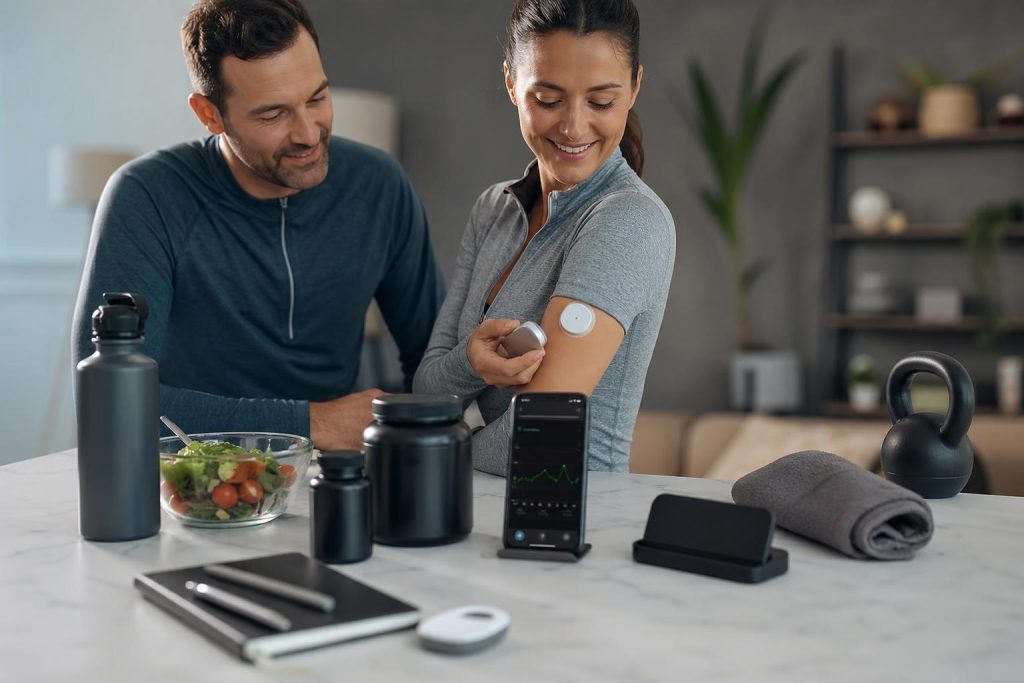
A CGM is a small wearable sensor, typically applied to the upper arm or abdomen, that measures interstitial glucose levels every few minutes around the clock. No finger pricks. No guessing. Just real-time data telling you exactly how your body responds to food, exercise, sleep, stress, and even alcohol. For GLP-1 users specifically, this matters because these medications fundamentally alter how your body processes glucose — slowing gastric emptying, amplifying insulin secretion, and suppressing glucagon. Watching those mechanisms play out in real time through a CGM isn’t just interesting; it helps you optimize your protocol and catch problems early.
What to Look For in a CGM
Not all CGMs are created equal, and the right choice depends on your goals and budget. The two most accessible options for non-diabetic men pursuing metabolic health are the Dexcom G7 and the Abbott Libre 3. The Dexcom G7 offers exceptional accuracy with a MARD (mean absolute relative difference) of around 8.2%, real-time alerts, and seamless smartphone integration. Clinical evaluations have confirmed the G7’s accuracy as among the highest available, making it a strong choice for anyone who wants precision data. The Libre 3 is slightly more affordable, requires no fingerstick calibration, and streams glucose data continuously — a meaningful upgrade from its predecessors.
For GLP-1 users, the low-glucose alarm features on both devices are particularly relevant. Semaglutide and tirzepatide lower the risk of hypoglycemia on their own, but when combined with caloric restriction or intense training — both common among men pursuing fat loss — blood sugar can dip unexpectedly. Having a device that alerts you before symptoms hit is a genuine safety advantage, not just a convenience.
Beyond hardware, the software matters. Dexcom integrates with Apple Health and many third-party apps. Abbott’s LibreLink app is clean and intuitive. If you want deeper data analysis and personalized metabolic coaching layered on top of CGM data, platforms like Levels or Supersapiens pair CGM hardware with proprietary apps designed to help you interpret trends, not just readings. These services aren’t cheap, but for men serious about biohacking their metabolic health, the behavioral insights they deliver can accelerate results significantly.
How to Actually Use CGM Data to Improve Your Results
Owning a CGM without knowing how to interpret it is like having a sophisticated GPS and ignoring the map. The key metrics to track are fasting glucose (ideally 70–90 mg/dL), postprandial glucose peaks (aim to stay under 140 mg/dL after meals), and time in range — the percentage of your day spent between 70 and 140 mg/dL. Research consistently shows that higher time in range correlates with better metabolic outcomes, reduced inflammation, and improved body composition over time.
For men on GLP-1 medications, CGM data can help you identify the optimal meal timing and composition to work with the drug’s mechanism rather than against it. Because GLP-1 agonists slow gastric emptying, large carbohydrate-heavy meals can create prolonged glucose elevations even on medication. The CGM will show you this clearly — and motivate you to shift toward protein-first meals and smaller carbohydrate portions in a way that abstract dietary advice simply cannot. Exercise is another powerful lever: studies show that even a 10-minute walk after eating can blunt postprandial glucose spikes by up to 22%. Seeing that effect in real time on your CGM screen is one of the most motivating health experiences available.
Sleep and stress data become compelling additions once you have a CGM. Cortisol-driven glucose spikes during poor sleep nights are visible and measurable — reinforcing what the research has been saying for years about the metabolic cost of sleep deprivation.
The Takeaway
Whether you’re on a GLP-1 medication, eating keto, or simply lifting and trying to stay lean, a CGM gives you something no food diary or scale can: real-time metabolic feedback personalized to your biology. The best CGM is the one you’ll actually wear and learn from — and right now, the Dexcom G7 and Abbott Libre 3 represent the clearest choices for men who want precision without a prescription barrier. Start with two to four weeks of data before drawing conclusions, pair the readings with your training and nutrition habits, and let the numbers guide smarter decisions. Metabolic health isn’t a mystery. With the right tools, it’s just information.