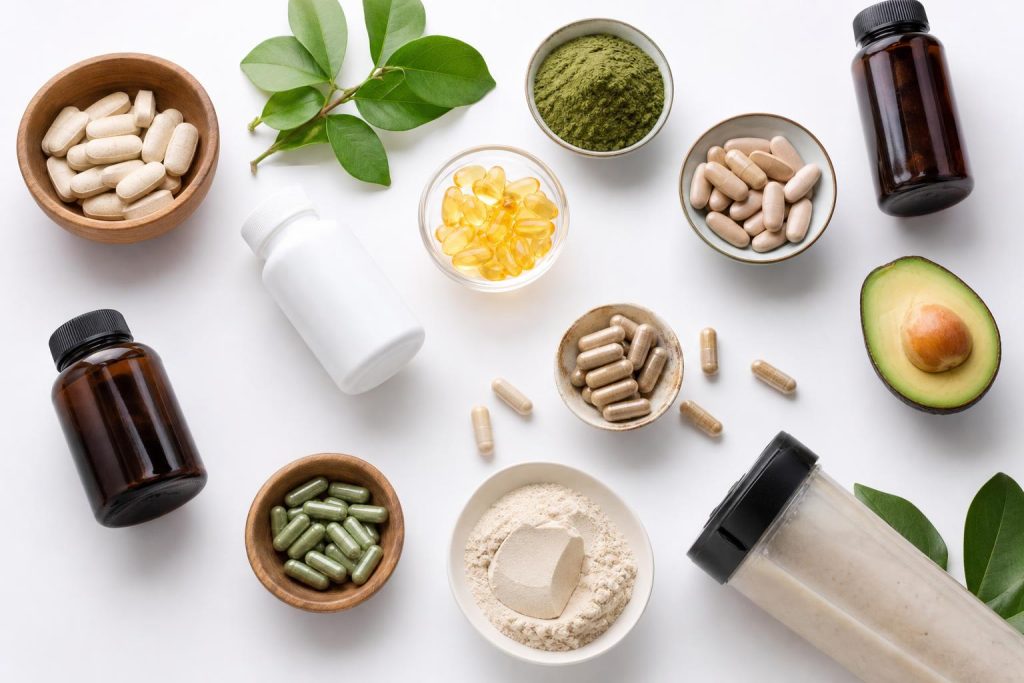
Ozempic is doing something remarkable in your body — suppressing appetite, slowing gastric emptying, improving insulin sensitivity, and in many cases driving significant weight loss. But here’s what most prescribing physicians don’t tell you: the same mechanisms that make semaglutide so effective also create nutritional gaps that, left unaddressed, can quietly undermine your results. Muscle loss, fatigue, bone density decline, and digestive disruption are not inevitable side effects — they’re often the result of not supporting your body through a period of dramatic metabolic change.
This isn’t about taking a handful of pills and hoping for the best. It’s about understanding what Ozempic actually does to your physiology, and then making targeted, evidence-informed decisions about how to support the process. Whether you’re on semaglutide, working through a traditional calorie deficit, or simply trying to optimize your health — the nutritional principles here apply broadly. GLP-1 users just have more urgency around getting them right.
The Nutritional Reality of Eating Less
When appetite suppression works as intended, you eat significantly less food. That’s the point. But food isn’t just calories — it’s protein, micronutrients, fiber, and cofactors your body needs to function. When you cut intake substantially without planning around it, deficiencies emerge fast. The most clinically relevant concern for men on Ozempic is protein and muscle mass. Studies consistently show that rapid weight loss — regardless of the method — leads to a meaningful proportion of lean tissue loss alongside fat. On a GLP-1 medication, where appetite suppression can drop caloric intake dramatically, this risk is amplified unless protein intake is deliberately prioritized.
This is where protein supplementation becomes less of a bodybuilding tool and more of a medical necessity. The target for men in a caloric deficit, especially those over 40, is somewhere between 1.6 and 2.2 grams of protein per kilogram of body weight per day. For most men eating 1,200 to 1,600 calories on Ozempic, hitting that number through food alone is genuinely difficult. A high-quality whey protein isolate or a plant-based blend used strategically — first thing in the morning, post-training, or as a meal anchor — can be the difference between losing fat and losing fat plus muscle. Muscle is your metabolic engine. Preserving it while on a GLP-1 isn’t optional; it’s the entire game.
Beyond protein, micronutrient depletion is a legitimate concern that most men overlook. Nausea, reduced food variety, and smaller meal volumes mean that vitamins and minerals commonly found in a balanced diet — B12, iron, zinc, magnesium, vitamin D — can fall short of optimal levels. A comprehensive, food-based multivitamin isn’t glamorous, but it’s foundational. Think of it as nutritional insurance during a period when your intake is deliberately restricted.
The Supplements That Move the Needle
Vitamin D3 and K2 deserve serious attention for men on Ozempic. Vitamin D deficiency is already epidemic among men, and weight loss — particularly rapid weight loss — can pull fat-soluble vitamins out of storage in ways that temporarily worsen deficiency status. Vitamin D supports testosterone production, immune function, insulin sensitivity, and bone health. Pairing it with K2 ensures calcium is directed toward bones rather than soft tissue. A combined D3/K2 supplement providing at least 2,000 to 5,000 IU of D3 daily is a reasonable starting point for most men, though getting blood levels tested is the smarter move.
Magnesium is another supplement that earns its place. Most men are already deficient before Ozempic enters the picture. It’s involved in over 300 enzymatic reactions, plays a central role in glucose metabolism, supports sleep quality, and helps regulate cortisol — all of which matter enormously during weight loss. Magnesium glycinate is the preferred form for most men because it’s well absorbed and doesn’t cause the digestive discomfort associated with magnesium oxide. Taking 300 to 400 mg before bed is a practical, low-risk intervention with meaningful upside.
Omega-3 fatty acids, specifically EPA and DHA from fish oil, are worth highlighting here for a specific reason tied to GLP-1 biology. Research on GLP-1 receptor agonists has documented their impact on liver health markers, with semaglutide showing meaningful reductions in liver fat content and liver enzyme levels in patients with nonalcoholic fatty liver disease and type 2 diabetes. Omega-3s are independently associated with reduced hepatic fat and systemic inflammation — making them a logical complement to semaglutide’s documented hepatoprotective effects. Two to four grams of combined EPA and DHA daily from a high-quality, third-party tested fish oil is a well-tolerated and evidence-supported addition to any GLP-1 protocol.
Creatine monohydrate might be the most underappreciated supplement a man on Ozempic can take. It won’t directly accelerate fat loss, but it will help you maintain — and potentially build — lean muscle during a period when muscle preservation is your primary physical challenge. Creatine supports strength output during resistance training, which is the single most important physical activity you can engage in while on a GLP-1 medication. Five grams per day, consistently, with no loading phase required. It’s safe, cheap, and one of the most studied supplements in existence. If you’re not using it, you’re leaving an easy win on the table.
Fiber supplementation deserves mention because GLP-1 medications already slow gastric motility, and reduced food intake means less dietary fiber from whole foods. This can lead to constipation — one of the more common complaints among Ozempic users. A psyllium husk supplement taken with adequate water not only supports regularity but also feeds beneficial gut bacteria, helps modulate blood sugar response, and contributes to satiety. Starting low — around 5 grams per day — and gradually increasing gives the gut time to adapt without causing bloating.
Collagen peptides represent a targeted addition worth considering, particularly for men over 40 on a calorie-restricted protocol. While not a complete protein source, collagen provides glycine, proline, and hydroxyproline — amino acids important for connective tissue integrity, joint health, and skin elasticity. Rapid weight loss can affect skin structure, and supporting connective tissue during this period is both practical and underappreciated. Ten to fifteen grams of hydrolyzed collagen peptides alongside vitamin C — which is required for collagen synthesis — is a simple pairing that works well as a morning addition to coffee or a shake.
What This Means For You
Ozempic is a powerful tool, but it works best when your body is properly supported around it. The goal isn’t to take more supplements — it’s to identify the specific gaps created by eating less, absorbing differently, and losing weight rapidly, and then address those gaps intelligently. Protein first, always. Vitamin D3/K2, magnesium, and omega-3s as a foundational trio. Creatine if you’re training — and you should be training. Fiber and collagen as targeted support for gut health and tissue integrity.
None of this replaces real food, consistent resistance training, and adequate sleep. Those are still the foundation. But for men who are serious about maximizing what Ozempic can do — preserving muscle, protecting metabolic health, and coming out of this process stronger than they started — strategic supplementation is the edge that most people miss. Build the foundation first. Then stack smart on top of it.
Scientific References
-
Yuan, Gao, Yang et al. (2023).
Comparing the effectiveness of long-term use of daily and weekly glucagon-like peptide-1 receptor agonists treatments in patients with nonalcoholic fatty liver disease and type 2 diabetes mellitus: a network meta-analysis..
Frontiers in endocrinology.
View on PubMed →