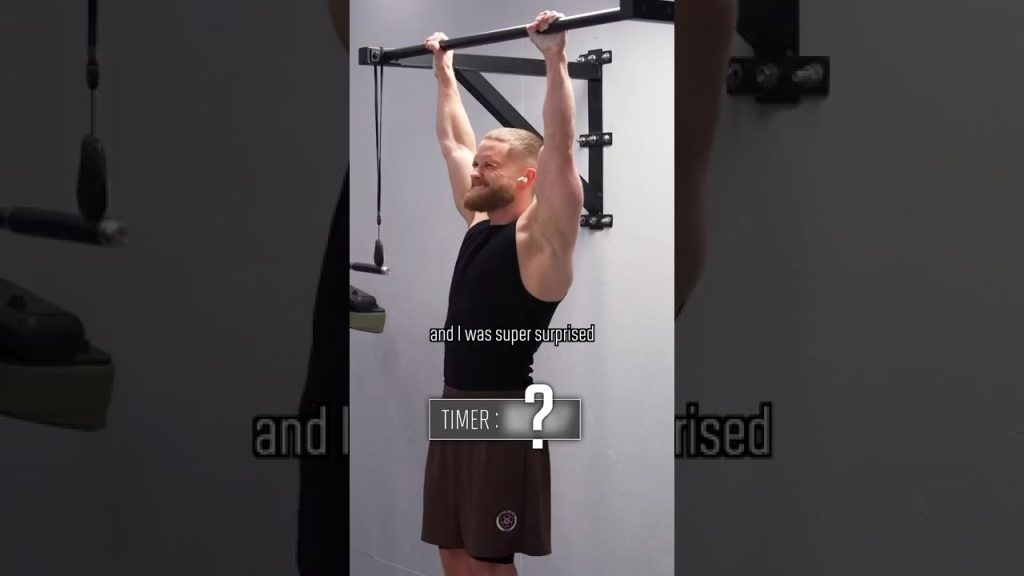
Video by Jeff Nippard on YouTube
In 2022, a study published in the Journal of Strength and Conditioning Research found that grip strength is one of the strongest predictors of all-cause mortality in middle-aged men — stronger, in some analyses, than cardiovascular fitness alone. Research consistently links handgrip strength to lean muscle mass, metabolic health, and long-term physical function. Yet most men training for fat loss or muscle preservation walk past the dumbbells at the end of the rack without ever picking them up for the one exercise that might deliver more functional value per minute than almost anything else in the gym: the farmer’s carry.
The farmer’s carry — sometimes called the farmer’s walk — is elegantly simple. You pick up something heavy, hold it at your sides, and walk. That’s it. But beneath that simplicity lies a training stimulus that challenges your grip, recruits your traps and upper back, demands core bracing under load, and forces your cardiovascular system to work in ways that conventional lifting rarely does. For men trying to preserve muscle during a caloric deficit, add functional strength, or simply build a more resilient body, the farmer’s carry belongs in the weekly rotation.
Why Grip Strength Matters More Than You Think
Before getting into the mechanics, it’s worth understanding why grip strength deserves dedicated attention rather than treating it as a byproduct of other training. A landmark study published in The Lancet tracking over 140,000 adults across 17 countries found that each 5 kg decrease in grip strength was associated with a 17% higher risk of cardiovascular mortality. That’s not a small signal — it’s a biological marker of systemic muscle health and neural drive.
Grip strength reflects the overall integrity of your muscular system because it’s one of the few qualities that demands coordinated effort from your forearms, wrists, shoulders, and core simultaneously. When grip deteriorates — whether from aging, sedentary behavior, or aggressive caloric restriction without resistance training — it’s often a downstream signal that lean tissue is being lost elsewhere. Studies in older men have demonstrated that grip strength is closely correlated with appendicular lean mass, meaning what’s happening in your hands reflects what’s happening in your legs, back, and arms.
This matters enormously for men in a fat-loss phase. Whether you’re cutting calories through traditional dieting, a structured ketogenic protocol, or using a GLP-1 medication to manage appetite, the risk of losing muscle alongside fat is real. Resistance training — and particularly loaded carries — acts as a powerful signal to your body to preserve lean tissue even when energy availability drops. The mechanical tension generated during a farmer’s carry sends a clear anabolic signal: hold onto this muscle, we’re using it.
How to Execute the Farmer’s Carry with Proper Form
The farmer’s carry looks simple enough that most men underestimate how much technique matters. Poor execution turns a powerful full-body exercise into a recipe for shoulder impingement, lower back strain, or a wasted training stimulus. Getting it right starts before you take a single step.
Begin by selecting your implement. Dumbbells are the most accessible option for most gym-goers, but hex bars, kettlebells, trap bars, or purpose-built farmer’s carry handles all work well. The choice matters less than the load — most men should start with a weight that challenges the grip within 30 to 40 meters, not something they can parade around the gym indefinitely. A useful starting point is roughly 50% of your bodyweight per hand, though this varies considerably based on training history.
The setup is critical. Stand with the weights at your sides, feet hip-width apart. Before you lift, brace your core as if you’re about to take a punch — creating intra-abdominal pressure that protects the spine. Then deadlift the implements off the floor: hinge at the hips, keep a neutral spine, drive through the floor with your legs. Do not round your lower back to pick up the weight. Once you’re standing, pull your shoulder blades down and back, pack your shoulders into their sockets, and keep your chin level — not jutting forward.
Now walk. Shorter, controlled steps work better than long strides. Keep your gaze forward, your ribcage stacked over your pelvis, and resist any temptation to lean to one side. The goal is to look composed and athletic, not like you’re fighting the weight with your entire body. Your core should be working hard, but it should be working invisibly — braced, not hunched. At the end of your walk, set the weights down with the same controlled hinge you used to pick them up. Never drop them from a standing position or let your back round at the finish.
Grip position deserves special attention. Crush the handles actively throughout the carry — don’t just hold on passively. Research on grip training shows that active, intentional gripping produces significantly greater forearm muscle activation than passive holding, which translates to faster grip strength development over time. Think of your grip as something you’re training, not just using.
One common mistake is loading the exercise too heavily before grip strength can support it. If your grip fails well before your legs or back reach any meaningful fatigue, you’ve exceeded the appropriate load. The farmer’s carry should challenge multiple systems simultaneously — grip, core, traps, cardiovascular — not expose a single bottleneck and call it a day.
Programming Farmer’s Carries for Muscle Preservation and Strength
The farmer’s carry is unusually versatile from a programming standpoint, which is part of why it fits so well across different training goals. For men primarily focused on muscle preservation during fat loss, carrying heavy loads for moderate distances — think 20 to 40 meters per set, three to four sets — pairs well with traditional strength work as a finisher. The metabolic demand is high enough to contribute to energy expenditure without generating the kind of excessive muscle damage that hinders recovery during a caloric deficit.
Evidence from resistance training research confirms that mechanical loading is the primary driver of muscle protein synthesis, even in hypocaloric conditions, provided protein intake remains adequate. Farmer’s carries generate substantial mechanical tension throughout the posterior chain, upper back, and forearms — muscle groups that are often underdeveloped in men who train primarily with machines or conventional free weight exercises.
For men whose primary goal is building grip strength, a slightly different approach works better. Use heavier loads for shorter distances — 15 to 20 meters — with longer rest periods between sets. This trains maximal grip force rather than grip endurance. Alternately, timed holds at the end of a carry set (standing still while gripping the implement for an additional 20 to 30 seconds before setting it down) produce significant time-under-tension for the forearm flexors and extensors. Over a 6 to 8 week training block, this approach measurably improves grip dynamometry scores for most men.
If cardiovascular conditioning or general work capacity is the target, farmer’s carries performed as part of a circuit — perhaps alternating with kettlebell swings, sled pushes, or box step-ups — create a demanding metabolic environment without the joint stress of running. Research on loaded carries within conditioning protocols shows favorable adaptations in both aerobic capacity and muscular endurance, making them a practical tool for men who want to improve body composition and performance simultaneously.
Frequency matters, but so does recovery. Most men can handle farmer’s carries two to three times per week without significant grip fatigue accumulating, provided the volume is managed sensibly. If you deadlift or pull heavily in the same session, consider placing carries at the end of the workout rather than the beginning, when grip fatigue might compromise your performance on the primary lifts. Conversely, if grip development is a priority, programming carries before pulling exercises once per week can force adaptation in the grip while the rest of the session reinforces the stimulus.
Progressions should follow the same logic as any strength exercise. Add load incrementally — 5 to 10 pounds per hand every two to three weeks is a reasonable pace for most men. Alternatively, extend the carry distance or increase the number of sets before adding weight. Avoid the temptation to jump load aggressively; the grip is relatively slow to adapt compared to larger muscle groups, and outpacing its development leads to a training ceiling rather than continued progress.
Implement variation also keeps the adaptation signal fresh. Single-arm carries — carrying a weight in one hand while the other swings freely — introduce an anti-lateral flexion demand on the core that bilateral carries don’t replicate. Core stability research highlights anti-lateral flexion as a critical but often neglected training quality that directly transfers to athletic movement and injury resistance. Overhead carries, where one arm presses a kettlebell overhead while the other holds a weight at the side, add shoulder stability and thoracic control into the equation. These variations should be introduced progressively, not substituted for heavy bilateral carries in the early stages of training.
The Takeaway
The farmer’s carry is one of the most efficient exercises available to men who want to preserve muscle, build functional strength, and improve the physical markers that actually predict long-term health. It requires no elaborate setup, no specialized machine, and no complicated periodization to deliver meaningful results. What it requires is consistency, honest loading, and attention to the details that most people overlook — the brace, the grip, the posture, the controlled descent at the end.
If you’re in a fat-loss phase, the carry helps you hold onto the muscle you’ve worked to build. If you’re focused on strength, it fills in the grip and upper back gaps that conventional lifting leaves behind. And if you’re simply trying to be a healthier, more capable man — the kind whose body still works the way it should decades from now — grip strength turns out to be one of the most reliable investments you can make. Pick up something heavy, stand tall, and walk. The research says you’ll be better for it.