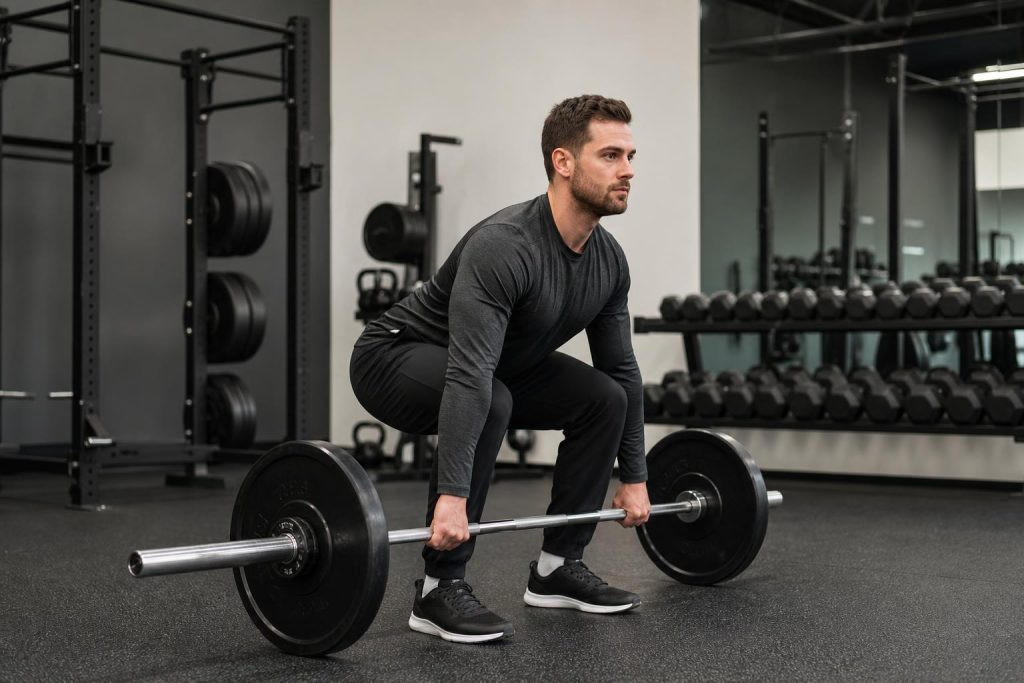
When researchers at the University of Liverpool tracked body composition changes in adults taking semaglutide, they found something that should concern every man reaching for this medication as a weight loss tool: nearly 40% of the weight lost came from lean mass, not fat. That’s not a minor footnote. That’s muscle — the tissue that drives your metabolism, protects your joints, and defines how you look and function for decades to come. The drug works. But the drug alone is not a plan.
Whether you’re on semaglutide, working through a calorie deficit the old-fashioned way, or somewhere in between, the principles here are the same. GLP-1 receptor agonists like semaglutide suppress appetite powerfully, which means you’re eating significantly less. That caloric restriction accelerates fat loss — but without the right training stimulus, it accelerates muscle loss too. Exercise isn’t just a complement to semaglutide. For men who want to come out of this leaner, stronger, and metabolically healthier, it’s the entire difference between transformation and deterioration.
Resistance Training Is Non-Negotiable
If you do only one thing while taking semaglutide — or during any sustained fat loss phase — make it resistance training. The evidence here is overwhelming. A landmark meta-analysis in the British Journal of Sports Medicine confirmed that progressive resistance training directly stimulates muscle protein synthesis and preserves lean mass during caloric restriction in ways that cardiovascular exercise simply cannot replicate. When you lift, you send a direct signal to your body that muscle is needed. Without that signal, a calorie deficit reads as a famine — and your body responds accordingly, cannibalizing lean tissue alongside fat.
Compound lifts should form the foundation of your program. Squats, deadlifts, Romanian deadlifts, bench press, rows, and overhead pressing movements recruit the largest muscle groups in your body, trigger the greatest hormonal response, and demand the most from your neuromuscular system. These aren’t just gym staples — they’re metabolic anchors. Research published in the Journal of Strength and Conditioning Research found that multi-joint compound exercises produce significantly greater elevations in anabolic hormones like testosterone and growth hormone compared to isolation movements. On semaglutide, when appetite suppression may already be blunting anabolic drive, optimizing your hormonal environment through compound training becomes even more critical.
Practically speaking, aim for three to four resistance sessions per week, hitting each major muscle group at least twice. Progressive overload — gradually increasing the weight, reps, or difficulty over time — is what separates training from just moving through the motions. You don’t need to train to failure every session, but you need to consistently challenge your muscles beyond what they’re already comfortable with. Sets in the range of six to twelve reps are well-supported for hypertrophy and strength, though going heavier (three to six reps) on your main lifts builds the kind of foundational strength that makes everything else easier.
Don’t Ignore Cardiovascular Training — But Choose It Wisely
Cardio gets a bad reputation in strength circles, and frankly, some of that reputation is earned. Excessive steady-state cardio during a calorie deficit can become catabolic, particularly when protein intake isn’t dialed in. But dismissing cardiovascular training entirely is a mistake — especially for men focused on long-term metabolic health, heart function, and insulin sensitivity. The key is choosing the right type and managing total volume.
High-intensity interval training, or HIIT, earns its place at the top of the list. A study published in the Journal of Obesity demonstrated that HIIT produced significant reductions in abdominal fat while simultaneously improving insulin sensitivity and preserving lean mass — outcomes particularly relevant for men on semaglutide who are already managing blood sugar and metabolic function. A HIIT session doesn’t need to be long. Ten to twenty minutes of genuine high-effort intervals, whether on a bike, rower, or through sprint work, delivers cardiovascular and metabolic benefits that far outpace the same time spent at a moderate steady pace.
Zone 2 cardio — sustained, moderate-intensity aerobic work where you can hold a conversation but feel the effort — also has a legitimate role. Research from Cell Metabolism highlights Zone 2’s unique ability to improve mitochondrial function and fat oxidation at the cellular level, making it an intelligent complement to weight training without placing excessive stress on recovery systems. Walking, cycling, or light rowing for thirty to forty-five minutes two or three times per week fits most schedules and accumulates real benefits without interfering with your strength sessions.
The one type of cardio to use cautiously during aggressive caloric restriction is high-volume steady-state work — think sixty-plus minutes of running five or six days per week. Without adequate calories and protein to recover, this kind of volume has diminishing returns and can actively work against muscle preservation.
Protein, Recovery, and the Training Window
Exercise selection matters enormously, but it won’t save you if recovery is neglected. Semaglutide’s appetite suppression can make it genuinely difficult to hit adequate protein targets — and yet protein is the single most important nutritional lever for preserving muscle during fat loss. A comprehensive review in the American Journal of Clinical Nutrition found that higher protein intakes — roughly 1.2 to 1.6 grams per kilogram of body weight — significantly attenuated lean mass loss during hypocaloric conditions. For a 200-pound man, that’s roughly 110 to 145 grams of protein daily, even on days when food sounds unappealing.
Prioritizing protein at every meal, leaning on high-quality sources like eggs, lean beef, poultry, Greek yogurt, and whey protein shakes, is worth treating as a non-negotiable. When appetite is suppressed, calories will naturally drop — but protein should be the last thing you sacrifice. Sleep quality and stress management round out the recovery picture. Research from the Annals of Internal Medicine showed that poor sleep during a calorie restriction intervention reduced the proportion of fat lost and increased lean mass loss — a finding every man on a cut needs to take seriously. Seven to nine hours of quality sleep isn’t a luxury. It’s part of the program.
The Takeaway
Semaglutide creates a powerful caloric deficit. Exercise — specifically resistance training anchored by compound lifts, supported by intelligent cardio — determines what you lose and what you keep. Men who treat this window as an opportunity to build strength while the medication handles appetite will emerge genuinely transformed. Men who take the drug and sit still will lose weight, yes, but at the cost of the muscle that makes that weight loss worth something. The bar, the bike, and the protein on your plate aren’t accessories to your weight loss plan. For any man serious about his health, they are the plan.