When Beachbody — now rebranded as BODi — launched a fitness program specifically tailored for GLP-1 medication users, it marked a significant cultural moment: structured exercise programming was finally catching up to one of the fastest-growing pharmacological trends in men’s health. But whether you’re on semaglutide, tirzepatide, or simply grinding through a caloric deficit the old-fashioned way, the physiological challenges these programs address are nearly identical. The real question isn’t whether you take a GLP-1 — it’s whether you’re training smart enough to protect your muscle while your body loses fat.
That distinction matters more than most men realize. Research published in Diabetes, Obesity and Metabolism found that participants using semaglutide lost a significant proportion of lean mass alongside fat — a finding that has pushed clinicians and fitness professionals alike to reconsider how exercise should be programmed during aggressive caloric restriction. BODi’s GLP-1 program attempts to solve this problem directly, but its core principles apply to any man running a caloric deficit with a body composition goal.
What BODi’s GLP-1 Program Actually Does
BODi’s dedicated GLP-1 fitness program — developed in collaboration with registered dietitians and trainers familiar with the physiological effects of appetite-suppressing medications — is structured around lower-volume, higher-intentionality workouts. Recognizing that GLP-1 users often experience significantly reduced caloric intake, the program de-emphasizes high-calorie-burn cardio in favor of resistance training designed to preserve lean tissue. Sessions are generally shorter, ranging from 20 to 35 minutes, and the progressions are measured to avoid the kind of overreaching that becomes especially risky when the body is running on limited fuel.
This approach is scientifically grounded. A study in Obesity Reviews confirmed that resistance training during caloric restriction significantly attenuates lean mass loss compared to diet-only or cardio-only interventions. The takeaway for any man — GLP-1 user or not — is that lifting weights while in a deficit isn’t optional if body composition is the actual goal. BODi simply packages that science into a structured format with built-in accountability through its app, trainer-led videos, and community support tools.
The nutrition guidance embedded in the program is equally relevant across the board. Protein targets are set deliberately high — typically around 0.7 to 1.0 grams per pound of body weight — to support muscle protein synthesis even when total caloric intake is reduced. Landmark research by Phillips and Van Loon established that elevated dietary protein is the single most important dietary lever for preserving lean mass during a cut, regardless of how the caloric deficit is created. Whether that deficit comes from a GLP-1 receptor agonist suppressing appetite or from disciplined meal planning, the protein math stays the same.
The Muscle Preservation Problem Every Man in a Deficit Faces
The physiology of fat loss creates a universal problem that no medication or meal plan fully solves on its own. When the body enters a sustained caloric deficit, it draws energy from both adipose tissue and skeletal muscle — a process accelerated by inactivity, inadequate protein, and poor sleep. A 2020 review in Nutrients demonstrated that men who combined resistance training with a high-protein diet during caloric restriction maintained significantly greater lean mass and experienced better improvements in metabolic markers than those who relied on diet alone. This isn’t a GLP-1 issue — it’s a biology issue.
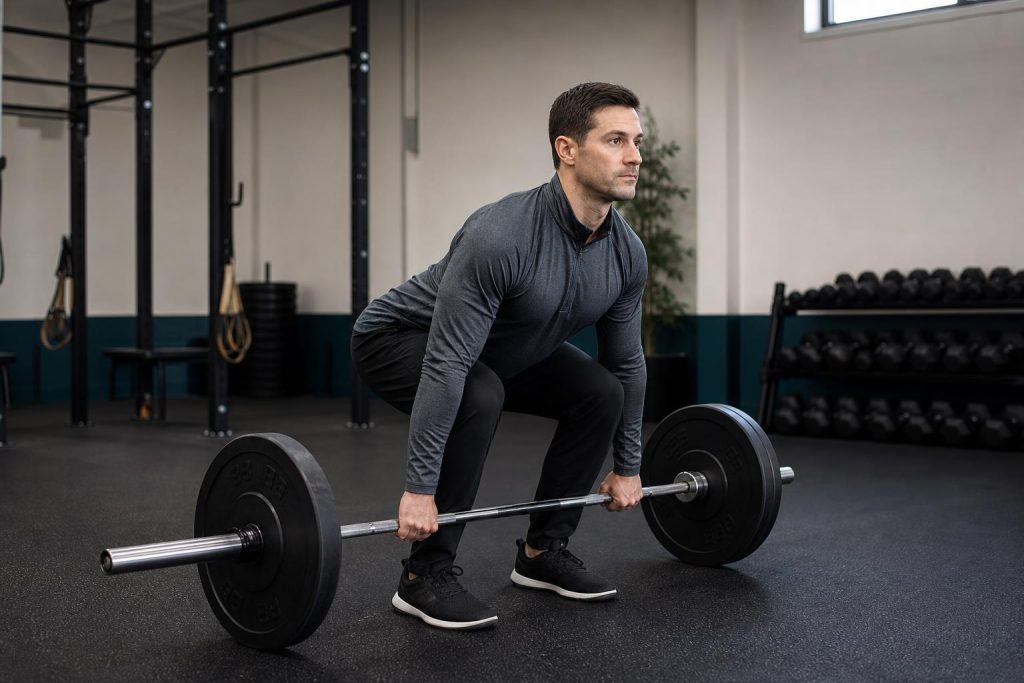
BODi’s programming addresses this by anchoring each week around compound resistance movements: squats, hinges, presses, and rows. These multi-joint patterns recruit the greatest volume of muscle tissue per movement, stimulating the anabolic signaling needed to preserve mass even in an energy-deficient state. Men who follow the program report that the shorter session lengths — initially surprising given the intensity promised — are actually strategic. Training duration matters less than training quality when calories are low, and accumulated fatigue from excessive volume can become a real liability.
If you’re not using BODi specifically, the programming logic translates directly. Prioritize three to four resistance sessions per week built around compound lifts. Keep cardio moderate — 20 to 30 minutes of steady-state work or two shorter HIIT sessions — and avoid the trap of trying to out-exercise your deficit. That approach accelerates muscle loss, not fat loss. Research in Applied Physiology, Nutrition, and Metabolism showed that adding excessive aerobic volume on top of an already aggressive deficit compounded lean tissue losses rather than improving fat loss outcomes.
Sleep and recovery deserve equal billing here. A pivotal study from the Annals of Internal Medicine found that dieters who slept 8.5 hours lost significantly more fat and preserved significantly more lean mass compared to those sleeping only 5.5 hours, even with identical caloric deficits. BODi’s program includes recovery-focused sessions — mobility work, stretching, and guided breathwork — that serve a dual purpose: managing the parasympathetic recovery needed for muscle repair and reducing the cortisol-driven catabolism that poor sleep accelerates. Men tend to undervalue this component until they start tracking their results more carefully.
Making the Program Work for Your Specific Situation
BODi operates on a subscription model, and while the GLP-1 specific track is among its newer offerings, the platform’s broader library — including programs like LIIFT4, Body Beast, and 9 Week Control Freak — offers men a range of resistance-first options calibrated to different fitness levels and goals. The GLP-1 program is worth considering if you’re navigating appetite suppression and need structured guidance to stay active without overtaxing a system running on reduced fuel. But if you’re not on any medication and simply want the muscle-preserving, fat-loss-optimized structure, any of the resistance-anchored programs on the platform will serve that purpose.
One practical consideration: commit to the nutrition component as seriously as the workouts. The BODi nutrition framework uses color-coded containers — a simplified portion control system — that tends to work well for men who respond better to visual cues than calorie counting. The protein emphasis built into the system is its strongest feature. If you’re already tracking macros independently, the key adjustment is ensuring protein never falls below 0.7 grams per pound of bodyweight on low-appetite days, because that’s precisely when most men undercut their own progress.
Hydration compounds everything, particularly for GLP-1 users who may naturally eat and drink less. Studies have shown that even mild dehydration impairs strength output and increases the perception of exertion, meaning your training quality degrades before you even notice you’re under-hydrated. Aiming for at least 90 to 100 ounces of water daily — more on training days — is a simple intervention that delivers a measurable performance return.
What This Means For You
BODi’s GLP-1 fitness program is a well-constructed solution to a real problem: how do you stay strong, preserve muscle, and actually improve your body composition when your appetite — and therefore your fuel supply — is significantly reduced? The answer it offers is the same one the research has been pointing to for years: prioritize resistance training, eat enough protein, recover deliberately, and don’t mistake caloric restriction for a complete fitness strategy. Whether you use GLP-1 medications or not, those principles are non-negotiable. The platform provides structure and accountability — two factors that consistently separate men who get results from men who stay stuck. The biology does the rest.