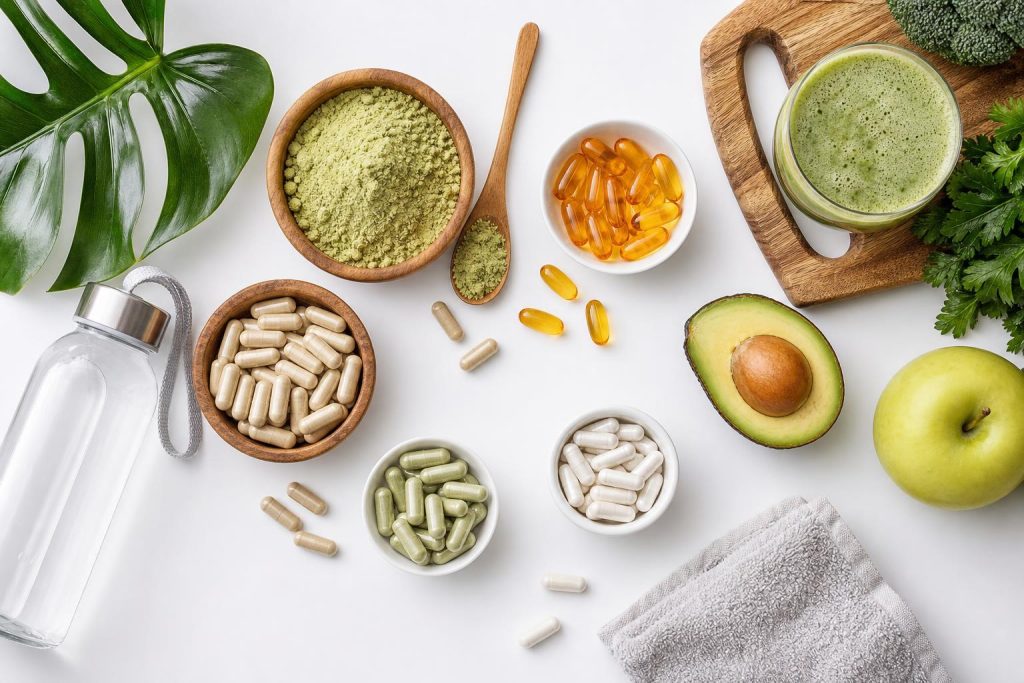
Semaglutide works. The clinical evidence on that point is no longer seriously debated. But what happens to your body during the months you spend on it — the muscle you might lose, the nutrients you may not absorb, the metabolic gaps that quietly open up — that’s a conversation most prescribers never have with their patients. The drug suppresses appetite aggressively, which means men on Ozempic are often eating 30 to 50 percent less food than they were before. Less food means less of everything: less protein, fewer micronutrients, reduced fiber, lower electrolyte intake. If you’re not supplementing strategically, you’re accelerating fat loss while simultaneously setting yourself up for muscle loss, fatigue, and nutritional deficiencies that can undermine the entire process.
This isn’t a reason to fear the medication. It’s a reason to use it smarter. The men who get the best results on Ozempic — or any GLP-1 receptor agonist — are the ones who treat the drug as one tool in a larger system, not a standalone solution. Nutrition, resistance training, and targeted supplementation are what determine whether the weight you lose is primarily fat or a damaging mix of fat and lean muscle. Get that equation right, and you come out the other side of your GLP-1 cycle leaner, stronger, and metabolically healthier than when you started.
The Nutritional Reality of Eating Less on Semaglutide
When researchers look at what GLP-1 receptor agonists actually do to the body beyond blood sugar and weight, the picture is more complex than the marketing suggests. A 2023 network meta-analysis published in Frontiers in Endocrinology comparing daily and weekly GLP-1 receptor agonist treatments found meaningful improvements in liver fat content, AST, and ALT levels across multiple agents including semaglutide — which matters because nonalcoholic fatty liver disease is an underdiagnosed driver of metabolic dysfunction in men with excess weight. The researchers found that daily semaglutide was among the most effective interventions for liver enzyme normalization, with ALT reductions reaching a mean difference of over 11 points in the daily-dose group. That’s significant metabolic healing happening in the background. But it also signals how much metabolic stress these men were carrying before treatment began — and how much nutritional support is needed to help the body repair itself properly.
The core problem is caloric compression. Men on therapeutic doses of semaglutide frequently report eating one small meal per day, skipping meals without hunger, and struggling to hit even 1,200 calories. Across that drastically reduced food volume, hitting adequate protein is nearly impossible without deliberate effort, and micronutrient intake falls off a cliff. This is the nutritional environment in which most GLP-1 users are trying to lose fat and maintain muscle — and it’s why supplementation isn’t optional, it’s structural.
Protein is the first and most urgent priority. The anabolic threshold — the minimum protein intake needed to stimulate muscle protein synthesis — doesn’t change just because you’re eating less. Research consistently points to a target of 1.6 to 2.2 grams of protein per kilogram of body weight for men trying to preserve lean mass during a caloric deficit. If you’re eating 1,200 calories of real food and fighting nausea, you are almost certainly not hitting that number through diet alone. A high-quality whey protein isolate or a well-formulated plant-based blend taken once or twice daily is the most evidence-supported supplement a man on Ozempic can use. It’s not glamorous, but it may be the single most important thing standing between you and a body composition outcome you’ll regret. Aim for 25 to 40 grams per serving, ideally timed around your resistance training sessions if you’re training.
The Supplements That Fill Real Gaps
Beyond protein, the micronutrient landscape during GLP-1 treatment deserves serious attention. Reduced food volume creates real deficiency risk across several key vitamins and minerals, and some of these deficiencies have downstream consequences that are easy to misattribute to the medication itself — fatigue, brain fog, muscle cramps, poor recovery, mood disruption.
Magnesium is one of the most commonly depleted minerals in men eating calorie-restricted diets, and deficiency is already endemic in Western populations even before dietary restriction begins. Magnesium is involved in over 300 enzymatic reactions, including those governing muscle contraction, glucose metabolism, and protein synthesis. Men experiencing muscle cramps, poor sleep, or constipation while on semaglutide — all common complaints — are frequently responding to low magnesium intake rather than the drug itself. Magnesium glycinate or magnesium malate, dosed at 300 to 400 milligrams before bed, addresses this gap with minimal digestive side effects.
Vitamin D and vitamin K2 function as a paired system worth understanding. Vitamin D deficiency is strongly associated with metabolic dysfunction, insulin resistance, and reduced testosterone — all concerns relevant to men on a fat-loss protocol. The problem is that vitamin D supplementation without adequate K2 can push calcium toward arteries rather than bones. A combined D3/K2 supplement, typically providing 3,000 to 5,000 IU of D3 alongside 100 micrograms of MK-7 K2, covers both bases cleanly. If you haven’t had your 25-hydroxyvitamin D levels tested recently, that bloodwork is worth ordering alongside your standard metabolic panel.
Omega-3 fatty acids — specifically EPA and DHA from fish oil — deserve a prominent place in the supplement stack for any man dealing with metabolic inflammation, which includes essentially every man who qualifies for GLP-1 therapy. The anti-inflammatory, triglyceride-lowering, and cardioprotective effects of EPA and DHA are among the most replicated findings in nutritional science. For men on semaglutide who are already seeing improvements in liver health and cardiometabolic markers, quality fish oil at two to four grams of combined EPA and DHA daily acts as a force multiplier. Look for products that have been third-party tested for heavy metals and oxidation — rancid fish oil does more harm than good.
Creatine monohydrate is the most evidence-backed performance supplement in existence, and it becomes more relevant, not less, when you’re in a caloric deficit. Creatine supports phosphocreatine resynthesis in muscle tissue, which translates to better strength output, better recovery, and a meaningful signal to muscle tissue that it should be preserved rather than catabolized. The old concern about water retention has been largely reframed by the research — what creatine does is pull water into muscle cells, not subcutaneous tissue, which can actually improve muscle fullness and training performance during the suppressed-appetite phase of GLP-1 treatment. Three to five grams daily, no loading phase required, is the standard protocol.
Zinc and B vitamins round out the foundation. Zinc is involved in testosterone production, immune function, and wound healing, and it’s commonly low in men eating restricted diets. B vitamins — particularly B12, B6, and folate — are critical for energy metabolism and neurological function. If you’re experiencing unusual fatigue or brain fog on semaglutide, suboptimal B12 is a legitimate suspect. A quality B-complex or a comprehensive multivitamin that includes meaningful doses (not token amounts) of these nutrients is a reasonable daily baseline for any man eating in a significant deficit.
A Few Things Worth Avoiding
The supplement market is not your friend by default. There are products aggressively marketed to men on GLP-1 medications that offer little beyond expensive urine and clever packaging. High-dose stimulant fat burners — typically built around large doses of caffeine, synephrine, or proprietary blends with undisclosed doses — add cardiovascular stress to a body that’s already undergoing significant metabolic change. They’re unlikely to accelerate fat loss meaningfully in men who are already in a substantial caloric deficit, and they can compound the nausea and digestive discomfort that some men experience on semaglutide.
Meal replacement shakes designed specifically for GLP-1 users often contain aggressive fiber blends that can worsen gastroparesis-like symptoms some men experience on higher doses of the medication. Read ingredient labels carefully and introduce any high-fiber supplement slowly, especially during dose escalation phases when gastrointestinal side effects tend to peak. On a related note, if you’re using a fiber supplement like psyllium husk — which is genuinely useful for gut health and satiety management — take it at least two hours away from any other medications to avoid absorption interference.
Collagen peptides are worth mentioning specifically because they’re frequently positioned as a protein supplement equivalent to whey or casein. They’re not. Collagen is an incomplete protein, lacking adequate tryptophan, and has a significantly lower leucine content than whey — meaning it provides a much weaker anabolic stimulus per gram. Collagen has legitimate uses for joint and connective tissue support, but it should never substitute for a complete protein source in a man trying to preserve muscle on a reduced-calorie diet.
The Takeaway
Ozempic can do remarkable things for metabolic health, body composition, and liver function — the research is genuine and growing. But no drug overrides basic physiology. The men who walk away from a GLP-1 cycle with the best outcomes are the ones who understood that the medication was buying them caloric deficit without hunger, and then used that window to lift weights, eat high-quality protein, and supplement the gaps that reduced food intake inevitably creates. Protein, creatine, magnesium, vitamin D with K2, and quality fish oil form a logical, evidence-grounded foundation. They’re not exotic. They’re not expensive. But used consistently alongside resistance training and a protein-forward diet, they’re the difference between losing fat and losing everything — fat, muscle, and the metabolic health you were trying to build in the first place.
Scientific References
-
Yuan, Gao, Yang et al. (2023).
Comparing the effectiveness of long-term use of daily and weekly glucagon-like peptide-1 receptor agonists treatments in patients with nonalcoholic fatty liver disease and type 2 diabetes mellitus: a network meta-analysis..
Frontiers in endocrinology.
View on PubMed →