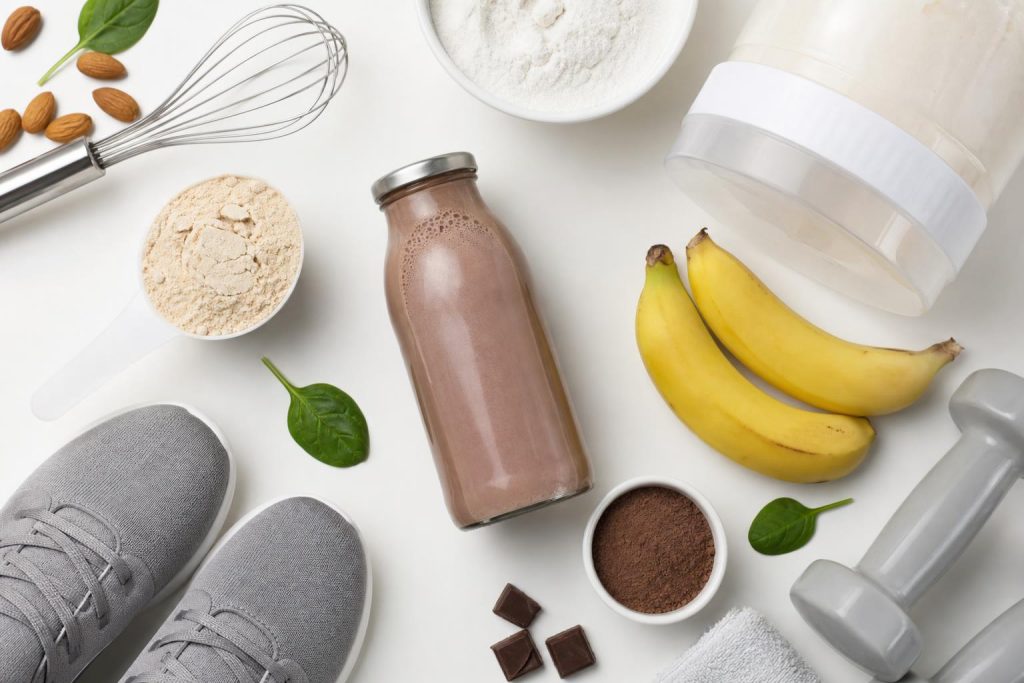
Here’s a number that should get your attention: in clinical trials of semaglutide, participants lost an average of 15% of their body weight — but research published in Diabetes Care found that roughly 40% of that weight loss came from lean mass, not fat. That means for every 20 pounds lost on a GLP-1 medication, nearly 8 of them could be muscle. For men who care about how they look, how they perform, and how they age, that’s not a side effect you can afford to ignore.
This is why protein — specifically how much you’re getting and where it’s coming from — becomes one of the most important variables to manage when appetite suppression is working against you. Ozempic and other GLP-1 receptor agonists do a remarkable job of reducing hunger, but they don’t discriminate. They reduce your appetite for everything, including the protein your muscle tissue desperately needs.
The math gets uncomfortable quickly. Most men on semaglutide or tirzepatide report dropping their daily food intake dramatically — sometimes to fewer than 1,000 calories per day. At that intake, even the most protein-conscious eater struggles to hit the minimum threshold for muscle protein synthesis. A landmark review in the Journal of the International Society of Sports Nutrition concluded that 1.6 to 2.2 grams of protein per kilogram of bodyweight per day is necessary to maximize muscle retention during a caloric deficit. For a 200-pound man, that’s 145 to 200 grams of protein daily — a target that becomes nearly impossible to hit through whole food alone when you’re eating like a sparrow.
This is exactly where a high-quality protein supplement stops being optional and starts being essential.
What Makes a Protein Supplement Actually Worth Taking
Not all protein powders are built the same, and when you’re in a reduced-calorie state, the differences matter more than they would for someone eating freely. The most critical factor is the amino acid profile — specifically leucine content. Leucine is the primary trigger for muscle protein synthesis, and studies have consistently shown that a minimum of 2 to 3 grams of leucine per serving is required to maximally stimulate anabolic signaling. Whey protein isolate — the gold standard for bioavailability — delivers this threshold reliably in every scoop.
Whey isolate earns its top ranking for several reasons beyond leucine. It’s rapidly digested, making it ideal post-workout when muscle protein synthesis rates are elevated. It’s low in lactose, which matters because GLP-1 users frequently report heightened digestive sensitivity. And it’s calorie-efficient: a high-quality whey isolate typically delivers 25 to 27 grams of protein in under 130 calories, allowing you to hit your protein targets without blowing through your limited caloric budget. For men eating 1,200 to 1,600 calories a day — whether on medication or just in a disciplined cut — that caloric efficiency is everything.
If dairy is off the table, micellar casein deserves serious consideration as a second option, particularly before bed. Research in Medicine and Science in Sports and Exercise demonstrated that 40 grams of casein protein consumed before sleep significantly increased overnight muscle protein synthesis and metabolic rate. Casein’s slow-digesting nature makes it ideal for overnight recovery when you’re going eight or more hours without food — a window that becomes particularly catabolic during aggressive weight loss.
For men who are plant-based or simply don’t tolerate dairy, a well-formulated pea and rice protein blend offers a complete amino acid profile that closely rivals whey. The key word is blend — neither pea nor rice protein alone provides all essential amino acids in sufficient ratios, but combined in roughly a 70/30 ratio, studies have shown comparable muscle-building outcomes to whey in resistance-trained individuals. Look for blends that explicitly state leucine content and third-party testing verification.
How to Use Protein Supplements Strategically — GLP-1 or Not
Timing and strategy matter as much as the product itself. If you’re on Ozempic and struggling to eat a full meal, a protein shake isn’t a backup plan — it’s a primary tool. The practical approach is to front-load protein early in the day, before nausea or fullness peaks. A 30 to 40 gram protein shake first thing in the morning protects muscle tissue before appetite suppression takes hold and keeps you ahead of your daily target.
Post-workout protein remains non-negotiable regardless of medication status. The anabolic window isn’t the rigid 30-minute myth it once was, but meta-analyses confirm that protein intake in close proximity to resistance training meaningfully improves lean mass outcomes. If a full meal feels impossible after a session, 25 to 40 grams of whey isolate mixed in water accomplishes the same goal in under 200 calories.
One often-overlooked strategy is adding creatine monohydrate directly to your protein shake. A 2017 meta-analysis in the Journal of Strength and Conditioning Research found that creatine supplementation significantly attenuated muscle loss during caloric restriction, making it a natural companion to any protein strategy focused on preservation. Five grams daily, every day — no loading required.
Quality matters here in a way that directly affects your investment. Look for products that carry NSF Certified for Sport, Informed Sport, or Informed Choice certification. These seals mean the product has been independently tested for banned substances and label accuracy — because a protein powder that delivers 22 grams instead of the labeled 27 grams is costing you muscle tissue you can’t afford to lose.
The Takeaway
Whether you’re on a GLP-1 medication or simply pushing through a hard cut, the physiology is the same: muscle doesn’t survive a protein deficit. Ozempic compresses your appetite, not your protein requirements. A high-quality whey isolate — used strategically, dosed adequately, and paired with resistance training — is the most direct intervention available to protect the muscle you’ve built and ensure the weight you’re losing is actually fat. That distinction is what separates a transformation from a temporary number on the scale.