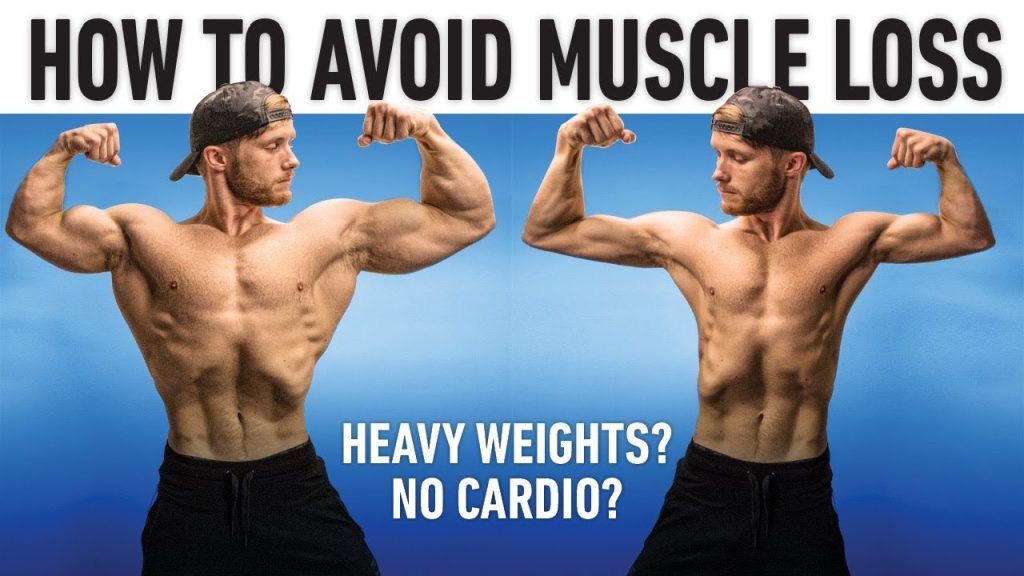
Video by Jeff Nippard on YouTube
Here is a number worth sitting with: clinical trial participants using semaglutide or tirzepatide lost more than 10% of their skeletal muscle mass over roughly 68 to 72 weeks of treatment. Researchers writing in Obesity Reviews put that figure into stark perspective — it is approximately equivalent to two decades of age-related muscle loss, compressed into less than two years. That is not a minor side effect. That is a body composition crisis hiding inside a weight loss success story.
For men on GLP-1 receptor agonists like semaglutide or tirzepatide, the medication is doing exactly what it is supposed to do: driving significant, sustained weight reduction. But the scale does not distinguish between fat and muscle. Without a deliberate, structured strength training program and a dialed-in nutrition strategy, a meaningful portion of the weight you are losing is functional tissue — the metabolically active, force-generating muscle you need to stay strong, burn calories at rest, and avoid the weight cycling trap once the medication is eventually tapered or discontinued.
The solution is not complicated. It is also not optional.
What the Science Actually Says About Muscle Loss on GLP-1s
The concern over fat-free mass loss during GLP-1 therapy is now well-documented in the medical literature. A 2025 review in Current Opinion in Clinical Nutrition and Metabolic Care examined the overlap between sarcopenic obesity — a condition where excess body fat and depleted muscle mass coexist — and the body composition changes triggered by incretin-based medications. The authors found that while GLP-1 drugs produce impressive reductions in total body weight, a variable but significant portion of that loss comes from fat-free mass, including skeletal muscle. The exact degree to which muscle function, not just mass, is compromised remains under active investigation.
Even more intriguing is recent preclinical data suggesting the picture may be more complex than simple caloric restriction explains. A 2025 study published in Cell Metabolism found that semaglutide had unexpected effects on skeletal muscle mass and force-generating capacity in mice, independent of weight loss alone — flagging a need for more rigorous human research into how these drugs interact directly with muscle tissue. The takeaway is not panic; it is preparation. If you are using a GLP-1 medication, your training program is not an add-on. It is a clinical necessity.
A precision medicine framework published in the Journal of Endocrinological Investigation reinforces this point directly, noting that in older and sarcopenic individuals, lean mass preservation during GLP-1 therapy depends on concurrent resistance training and adequate protein intake. The same logic applies broadly to any man using these medications, regardless of age.
Building Your GLP-1 Strength Training Program
The goal of strength training on a GLP-1 is not aesthetics first — it is preservation first, with aesthetics as a welcome byproduct. Your appetite is suppressed, your caloric intake is reduced, and your body is in an aggressive deficit. In that environment, muscle protein synthesis does not happen by accident. You have to force the adaptation through mechanical load.
Three to four resistance training sessions per week is the evidence-supported target for men looking to preserve muscle during weight loss. Each session should prioritize compound, multi-joint movements — squats, deadlifts, Romanian deadlifts, bench press, rows, overhead press, and pull-ups or lat pulldowns. These exercises recruit the largest muscle groups simultaneously, creating the greatest anabolic stimulus per unit of effort. That matters when your recovery capacity may be reduced due to lower caloric intake.
Set and rep ranges should sit in the 3 to 5 sets of 6 to 12 repetitions zone — the classic hypertrophy and strength maintenance window. Train close to muscular failure on most working sets, stopping one to two reps short. Progressive overload still applies even in a deficit: if you are lifting the same weights week after week, you are sending your body no signal to retain muscle. Add small increments in load or volume over time, even if progress feels slower than it would in a caloric surplus.
Do not neglect unilateral work. Single-leg exercises like Bulgarian split squats and single-arm rows expose and correct the strength asymmetries that often develop in men who have been sedentary or who have lost significant body weight. Functional capacity — the ability to move well and remain injury-free — matters just as much as the numbers on a barbell.
Cardio has its place, but keep it strategic. Two to three sessions of low-to-moderate intensity steady-state cardio or brisk walking supports cardiovascular health and insulin sensitivity without cannibalizing muscle recovery. High-volume cardio on top of heavy lifting and a significant caloric deficit is a recipe for muscle loss, not fat loss. Prioritize steps throughout the day over marathon treadmill sessions after lifting.
On the nutrition side, protein is the non-negotiable variable. The Obesity Reviews consensus is clear: adequate intake of high-quality protein — and critically, adequate absorption — is one of two primary levers for preserving muscle during caloric restriction. On GLP-1 medications, nausea and reduced appetite can make hitting protein targets feel nearly impossible. Prioritize protein at every meal before anything else on the plate. Lean meats, eggs, Greek yogurt, cottage cheese, and protein shakes all count. A general target of 0.7 to 1.0 grams per pound of body weight per day is appropriate for most men in a deficit; erring toward the higher end is smart when you are training hard and eating less.
Micronutrient support matters too. Rapid weight loss and suppressed appetite can create gaps in vitamin D, magnesium, zinc, and B vitamins — all of which play roles in muscle function, testosterone production, and recovery. A quality multivitamin and omega-3 supplementation are reasonable baseline additions for most GLP-1 users who are eating in a consistent deficit.
The Takeaway
GLP-1 medications are genuinely powerful tools for men who need them. But the drug does the fat loss — you have to do the work to make sure there is muscle underneath when the fat is gone. A structured resistance training program, high protein intake, and consistent progressive overload are not optional extras for the motivated. They are the difference between arriving at your goal weight lean and functional, or lighter but weaker and metabolically compromised. The research is settled on this. The only question is whether you act on it.
Scientific References
-
Mechanick, Butsch, Christensen et al. (2025).
Strategies for minimizing muscle loss during use of incretin-mimetic drugs for treatment of obesity..
Obesity reviews : an official journal of the International Association for the Study of Obesity.
View on PubMed → -
Caturano, Amaro, Berra et al. (2025).
Sarcopenic obesity and weight loss-induced muscle mass loss..
Current opinion in clinical nutrition and metabolic care.
View on PubMed → -
Tuccinardi, Masi, Watanabe et al. (2025).
Precision obesity medicine: A phenotype-guided framework for pharmacologic therapy across the lifespan..
Journal of endocrinological investigation.
View on PubMed → -
Unknown Authors (2025).
Burden of 375 diseases and injuries, risk-attributable burden of 88 risk factors, and healthy life expectancy in 204 countries and territories, including 660 subnational locations, 1990-2023: a systematic analysis for the Global Burden of Disease Study 2023..
Lancet (London, England).
View on PubMed → -
Karasawa, Choi, Meza et al. (2025).
Unexpected effects of semaglutide on skeletal muscle mass and force-generating capacity in mice..
Cell metabolism.
View on PubMed →