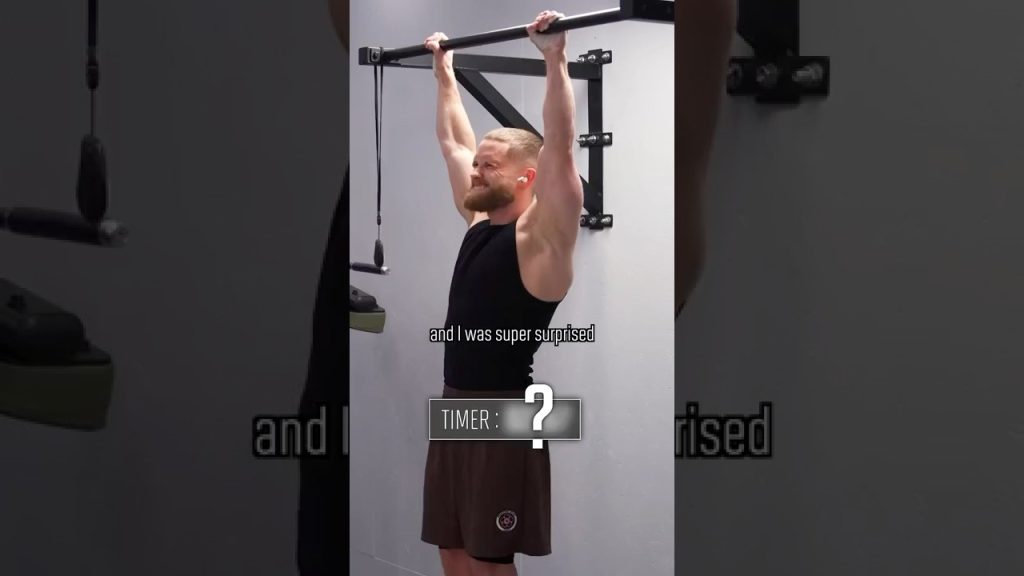
Video by Jeff Nippard on YouTube
There is a moment in every serious lifter’s training journey when they realize their grip is the weakest link in the chain. The deadlift stalls not because the legs or back gave out, but because the hands did. Research published in the Journal of Strength and Conditioning Research confirms that grip strength is a significant limiting factor in multi-joint pulling movements, and a growing body of epidemiological data links handgrip strength directly to all-cause mortality, cardiovascular health, and lean muscle mass retention as men age. The farmer’s carry — walking a set distance while holding heavy weights at your sides — is arguably the most underutilized tool for addressing every one of these concerns simultaneously.
It looks deceptively simple. Pick something heavy up. Walk with it. Put it down. But the physiological demands of a loaded carry are anything but simple. Your grip is working isometrically at near-maximal tension. Your core is bracing against rotational and lateral forces. Your traps, rhomboids, and shoulder stabilizers are firing continuously just to keep the weight from pulling your arms out of their sockets. Your legs and hips are generating locomotion under load. In a single movement, you are training grip endurance, anti-lateral flexion core stability, upper back hypertrophy, and cardiovascular conditioning at once — a combination no machine in any commercial gym can replicate.
Why Grip Strength Matters More Than You Think
The science on grip strength has become impossible to ignore. A landmark study published in The Lancet involving nearly 140,000 participants across 17 countries found that each 5 kg decrease in grip strength was associated with a 17% higher risk of cardiovascular mortality and a 16% higher risk of all-cause mortality — effects that were stronger predictors than systolic blood pressure. This is not a peripheral health metric. Grip strength is a systemic marker of musculoskeletal integrity, hormonal health, and biological age.
For men focused on fat loss and body recomposition, the connection runs even deeper. Research in the Journal of Cachexia, Sarcopenia and Muscle has established strong correlations between grip strength and total lean body mass, meaning that as muscle is lost — whether through caloric restriction, aging, or inactivity — grip strength declines proportionally. This makes grip testing a surprisingly accurate proxy for whether your muscle preservation strategies are actually working. Men using GLP-1 medications for weight loss, men in aggressive caloric deficits, or anyone prioritizing fat loss should pay close attention: rapid weight loss that strips muscle will show up in your grip before it shows up on a DEXA scan.
The farmer’s carry directly attacks this problem. Because the forearm flexors, hand intrinsics, and wrist stabilizers are under sustained tension throughout the movement, the carry trains grip endurance and strength simultaneously — something that standard barbell work with straps never accomplishes. Over time, this transfers to every pulling movement you do and creates real-world functional strength that carries over to performance, injury resistance, and quality of life.
How to Execute the Farmer’s Carry Correctly
The technical demands of the farmer’s carry are modest compared to a squat or deadlift, but executing it with intention separates those who get results from those who just walk around the gym looking tired. Start with the implement selection. Hex dumbbells, trap bar handles, dedicated farmer’s carry handles, kettlebells, or even heavy suitcases all work. Farmer’s carry handles with a longer handle allow for heavier loading and a more neutral wrist position, making them ideal for experienced trainees. For most men starting out, heavy dumbbells are perfectly effective and accessible in any gym setting.
To initiate the lift, hinge at the hips and deadlift the weights to a standing position — do not round the lower back or jerk the weight up. Once standing, your feet should be roughly hip-width apart, shoulders packed down and back (think: tuck your shoulder blades into your back pockets), chest tall, and chin neutral. Do not let the weights drift away from your body or allow your shoulders to shrug toward your ears. The grip itself should be full and deliberate — all four fingers and the thumb wrapping the handle, with the weight sitting in the palm rather than hanging off the fingers. Squeeze hard from the start and maintain that squeeze throughout the walk.
Your gait should be controlled and deliberate — short, quick steps with minimal trunk rotation. The temptation when fatigue sets in is to lean to one side or let the torso sway. Resist this. The anti-lateral flexion demand on your obliques and quadratus lumborum is a key training stimulus, and collapsing into it defeats the purpose. Walk in a straight line, turn carefully, and return. Distance and load will depend on your training goal. For grip strength development, research on isometric training adaptations supports heavier loads over shorter distances — think 20 to 30 meters at 60 to 80% of your bodyweight per hand. For conditioning and muscle endurance, lighter loads over longer distances — 40 to 60 meters — produce more metabolic stress and cardiovascular benefit. For general strength and hypertrophy, moderate loads at 40 to 50% bodyweight per hand for 3 to 5 sets of 30 to 40 meters fits the evidence on time-under-tension for trap and upper back development.
Programming the farmer’s carry is straightforward. It functions best as a finisher after primary strength work or as an active recovery movement on lighter training days. Three to four sets twice per week is sufficient for most men to see meaningful grip and muscle preservation results within four to six weeks. Progress by increasing load, distance, or reducing rest between sets. A simple progression model: add 5 to 10 pounds per hand every two weeks while maintaining technical integrity. When you can no longer complete the programmed distance without the weights pulling your spine into lateral flexion, you have found your working threshold — back off slightly and build back up.
Muscle Preservation, Metabolic Demand, and the Bigger Picture
One of the most compelling arguments for making the farmer’s carry a training staple is its muscle preservation effect during periods of caloric restriction. Loaded carries create significant mechanical tension in the traps, rhomboids, rear deltoids, forearms, and lateral core — all areas that respond well to time-under-tension stimulus. Studies on resistance training during caloric deficit consistently show that maintaining mechanical load on muscle tissue is the primary driver of lean mass retention, independent of protein intake alone. The farmer’s carry delivers that mechanical load in a time-efficient, low-skill-barrier format that almost any man can do regardless of training history.
The metabolic cost is also not trivial. Research on loaded locomotion shows elevated heart rate and oxygen consumption comparable to moderate-intensity cardio, meaning the carry simultaneously builds strength, preserves muscle, and burns calories — a combination that pure cardio or pure lifting rarely achieves in a single movement. For men who are time-constrained or simply want more return on their training investment, this matters enormously.
It is also worth noting that the farmer’s carry is exceptionally joint-friendly. Unlike heavy barbell pressing or loaded squats, the carry places minimal shear force on the spine and virtually no impact stress on the knees. For men managing old injuries, returning from a layoff, or simply aging into a more conservative training approach, the carry offers a high-stimulus, low-risk option that keeps them in the game long term.
The Takeaway
The farmer’s carry is not a trend or a novelty. It is one of the most functional, evidence-supported movements a man can add to his training — and one of the most neglected. Pick up something heavy, walk with it, and do it consistently. Your grip will get stronger, your upper back will thicken, your core will stabilize under real-world load, and your body will preserve the muscle it has built even through the leanest phases of a cut. The research supports it. The results speak for themselves. All you have to do is carry the weight.