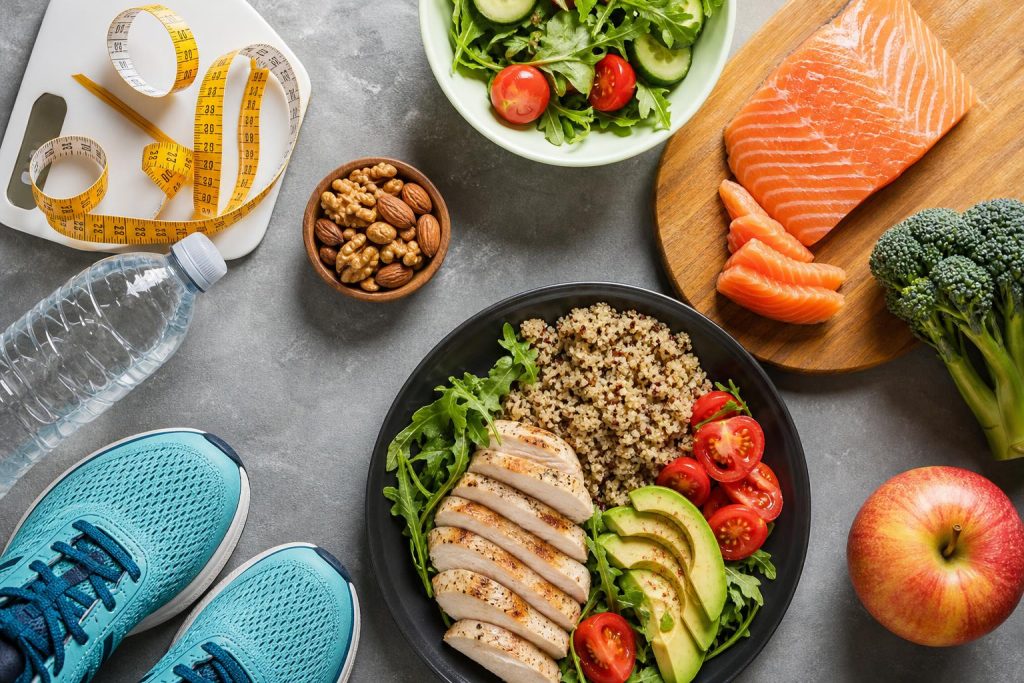
Here is a number that should give every man on semaglutide pause: up to 45% of the weight lost on GLP-1 receptor agonists like semaglutide can come from skeletal muscle, not fat. Let that sink in. You step on the scale, the number drops, you feel like you’re winning — but nearly half of what you lost could be the metabolically active, strength-generating, longevity-protecting tissue you actually want to keep. This isn’t a fringe concern buried in an obscure journal. It’s emerging as one of the most pressing clinical challenges in modern obesity medicine, and the research community is scrambling to address it.
GLP-1 medications have unquestionably transformed what’s possible in weight management. Semaglutide and tirzepatide consistently deliver 15–25% mean body weight reductions in clinical trials — numbers that rival bariatric surgery. But as a landmark 2024 paper in Metabolism: Clinical and Experimental made clear, over 25% of total weight lost from both surgery and pharmacotherapy typically comes from fat-free mass, including skeletal muscle — a consequence that is routinely overlooked and can impair metabolic health, reduce physical function, and increase the long-term risk of sarcopenic obesity. If you’re using semaglutide to get leaner and healthier, losing a quarter or more of your progress as muscle is not a side effect you can afford to ignore.
The good news is that muscle loss during GLP-1 therapy is not inevitable. It is modifiable. The strategies that protect lean mass during semaglutide treatment are the same ones that optimize body composition for any man serious about his health — resistance training, adequate protein, and smart supplementation — executed with a level of precision the situation demands.
Why Semaglutide Threatens Muscle Mass in the First Place
Understanding why GLP-1 medications promote muscle loss makes it easier to counter the effect strategically. The mechanism is multifactorial. Muscle loss with these drugs is driven by caloric restriction, anabolic resistance, and hormonal shifts — a convergence of forces that creates an environment where the body readily breaks down muscle for fuel while the appetite suppression effect of semaglutide simultaneously makes it harder to eat enough protein to stimulate muscle protein synthesis.
When you eat significantly less — which semaglutide ensures — your body enters a state of negative energy balance. This is exactly what you want for fat loss. But the body is opportunistic. In the absence of adequate caloric and protein intake, and without a strong anabolic stimulus like resistance training, muscle tissue becomes a convenient source of amino acids and glucose. The deeper the caloric deficit and the more sedentary the individual, the more aggressively this process unfolds. Older men face compounding risk. Anabolic resistance — the blunted muscle protein synthesis response to protein intake that naturally accompanies aging — means that even adequate dietary protein may not fully protect muscle in men over 50 without the addition of progressive resistance training.
At the molecular level, the myostatin-activin-follistatin system plays a central role in muscle and bone maintenance during weight loss. Myostatin and activins are proteins that promote muscle degradation, while follistatins act as their natural inhibitors. During prolonged caloric restriction, the balance tips in favor of myostatin and activin activity, accelerating muscle catabolism. This is why simply eating less and taking semaglutide — without any deliberate counter-strategy — is a recipe for arriving at your goal weight with far less muscle than you started with. And a leaner but weaker, metabolically compromised body is not the outcome anyone signs up for.
New preclinical research has added another dimension to this picture. A 2026 study published in JCI Insight found that semaglutide monotherapy in obese mice not only reduced lean mass and impaired muscle strength but also suppressed mitochondrial gene expression while elevating atrophy-related genes in skeletal muscle. This suggests that GLP-1 medications may actively disrupt mitochondrial function in muscle tissue — which would explain accelerated muscle fatigue, reduced exercise capacity, and impaired recovery that some semaglutide users report. It also points toward a specific therapeutic target: interventions that support mitochondrial health and ketone metabolism in muscle may directly blunt this effect.
The Evidence-Based Arsenal: What Actually Works
Resistance training is not optional for men on semaglutide. It is the intervention with the strongest evidence base and the most direct mechanism for preserving lean mass during pharmacologic weight loss. Resistance training is currently the primary recommended strategy for preserving skeletal muscle and functional capacity during pharmacologic weight loss, and the mechanistic rationale is straightforward: progressive mechanical loading stimulates muscle protein synthesis, counteracts anabolic resistance, and sends a clear biological signal that muscle tissue is needed and should be preserved rather than catabolized. Three to four sessions per week of compound, progressive resistance work — squats, deadlifts, rows, presses — is not a recommendation to work up to eventually. It is the non-negotiable baseline if you want your weight loss to come from fat.
Protein intake is the second pillar, and the targets are higher than most men assume. A 2025 expert consensus published in Obesity Pillars synthesizing evidence from a global working group recommended protein intakes exceeding 1.2 grams per kilogram of body weight per day, distributed evenly across meals, combined with structured resistance and aerobic activity to preserve lean mass during GLP-1 therapy. For a 200-pound man, that translates to roughly 109 grams of protein minimum per day — a number that becomes genuinely difficult to hit when semaglutide is suppressing appetite and reducing total food intake. This is why protein must be prioritized at every meal rather than treated as an afterthought. Lean meats, eggs, Greek yogurt, cottage cheese, and protein shakes are not just convenient — they are clinically necessary tools when appetite suppression is working against your lean mass targets. Distributing protein evenly across three or four meals — rather than consuming the majority at dinner — also appears to optimize muscle protein synthesis by repeatedly stimulating anabolic signaling throughout the day.
On the supplementation front, the most compelling emerging data concerns ketone esters. The same 2026 JCI Insight study that identified semaglutide’s effects on mitochondrial gene expression also tested a solution: co-administration of a beta-hydroxybutyrate-generating ketone ester alongside semaglutide. The results were striking. Ketone ester co-treatment preserved skeletal muscle mass and function without compromising fat loss, and mechanistically, it prevented semaglutide-induced disruption of mitochondrial and atrophy-related gene expression in muscle tissue. This is preclinical data — mouse models, not human trials — and that limitation deserves honest acknowledgment. But the mechanistic coherence is compelling: if semaglutide impairs ketone metabolism and mitochondrial function in muscle, providing exogenous ketones as an alternative fuel source and mitochondrial substrate could logically blunt that effect. Ketone esters are commercially available, though expensive, and the human translational data doesn’t yet exist. Men who want to explore this approach should do so with eyes open to the current state of the evidence.
Creatine monohydrate is a far more established option with decades of human trial data. While no large randomized controlled trial has specifically studied creatine in semaglutide users, its mechanisms — increasing phosphocreatine availability, supporting muscle protein synthesis, improving training performance — are directly relevant to the muscle preservation challenge. It is inexpensive, well-tolerated, and works best in the context of consistent resistance training. Three to five grams per day is the standard evidence-based dose, and there is no meaningful reason not to include it if muscle preservation is a priority.
Looking further down the pipeline, pharmaceutical companies are actively developing drugs that target the myostatin-activin pathway specifically to address lean mass loss during GLP-1 therapy. Compounds like Bimagrumab, Trevogrumab, and Garetosmab — which inhibit activin and myostatin signaling — have demonstrated promise in preventing muscle loss while promoting fat loss, and when combined with GLP-1 receptor agonists, may allow patients to achieve fat loss while simultaneously preserving or even increasing muscle mass. These are not yet available for clinical use, but they represent the next wave of what sophisticated obesity pharmacotherapy may look like — and they validate the biological importance of protecting lean mass as a primary treatment goal rather than an afterthought.
The broader paradigm shift being called for across the research literature is worth internalizing. As one 2026 review in the European Heart Journal framed it, obesity treatment needs to move away from a focus on total weight loss and toward high-quality weight loss that preserves or enhances muscle mass — optimizing body composition and supporting durable cardiovascular risk reduction. This is not just a philosophical preference. Muscle mass is metabolically active tissue that drives resting energy expenditure, improves insulin sensitivity, supports bone density, and is one of the strongest predictors of long-term health and longevity in men. Losing it in pursuit of a lower scale number is trading a long-term asset for a short-term metric.
The Takeaway
Semaglutide is a powerful tool. But a tool used without a strategy can cause as much damage as it prevents. The men who will get the most from GLP-1 therapy — better body composition, preserved strength, improved metabolic health — are the ones who treat the medication as one component of a broader plan rather than a standalone solution. That means showing up to the gym consistently and lifting progressively heavy. It means hitting protein targets deliberately and distributing intake across the day. It means monitoring body composition — not just body weight — to understand what you’re actually losing. And it means staying ahead of the research as emerging interventions like ketone esters and myostatin inhibitors move through the clinical pipeline.
The scale going down is not the goal. The goal is a body that is leaner, stronger, and more metabolically resilient than the one you started with. That outcome requires active muscle preservation — and the evidence to achieve it already exists.
Scientific References
-
Stefanakis, Kokkorakis, Mantzoros et al. (2024).
The impact of weight loss on fat-free mass, muscle, bone and hematopoiesis health: Implications for emerging pharmacotherapies aiming at fat reduction and lean mass preservation..
Metabolism: clinical and experimental.
View on PubMed → -
Abuetabh, Schmidt, Naganuma et al. (2026).
Semaglutide-induced loss of skeletal muscle mass is blunted by co-administration of ketone esters..
JCI insight.
View on PubMed → -
Ullah, Tamanna et al. (2025).
Obesity: Clinical Impact, Pathophysiology, Complications, and Modern Innovations in Therapeutic Strategies..
Medicines (Basel, Switzerland).
View on PubMed → -
Khan, Dawood, Handelsman et al. (2026).
Fat, muscle, and anti-obesity medications in cardiovascular disease prevention..
European heart journal.
View on PubMed → -
Noronha, Van Gaal, Neeland et al. (2025).
Optimizing GLP-1 therapies for obesity and diabetes management..
Obesity pillars.
View on PubMed →