Here is a number worth sitting with: in clinical trials, semaglutide — the active ingredient in Ozempic and Wegovy — produced an average body weight reduction of 11.4% compared to placebo across five randomized controlled trials involving more than 4,400 participants. That figure, drawn from a 2024 comprehensive review of obesity medications published in JAMA, represents some of the most dramatic pharmacological weight loss data ever recorded. So it is understandable that men starting semaglutide would wonder: do I actually need to change what I eat? Can the drug do the heavy lifting on its own?
It is a fair question, and the honest answer is more nuanced than either the medication’s most enthusiastic advocates or its harshest critics tend to admit. Ozempic — prescribed off-label for weight loss, with Wegovy being the FDA-approved weight management formulation of semaglutide — does produce significant weight reduction through biological mechanisms that operate independently of willpower or conscious dietary restriction. But the research consistently shows that the men who get the most out of it are the ones who combine it with deliberate lifestyle changes. Understanding why that is true requires looking at what semaglutide actually does in the body, and what it does not do.
How Semaglutide Drives Weight Loss — With or Without Dieting
Semaglutide is a glucagon-like peptide-1 receptor agonist, which means it mimics a gut hormone your body naturally releases after eating. GLP-1 acts on the hypothalamus — the brain’s appetite-control center — to suppress hunger signals, slow gastric emptying, and increase feelings of satiety. When you inject semaglutide, you are essentially turning up the volume on a biological signal that tells your brain you have had enough food. For many men, this translates into eating significantly less without consciously trying to restrict calories. The drug is doing the appetite suppression for you.
This is why the question of “weight loss without diet” is somewhat misleading. Most men on semaglutide are eating less — they just are not following a formal diet plan. The medication manufactures a caloric deficit by reducing appetite and slowing how quickly food leaves the stomach. You feel full faster, stay full longer, and naturally eat fewer calories across the day. In that sense, the drug is doing the dietary work for you at a hormonal level, even if you never count a calorie or follow a meal plan.
The placebo data illustrates this clearly. In the STEP 3 randomized clinical trial, published in JAMA in 2021, participants receiving semaglutide alongside intensive behavioral therapy lost an average of 16% of their body weight over 68 weeks. The placebo group, receiving the same counseling and diet structure, lost 5.7%. The medication contributed roughly 10 additional percentage points of weight loss on top of already substantial lifestyle intervention. That gap reflects the drug’s pharmacological effect — the appetite suppression and hormonal signaling that occurs regardless of how strictly participants followed dietary advice.
Even against another GLP-1 medication, semaglutide’s biological potency stands out. The STEP 8 trial published in JAMA in 2022 compared once-weekly semaglutide 2.4 mg against once-daily liraglutide 3.0 mg in adults with overweight or obesity. Both groups received counseling for diet and physical activity. Semaglutide produced 15.8% mean weight loss versus 6.4% with liraglutide — a difference of 9.4 percentage points. More than half of semaglutide users lost at least 15% of their body weight, and 38.5% lost 20% or more. These are outcomes that rival bariatric surgery in some cases, achieved primarily through the drug’s biological mechanisms rather than heroic dietary discipline.
What You Leave on the Table Without Dietary Support
The biological case for semaglutide’s standalone efficacy is real. But the research equally makes the case that diet quality — not just caloric quantity — matters enormously for what kind of weight you lose and how your body responds long-term.
The issue that deserves far more attention in conversations about GLP-1 medications is muscle loss. A 2024 narrative review in Diabetes Care examined body composition changes with incretin-based therapies including semaglutide and tirzepatide. The findings were sobering: these medications cause rapid and significant loss of lean mass — approximately 10% of weight lost, or around 6 kilograms of muscle — comparable, the authors noted, to a decade or more of aging. When you are losing 15% of your body weight and a meaningful portion of that is muscle, you are not just getting leaner. You are potentially getting weaker, slowing your metabolism, and setting yourself up for accelerated fat regain if you ever stop the medication.
This is where diet quality — specifically adequate protein intake — becomes non-negotiable, not for the sake of maximizing weight loss on the scale, but for preserving what matters most about your body composition. Men on semaglutide who are eating less but not prioritizing protein are at real risk of losing the muscle they have spent years building or that their metabolic health depends on. A general target of 1.6 to 2.2 grams of protein per kilogram of body weight per day, drawn from resistance training literature, gives the body the raw material to hold onto lean tissue even in a significant caloric deficit. Without deliberate attention to this, the medication’s appetite suppression can inadvertently drive you toward inadequate protein as overall food volume drops.
Diet quality also shapes the cardiometabolic benefits that make GLP-1 medications more than just a weight loss tool. The STEP 9 trial published in the New England Journal of Medicine in 2024 demonstrated that semaglutide produced a 13.7% reduction in body weight alongside dramatic improvements in knee osteoarthritis pain scores over 68 weeks — participants saw their pain scores drop by 41.7 points compared to 27.5 points in the placebo group. What is worth noting is that these participants also received counseling on physical activity and a reduced-calorie diet. The drug was the primary driver, but the lifestyle context still mattered for maximizing outcomes. Men eating ultra-processed, inflammatory diets may blunt some of these broader health benefits even if the scale moves in the right direction.
There is also the matter of what happens when the medication stops. Semaglutide suppresses appetite pharmacologically, and when that suppression is removed, appetite returns — often with intensity. Men who used the drug’s effects as a window to build better eating habits, retrain their relationship with food, and establish protein-forward, whole-food dietary patterns are far better positioned to maintain their results. Men who simply ate less while on the drug, without changing the quality or structure of their diet, tend to regain weight more rapidly after discontinuation.
Building the Stack That Actually Works
If you are using semaglutide — or considering it — the most useful mental model is to think of the medication as creating a biological opportunity rather than solving the problem on its own. The drug gives you a window of reduced appetite, improved insulin signaling, and hormonal support for fat loss. What you do inside that window determines whether you emerge leaner, stronger, and metabolically healthier, or simply lighter with less muscle and no new habits.
Resistance training deserves particular emphasis here because the research is unambiguous about its role. The same 2024 Diabetes Care review found that supervised resistance exercise programs lasting more than ten weeks produced approximately 3 kilograms of lean mass gain and strength improvements of around 25% in men and women. Pairing that kind of training stimulus with semaglutide-supported fat loss creates the conditions for genuine body recomposition — losing fat while preserving or even building muscle — rather than just weight loss. This is not a minor distinction. Muscle mass is the primary driver of resting metabolic rate, glucose disposal, and long-term metabolic health. Protecting it while losing fat is the goal, and resistance training is the primary tool to get there.
For men not on GLP-1 medications, this same framework applies to any approach to fat loss. Whether you are running a caloric deficit through traditional dieting, intermittent fasting, or a structured program, the combination of adequate protein intake and consistent resistance training is what separates fat loss from weight loss. The lesson from the GLP-1 literature is not specific to the drug — it is a reminder that how you lose weight matters as much as how much you lose.
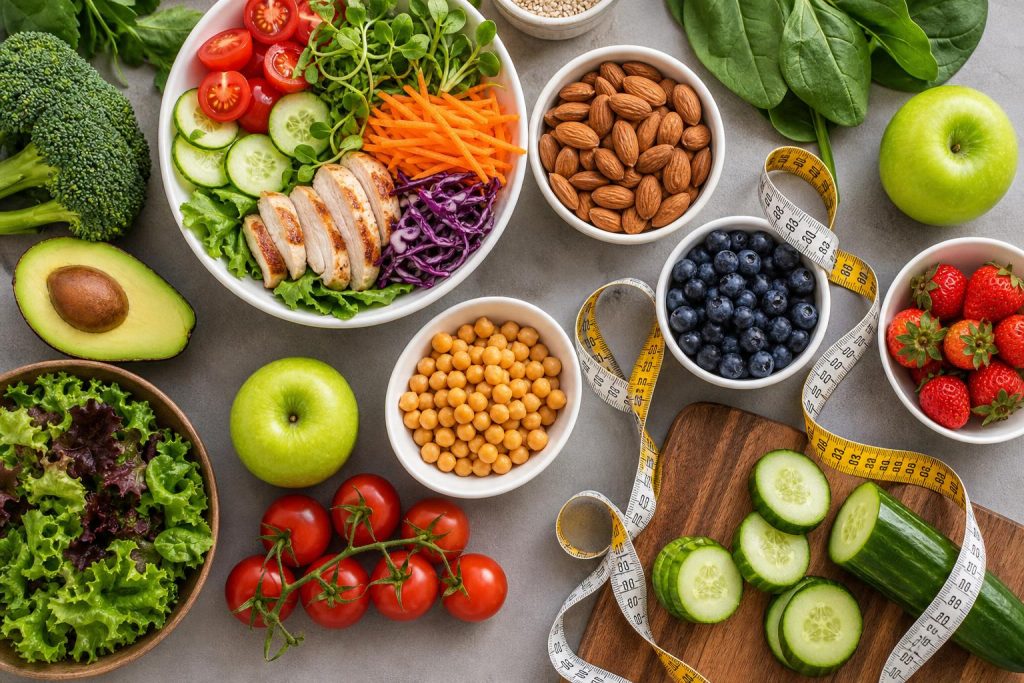
Practically speaking, men on semaglutide should focus their reduced caloric intake on protein-dense whole foods — lean meats, eggs, Greek yogurt, cottage cheese, legumes — and treat the appetite suppression as leverage to eliminate the ultra-processed, calorie-dense foods that drove weight gain in the first place rather than as permission to eat less of everything indiscriminately. Lifting three to four times per week with progressive overload, even at moderate intensity, provides the training stimulus needed to counteract medication-driven lean mass losses. And tracking protein — even loosely — during the early months on the drug helps ensure that the reduction in appetite does not translate into inadequate muscle support.
The Takeaway
Ozempic and semaglutide do drive meaningful weight loss through mechanisms that do not require formal dieting. The biology is real, the clinical evidence is substantial, and dismissing the drug’s pharmacological power would be inaccurate. But “weight loss without diet” is not the same as “weight loss without consequences for muscle, metabolism, and long-term outcomes.” The men getting the best results from semaglutide are not white-knuckling restrictive meal plans — but they are eating more protein than they were before, lifting weights regularly, and using the drug’s appetite suppression to build the habits and body composition that last beyond the prescription. The medication is a powerful tool. Using it without the foundation of sound nutrition and resistance training is like installing a performance engine in a car with bald tires. The power is there — but you will not get where you are going as safely or as fast.
Scientific References
-
Rubino, Greenway, Khalid et al. (2022).
Effect of Weekly Subcutaneous Semaglutide vs Daily Liraglutide on Body Weight in Adults With Overweight or Obesity Without Diabetes: The STEP 8 Randomized Clinical Trial..
JAMA.
View on PubMed → -
Gudzune, Kushner et al. (2024).
Medications for Obesity: A Review..
JAMA.
View on PubMed → -
Locatelli, Costa, Haynes et al. (2024).
Incretin-Based Weight Loss Pharmacotherapy: Can Resistance Exercise Optimize Changes in Body Composition?.
Diabetes care.
View on PubMed → -
Bliddal, Bays, Czernichow et al. (2024).
Once-Weekly Semaglutide in Persons with Obesity and Knee Osteoarthritis..
The New England journal of medicine.
View on PubMed → -
Wadden, Bailey, Billings et al. (2021).
Effect of Subcutaneous Semaglutide vs Placebo as an Adjunct to Intensive Behavioral Therapy on Body Weight in Adults With Overweight or Obesity: The STEP 3 Randomized Clinical Trial..
JAMA.
View on PubMed →