When researchers analyzed the STEP 1 trial data, they found something that should concern any man using semaglutide for weight loss: participants lost an average of 14.9% of their body weight, but a meaningful portion of those losses came from lean mass, not just fat. That’s not a side effect buried in the footnotes — it’s a physiological reality of aggressive caloric restriction, whether you’re on a GLP-1 medication, running a traditional deficit, or doing anything else that drives the scale down fast. The question isn’t whether to worry about muscle loss. The question is what you’re going to do about it.
The answer, supported by decades of research, is resistance training — specifically a structured, progressive program that signals your body to hold onto the muscle it has even as body weight drops. For men on semaglutide, the challenge is that appetite suppression can dramatically reduce caloric and protein intake, creating a dual threat: less fuel coming in and a hormonal environment that can tip toward catabolism. But this challenge isn’t unique to GLP-1 users. Any man in a sustained caloric deficit faces the same biological pressure. The solution is the same across the board: lift with intention, eat enough protein, and give your body a reason to preserve lean tissue.
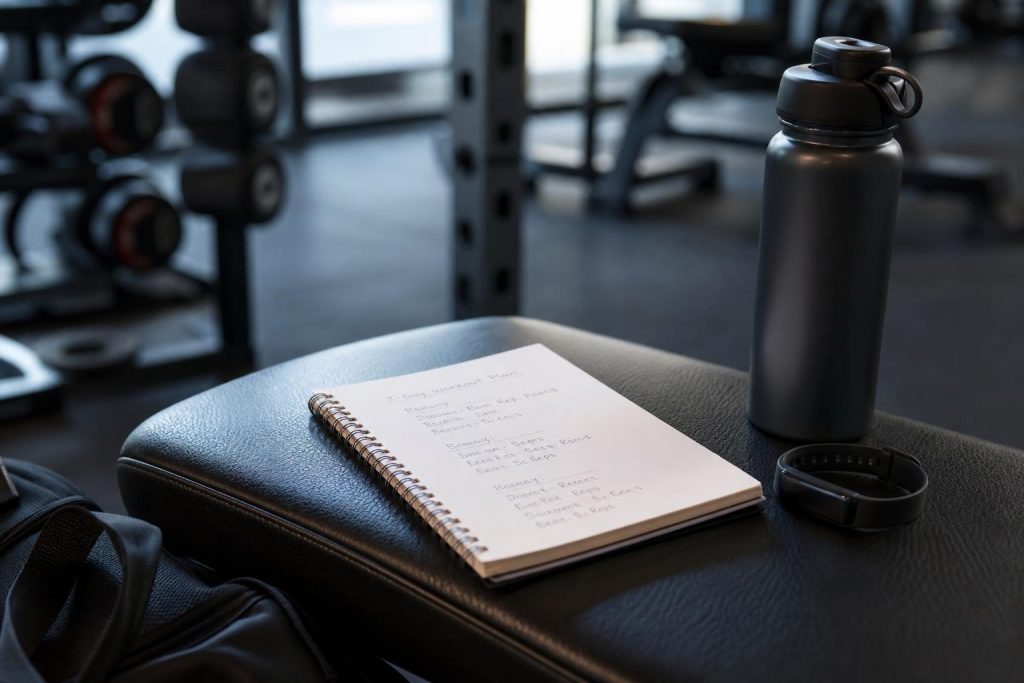
A three-day-per-week resistance training program hits the sweet spot between training stimulus and recovery, particularly for men managing appetite suppression, reduced caloric availability, or simply busy lives. Research published in the Journal of Strength and Conditioning Research confirms that training each muscle group twice per week is sufficient to drive hypertrophy and preservation, and a well-designed three-day split can accomplish exactly that with smart exercise selection.
How to Structure the Three Days
The most effective approach for a three-day program is a push-pull-legs format or a full-body rotation, depending on your experience level. For most men focused on preservation during a fat-loss phase, full-body training three days per week — Monday, Wednesday, Friday, for example — delivers the highest frequency stimulus per muscle group with adequate recovery between sessions. Each session should include one primary compound movement for the lower body, one for the upper body push pattern, and one for the upper body pull pattern, followed by targeted accessory work.
Day one might open with barbell back squats or goblet squats, paired with a dumbbell bench press and a cable row or dumbbell row. Accessory work should address the areas most prone to atrophy during caloric restriction: the glutes, hamstrings, and upper back. Day two shifts the primary lifts — Romanian deadlifts anchor the lower body work, overhead pressing drives the push pattern, and pull-ups or lat pulldowns handle the pull. Day three completes the week with front squats or leg press, incline dumbbell pressing, and a chest-supported row variation. Sets should run three to four per compound movement, rep ranges between six and twelve, and rest periods between 90 seconds and two minutes. This isn’t a circuit — rest matters for maintaining load and mechanical tension, which is the primary driver of muscle protein synthesis.
Mechanical tension — the force generated against resistance — is the dominant stimulus for muscle protein synthesis, which means you need to be moving challenging weight, not just going through the motions with light dumbbells. Men who drop their training intensity during a weight-loss phase often lose more muscle than those who maintain load, even when caloric intake is similar. Preserve the weight on the bar as long as possible. If you can only complete four reps of a set programmed for eight, you’re not recovered — reduce the load by ten percent and rebuild. If you’re completing all reps with two or more reps in reserve, it’s time to add weight.
Protein Is the Non-Negotiable Variable
No training program survives a protein deficit. A 2017 meta-analysis in the British Journal of Sports Medicine found that protein intakes beyond 1.62 grams per kilogram of body weight per day did not further augment muscle gains, but getting to that threshold — roughly 0.73 grams per pound of bodyweight — is critical during any fat-loss phase. For men on semaglutide, suppressed appetite makes hitting protein targets genuinely difficult. The practical solution is to prioritize protein at every meal before anything else, rely on high-protein, low-volume foods like Greek yogurt, eggs, cottage cheese, canned fish, and protein shakes, and treat protein as a non-negotiable even on days when overall caloric intake is low.
Leucine, the branched-chain amino acid most responsible for triggering muscle protein synthesis, should be a consideration when planning meals. Research suggests that a leucine threshold of approximately 2-3 grams per meal is required to maximally stimulate muscle protein synthesis — an amount easily reached by consuming 30 grams or more of high-quality protein per sitting. Spreading protein intake across three to four meals rather than concentrating it in one or two keeps that anabolic signal firing throughout the day.
Progressive overload — the practice of systematically increasing the demand placed on the musculoskeletal system over time — remains the organizing principle of any effective resistance program. Track your lifts. Write them down or log them in an app. If you’re not adding weight, reps, or sets over time, your body has no reason to maintain or build muscle. This is true whether you’re on a GLP-1, running a keto deficit, or simply trying to recompose your body through clean eating and lifting. The biology doesn’t change based on the method — it responds to stimulus.
The Takeaway
Muscle loss during weight loss isn’t inevitable — it’s a failure of programming. A three-day resistance training program built around compound movements, progressive overload, and adequate protein intake gives your body the signals it needs to hold onto lean tissue while dropping fat. For men on semaglutide, that protein target requires deliberate effort when appetite is suppressed. For men in a traditional deficit, it requires the same discipline. The physiology is shared. The solution is shared. Get under the bar, hit your protein, and make your body work to justify keeping what it’s built.