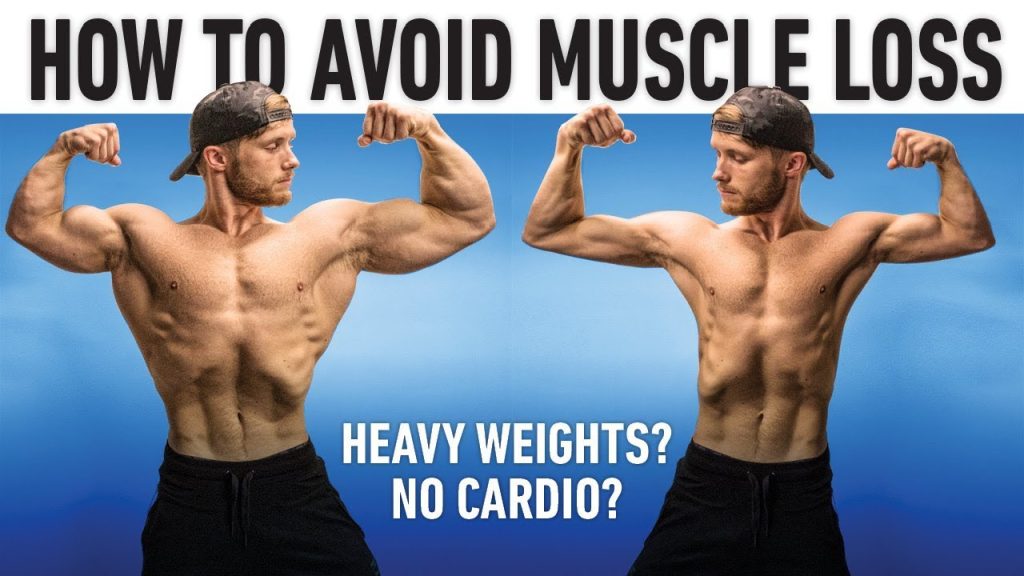
Video by Jeff Nippard on YouTube
When semaglutide and tirzepatide started reshaping the weight loss landscape, most of the conversation centered on appetite suppression and blood sugar control. What got buried — and what’s now becoming impossible to ignore — is what happens to your body composition if you’re losing weight on a GLP-1 without a deliberate exercise strategy to back it up. The short answer: you may be losing the wrong kind of weight.
A 2026 case report published in AACE Endocrinology and Diabetes tracked two older women on GLP-1 receptor agonists — one on tirzepatide, one on semaglutide — and found dramatically different outcomes in lean mass. The less physically active patient, who also tracked her food less carefully, experienced a substantial reduction in lean mass alongside modest fat loss. The more active patient showed the opposite: significant fat loss with a modest gain in lean mass. Same class of drug. Radically different body composition outcomes. The difference, the authors concluded, came down to exercise and dietary discipline. That single case report, while anecdotal, points to a principle that the broader research is now confirming: GLP-1 medications don’t operate in a vacuum. How you move while on them determines what you actually lose — and what you keep.
Why Exercise Isn’t Optional When You’re on a GLP-1
GLP-1 receptor agonists work primarily by slowing gastric emptying, reducing appetite, and improving insulin sensitivity. The result is a meaningful caloric deficit — often without the user consciously engineering one. That deficit is powerful for driving the scale down, but a caloric deficit alone doesn’t discriminate. Without a muscle-preserving stimulus, your body will cannibalize lean tissue alongside fat. This is a well-established physiological reality, and it’s amplified in older adults, but it applies to men of any age who are sedentary while on these medications.
A 2025 study published in the American Journal of Health Promotion examined the synergistic effects of combining physical activity with GLP-1 receptor agonist therapy and found that the combination produced measurably better outcomes across multiple health markers — including blood glucose control, blood pressure, lipid management, body composition, and overall cardiometabolic risk — compared to medication alone. The authors were direct: healthcare professionals need to routinely prescribe physical activity concurrently with GLP-1 medications. Not as a nice-to-have, but as a co-intervention. This framing matters. It means if you’re on a GLP-1 and not training, you’re running the medication at a fraction of its potential.
The cardiovascular angle compounds this further. The 2019 ACC/AHA Guidelines on Primary Prevention of Cardiovascular Disease are unambiguous: promoting a healthy lifestyle — including regular physical activity — is the most important modifiable factor for preventing atherosclerotic vascular disease, heart failure, and atrial fibrillation. GLP-1 medications do improve cardiovascular outcomes independently, but they work best when layered on top of a foundation of movement. Medication and lifestyle are not interchangeable — they’re additive.
How to Restructure Your Training on a GLP-1
If you’re starting or currently using a GLP-1 medication, the primary shift your exercise routine needs is a reorientation toward resistance training. Most men on these medications are focused almost entirely on the number moving down on the scale. That’s understandable, but it’s incomplete thinking. The goal should be fat loss with muscle preservation — and the only reliable way to preserve muscle in a caloric deficit is to give those muscles a reason to stay. Heavy compound lifts — squats, deadlifts, rows, presses — send that signal more effectively than any cardio protocol.
The AACE case report noted that the patient with the better body composition outcome was more physically active, suggesting that even general activity levels influence how GLP-1 medications partition weight loss between fat and lean tissue. For practical purposes, this means you should be resistance training at minimum two to three times per week, with a focus on progressive overload — gradually increasing the load or volume over time to sustain the muscle-building stimulus. If you’re new to lifting, this doesn’t have to be complicated. Three full-body sessions per week built around compound movements is sufficient to preserve lean mass during a GLP-1-driven deficit.
Protein intake runs parallel to this. Exercise without adequate protein is a diminished strategy. GLP-1 medications reduce appetite significantly, which often means protein intake drops alongside overall calories. This is a specific risk to be aware of. Aiming for 0.7 to 1 gram of protein per pound of bodyweight — distributed across meals — gives your muscles the raw material to resist breakdown. If appetite suppression makes hitting those numbers difficult, protein shakes can bridge the gap without requiring a large volume of food.
Cardio still has a role, but it should be secondary. Zone 2 cardio — steady-state aerobic work at a moderate intensity — supports cardiovascular health and metabolic efficiency, and complements rather than competes with resistance training when managed correctly. Three to four sessions per week of 20 to 40 minutes, either on off days or as a finisher after lifting, is a reasonable structure. What to avoid is excessive cardio that deepens the caloric deficit so aggressively that muscle loss accelerates. On a GLP-1, your appetite is already suppressed — you don’t need to burn an additional 800 calories on the treadmill every day. More isn’t better here. Smarter is better.
Recovery also becomes more important when training in a caloric deficit. GLP-1 users are often under-eating relative to their training load, sometimes without realizing it. Sleep quality, stress management, and deload periods matter more, not less, in this context. If performance in the gym is declining week over week — weights are dropping, sets feel harder than they should — that’s a signal the deficit is too aggressive or recovery is insufficient. It’s worth tracking both food intake and training performance closely during GLP-1 therapy to identify these patterns early.
For men who are not on GLP-1 medications but are pursuing fat loss through diet and training alone, this framework applies equally. The physiological principles don’t change based on how you’re achieving your caloric deficit. Whether appetite suppression comes from a medication, a structured meal plan, or intermittent fasting, the muscle preservation imperative remains the same: resistance train, prioritize protein, and don’t let cardio cannibalize your recovery capacity.
The Takeaway
GLP-1 medications are a legitimate and powerful tool for weight loss, but they’re not a replacement for training — they’re an amplifier of it. The men who get the best results on these medications are the ones who treat the drug as the appetite management layer and exercise as the body composition layer. Without both working together, you risk losing weight in a way that leaves you smaller but not stronger, lighter but not leaner in the way that actually matters for long-term health. Restructure your training to prioritize resistance work, protect your protein intake even when you’re not hungry, and treat cardiovascular exercise as a complement rather than the centerpiece. That combination — medication or not — is what drives outcomes worth keeping.
Scientific References
-
Arnett, Blumenthal, Albert et al. (2019).
2019 ACC/AHA Guideline on the Primary Prevention of Cardiovascular Disease: Executive Summary: A Report of the American College of Cardiology/American Heart Association Task Force on Clinical Practice Guidelines..
Circulation.
View on PubMed → -
Ablah, Imboden, Zendell et al. (2025).
Benefits of Supplementing a GLP-1 Type Medication With Physical Activity..
American journal of health promotion : AJHP.
View on PubMed → -
Morrow, Hawkins, Griffiths et al. (2026).
Impact of weight-loss interventions on psoriasis severity: A systematic review and meta-analysis..
Journal of the European Academy of Dermatology and Venereology : JEADV.
View on PubMed → -
Mohammed, Mishra et al. (2026).
Variable Effects of Glucagon Like Peptide-1 Receptor Agonists on Body Composition in Older Women..
AACE endocrinology and diabetes.
View on PubMed → -
Toma, Buckley, Early et al. (2026).
Geriatric Pharmacotherapy Case Series: GLP-1 RA for Weight Management in Older Adults..
The Senior care pharmacist.
View on PubMed →