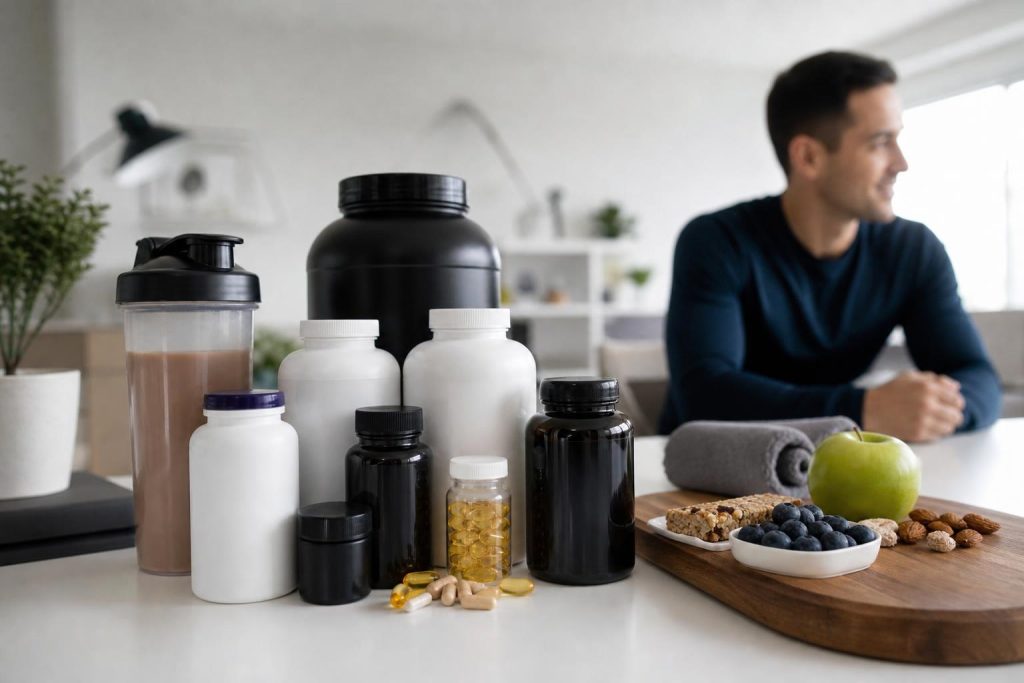
Semaglutide — the active compound in Ozempic and Wegovy — has become one of the most researched metabolic drugs in modern medicine. It curbs appetite, improves insulin sensitivity, and drives meaningful fat loss. But here’s what most prescribing conversations miss: the same mechanisms that make GLP-1 receptor agonists so effective can quietly deplete key micronutrients, impair absorption, and create nutritional gaps that blunt your results and your long-term health. Getting your vitamins right while on Ozempic isn’t optional maintenance — it’s an essential part of the protocol.
The science here is clear and growing. A 2022 systematic review and network meta-analysis published in Frontiers in Medicine evaluated GLP-1 receptor agonists — including semaglutide specifically — alongside vitamin E, pioglitazone, and SGLT2 inhibitors in patients with non-alcoholic fatty liver disease. Semaglutide ranked highest in reducing ALT and AST liver enzymes, while vitamin E independently improved resolution of NASH. The two compounds address metabolic dysfunction through complementary but distinct mechanisms. That single finding tells you something important: even when a medication is doing heavy lifting metabolically, targeted nutrients still carry their own measurable value.
Why Ozempic Creates Nutritional Blind Spots
When semaglutide slows gastric emptying and significantly reduces food intake, you’re not just eating less — you’re absorbing less. Protein intake often drops first, but micronutrient intake follows closely behind. Men on GLP-1 medications frequently under-consume calories to the point where hitting daily targets for B12, magnesium, zinc, vitamin D, and iron becomes nearly impossible through food alone — even on a clean diet. Add the nausea and food aversions common in the first few months of treatment, and the deficit deepens further.
There’s also the muscle preservation question. GLP-1-driven weight loss is fast by dietary standards, and rapid weight loss — regardless of the mechanism — accelerates muscle catabolism when protein and supporting micronutrients are insufficient. Men pursuing body recomposition, not just weight loss on the scale, need to think about their vitamin and mineral status the same way they think about their training load: strategically.
Vitamin B12 deserves particular attention. It plays a central role in energy metabolism, red blood cell formation, and neurological function. Reduced stomach acid output — a side effect of slowed gastric motility — impairs B12 absorption from food. Over months, this can manifest as fatigue, brain fog, and peripheral tingling that men often misattribute to other causes. A sublingual or methylcobalamin form of B12 bypasses the gastric absorption step and is worth prioritizing on any GLP-1 protocol.
Vitamin D and magnesium function as a paired system that most men are already deficient in before starting a GLP-1 medication. Vitamin D supports testosterone production, immune regulation, and insulin sensitivity — all of which matter enormously during active fat loss. Magnesium is required for over 300 enzymatic reactions, including glucose metabolism and muscle protein synthesis. Eating less means getting less of both. A quality vitamin D3 supplement paired with magnesium glycinate or malate is a practical, low-cost intervention with meaningful downstream effects on how you feel and perform.
Vitamin E, Liver Health, and the Semaglutide Connection
The liver finding from the Frontiers in Medicine meta-analysis is worth unpacking further. Semaglutide showed strong performance in reducing liver enzyme markers associated with hepatic inflammation — but vitamin E, specifically in its tocotrienol and tocopherol forms, independently contributed to NASH resolution through a different pathway: its role as a lipid-soluble antioxidant that reduces oxidative stress in liver tissue. For men with any degree of metabolic dysfunction, fatty liver, or elevated liver enzymes — a population that significantly overlaps with GLP-1 users — the combination of semaglutide’s anti-inflammatory action and vitamin E’s antioxidant support represents a clinically relevant pairing.
This doesn’t mean megadosing vitamin E. The research clusters around 400–800 IU of mixed tocopherols or tocotrienols daily for liver-related outcomes. Higher doses over long periods have shown mixed safety data in other contexts, so matching the dose ranges used in the studies that produced positive findings is the sensible approach. Look for a full-spectrum vitamin E product rather than isolated alpha-tocopherol, which is what most budget supplements use and what the research suggests is the less effective form.
Zinc rounds out the short list of must-address micronutrients. It’s central to testosterone synthesis, immune function, and wound healing — and it’s one of the first minerals to drop when caloric intake falls. Men who lift weights while on Ozempic and want to preserve lean mass have a meaningful reason to monitor and supplement zinc, particularly if red meat intake has declined as appetite shrinks. Zinc bisglycinate or zinc picolinate offer better absorption than cheaper oxide forms. Keep doses in the 15–30mg range to avoid displacing copper over time.
Building a Practical Supplement Stack
The goal isn’t to replace food — it’s to close the gaps that reduced food intake inevitably creates. A high-quality multivitamin formulated for men covers the baseline and removes decision fatigue. From there, build on top: vitamin D3 with K2 (to direct calcium appropriately), magnesium glycinate in the evening for sleep and muscle recovery, methylated B-complex to support the B12 and folate pathways, and a full-spectrum vitamin E if liver health is a concern. If your diet has drifted low in red meat or shellfish, add zinc. If you’re training seriously, creatine monohydrate — while not a vitamin — supports muscle energy systems in a way that directly counteracts the muscle loss risk of rapid weight reduction.
None of these supplements replace the fundamentals. Prioritizing protein at every meal, staying consistent with resistance training, and sleeping seven to nine hours per night will do more for your body composition than any capsule. But when your food volume is reduced by design — whether by medication, discipline, or structured dieting — micronutrient support becomes the margin between good results and great ones.
The Takeaway
Ozempic is a powerful tool. But a tool used without proper maintenance wears down faster than it should. The research is clear that vitamin E contributes meaningfully to liver health outcomes even in the presence of effective GLP-1 therapy, and the nutritional gaps created by reduced appetite are real and measurable. Men who take their supplementation as seriously as their medication — covering B12, vitamin D, magnesium, zinc, and vitamin E at minimum — are building a foundation that supports the medication’s effects rather than leaving them to work in a depleted system. That’s not overcaution. That’s how you make the investment count.
Scientific References
-
Luo, Wei, Cai et al. (2022).
Efficacy of Off-Label Therapy for Non-alcoholic Fatty Liver Disease in Improving Non-invasive and Invasive Biomarkers: A Systematic Review and Network Meta-Analysis of Randomized Controlled Trials..
Frontiers in medicine.
View on PubMed →