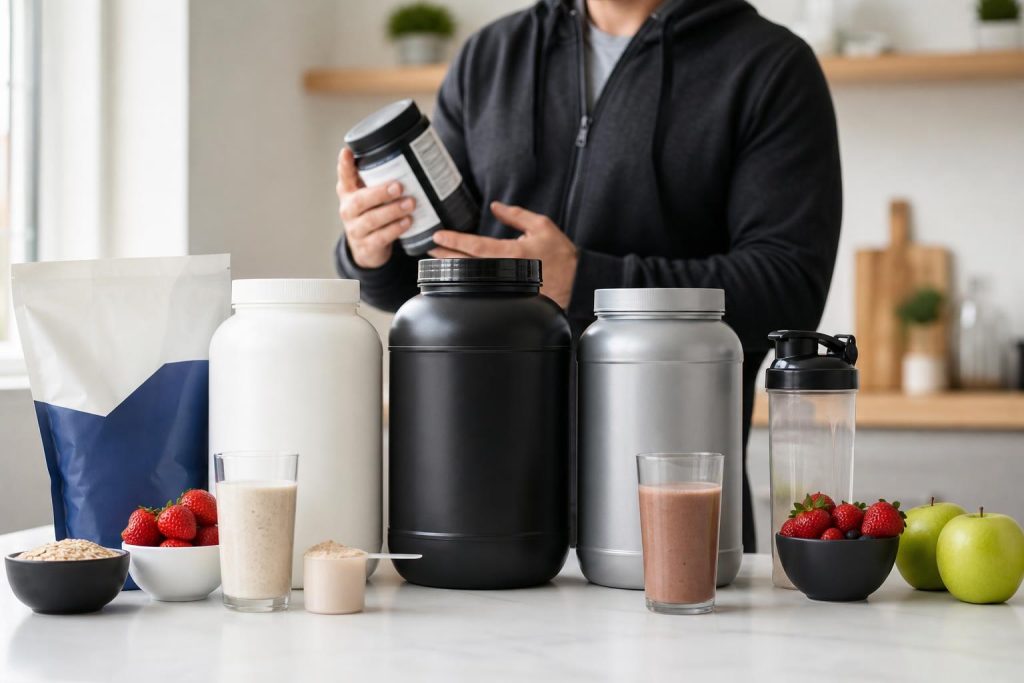
Here is a number worth sitting with: in clinical trials of semaglutide, participants lost an average of 15% of their body weight — but a significant portion of that loss came from lean mass, not just fat. A 2022 analysis published in Diabetes, Obesity and Metabolism found that roughly 40% of weight lost on GLP-1 receptor agonists can be lean tissue when dietary protein and resistance training are inadequate. For any man trying to come out of a cut looking and performing better — whether he’s using Ozempic, eating in a caloric deficit the old-fashioned way, or grinding through a recomposition — that statistic should change how he thinks about protein supplementation.
The conversation around protein powder often gets reduced to gym-bro culture: shake after workout, done. But the science is considerably more nuanced, and considerably more urgent, than that. Protein isn’t a supplement in the casual sense of the word. It’s a nutritional foundation. And when appetite suppression — from any source, whether a medication, a high-volume eating strategy, or simply aggressive dieting — reduces your total food intake, protein becomes the macro you can least afford to shortchange.
This guide cuts through the noise to give you the evidence-based answer on which protein supplements actually work, which are best suited for men with blunted appetites or sensitive digestion, and how to use them intelligently inside a broader nutrition strategy built around real food first.
Why Protein Becomes Critical When Calories Drop
The physiological case for higher protein during a caloric deficit is well-established. A landmark study in the American Journal of Clinical Nutrition demonstrated that increasing protein to 1.2–1.6 grams per kilogram of body weight during energy restriction significantly preserved lean mass compared to lower protein intakes — even without changes to training. The mechanism comes down to muscle protein synthesis: when calories are low, the body faces pressure to cannibalize lean tissue for gluconeogenesis. Adequate protein, particularly leucine-rich sources, blunts that response by stimulating the mTOR pathway and signaling that the body has sufficient amino acid availability.
For men on semaglutide or tirzepatide, the challenge compounds quickly. These medications are remarkably effective at suppressing appetite — that’s their mechanism — but a suppressed appetite doesn’t distinguish between a bag of chips and a chicken breast. When you simply don’t feel hungry, protein intake tends to fall first because high-protein whole foods often require more effort and appetite to consume. The result, without intentional planning, is exactly the lean mass loss scenario the clinical data warns about.
But this isn’t exclusively a GLP-1 issue. Any man in a hard caloric deficit — whether cutting for a competition, trying to lose 30 pounds before summer, or aging through the natural decline in anabolic hormones after 40 — faces the same muscle preservation math. Research on older men specifically shows that protein requirements for muscle preservation increase with age, making supplementation not a convenience but a functional necessity for men over 45 who are also managing lower overall food volume.
The practical target for most active men in a deficit lands between 1.6 and 2.2 grams of protein per kilogram of body weight. For a 200-pound (91 kg) man, that’s roughly 145 to 200 grams daily. Hitting that number on reduced food intake — or on days when appetite is nearly absent — is where a well-chosen protein supplement earns its place on the shelf.
How to Choose the Right Protein Supplement
Not all protein supplements are equally suited to the physiological demands of a cut, and the differences between them are meaningful enough to influence your choice based on your specific situation.
Whey protein isolate remains the gold standard for muscle protein synthesis per gram, and the research behind it is extensive. A 2012 study in the Journal of the International Society of Sports Nutrition confirmed that whey’s superior leucine content — approximately 10–11% by weight — drives a faster and more pronounced anabolic response compared to casein or soy. Whey isolate, specifically, is the better choice over concentrate for men dealing with digestive sensitivity or reduced gastric capacity. The extra filtration step removes most lactose and fat, leaving a cleaner 90%+ protein product that sits considerably lighter in the stomach. For men on Ozempic or similar medications who already deal with nausea or delayed gastric emptying, this is not a minor point — a concentrate that causes bloating or discomfort will get abandoned, defeating its purpose entirely.
Casein protein occupies a different but complementary role. Because it forms a gel in the stomach and digests slowly over four to seven hours, it provides a sustained amino acid release that makes it well-suited to periods of extended fasting — including the long overnight window or the hours during the day when medication-induced appetite suppression makes eating feel impossible. The original Boirie et al. study established this slow-release kinetics model clearly, and follow-up research has confirmed casein’s advantage for overnight muscle protein balance. A practical application: if you know you won’t be hungry until mid-afternoon, a casein shake in the morning provides coverage during the gap without forcing you to eat when your body is actively resisting it.
For men who avoid dairy — whether by preference, intolerance, or philosophy — the plant protein landscape has improved substantially. The critical issue with most plant proteins is incomplete amino acid profiles and lower leucine density. Rice protein and pea protein individually are both incomplete, but research published in 2020 in Nutrients demonstrated that a 70/30 blend of pea and rice protein delivers an amino acid profile comparable to whey, including sufficient leucine to meaningfully stimulate muscle protein synthesis. When shopping plant proteins, blends outperform single-source options nearly every time — if the label shows only one plant protein source, look harder.
Collagen protein deserves a specific mention because it has gained enormous marketing traction in the men’s health space, often positioned alongside muscle preservation claims. The biochemical reality is more limited. Collagen is low in leucine and virtually devoid of tryptophan, making it a poor driver of muscle protein synthesis on its own. Research from 2019 confirmed collagen can support connective tissue repair when combined with vitamin C and used strategically around training, but it should not be counted toward your daily muscle-building protein target. If you’re using a collagen supplement, treat it as an add-on, not a substitute.
When evaluating any protein product, three practical criteria separate quality options from marketing noise. First, look for third-party testing certification — NSF Certified for Sport or Informed Sport are the two most credible, ensuring the product contains what it claims and isn’t contaminated with banned substances or heavy metals. Second, examine the protein per serving versus the total serving weight: a 35-gram scoop delivering only 20 grams of protein suggests significant filler. Third, scrutinize the sweetener profile. Artificial sweeteners like sucralose and acesulfame potassium are widely used in protein powders, and while the evidence is still evolving, some men report — and some research suggests — that they may influence gut microbiome composition unfavorably with heavy habitual use. Opting for a stevia-sweetened or minimally sweetened option is a low-cost hedge.
Building Protein Strategy Around Real Food First
A supplement is, by definition, supplemental. The men who get the best outcomes from protein powders are the ones who treat them as a tactical tool layered onto a solid whole-food foundation — not as a dietary shortcut. Whole food protein sources like eggs, Greek yogurt, cottage cheese, lean beef, canned salmon, and tempeh deliver protein alongside vitamins, minerals, fatty acids, and bioactive compounds that no isolate replicates. The research on food matrix effects consistently shows that protein from whole foods is processed differently — and in some contexts more beneficially — than isolated protein sources alone.
The practical protocol that works for most men, regardless of whether they’re using a GLP-1 medication or not, starts with anchoring at least two high-protein whole food meals daily, then using a supplement strategically to fill the gaps. Morning shake when appetite is low? Valid. Post-training isolate to capitalize on the post-exercise anabolic window? Supported by evidence. Casein before bed on nights when dinner was light? Smart. What doesn’t work is relying entirely on powder because cooking feels like effort — that path leads to micronutrient deficiencies that eventually undermine the very performance and body composition outcomes you’re chasing.
Timing matters, but not in the mystical sense supplement marketing implies. A 2013 meta-analysis in the Journal of the International Society of Sports Nutrition found that total daily protein intake was a stronger predictor of muscle gain than timing alone. That said, distributing protein across three to four meals or shakes — rather than eating 150 grams in a single sitting — appears to optimize muscle protein synthesis rates throughout the day. Aim for roughly 30 to 40 grams of high-quality protein per feeding, with leucine content as the key variable driving the anabolic response at each meal.
The Takeaway
Whether you’re managing appetite on Ozempic, grinding through a traditional cut, or simply trying to hold onto hard-earned muscle as the years accumulate, protein supplementation works when it’s used intelligently. Whey isolate earns the top spot for most men: fast-digesting, leucine-dense, easy on sensitive stomachs, and backed by decades of research. Casein fills the slow-release niche. A quality pea-rice blend handles the plant-based case. What matters most, though, is hitting your daily protein target consistently — not the brand on the label. Pick a third-party tested product, build it into a whole-food-first strategy, pair it with resistance training, and the muscle math starts working in your favor regardless of how you got here.