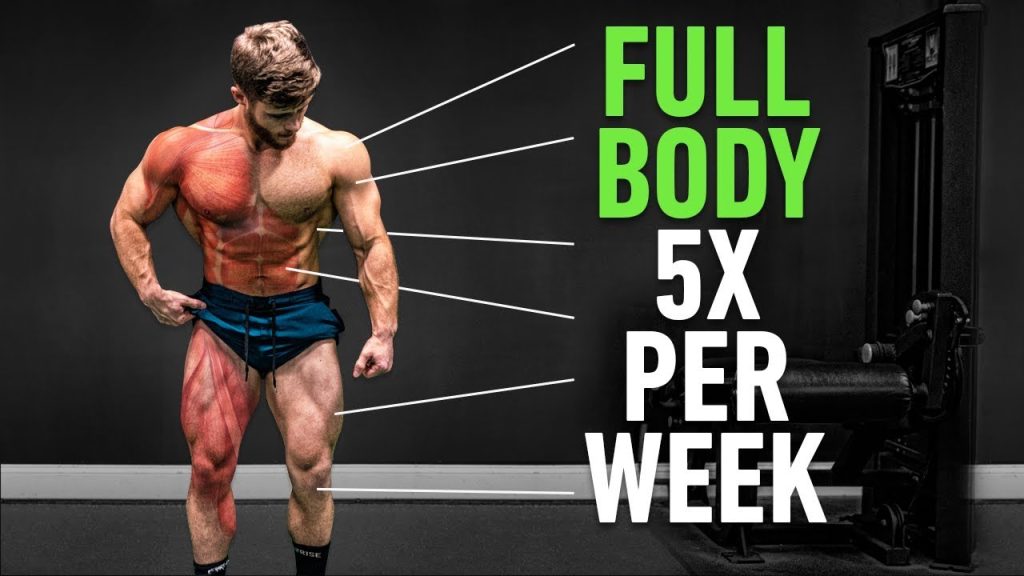
Video by Jeff Nippard on YouTube
Four weeks sounds like a marketing promise, and in many cases it is. But here’s what the research actually tells us: meaningful body recomposition — losing fat while preserving or building lean mass — can produce visible results in as little as 28 days when the right training variables are dialed in. A 2017 meta-analysis published in the Journal of Strength and Conditioning Research found that resistance training significantly reduces body fat percentage while preserving fat-free mass, even over short intervention periods. The catch? You have to train with purpose, eat with precision, and recover like it’s your job.
Getting “ripped” is ultimately a body fat problem, not a muscle problem. Most men already have more lean mass than they realize — it’s just buried under a layer of subcutaneous and visceral fat that softens definition. The four-week goal, then, isn’t to build a new physique from scratch. It’s to aggressively strip fat while creating enough mechanical tension in the muscle to signal your body to hold onto what it’s built. That dual objective shapes everything about how you should train.
The Training Framework That Actually Works
If you walk into this month doing steady-state cardio and three sets of machine work, you’ll get modest results at best. The evidence points clearly toward a hybrid approach: compound resistance training combined with metabolic conditioning. Research published in Obesity Reviews confirms that combined aerobic and resistance exercise produces superior fat loss outcomes compared to either modality alone — and does so without the muscle wasting that pure cardio can cause in a calorie deficit.
Structure your week around four training days: two focused on heavy compound lifting and two on metabolic resistance training (MRT). Heavy days — think squats, deadlifts, bench press, rows, and overhead pressing — should be performed in the 4 to 6 rep range with 80 to 85 percent of your one-rep max. This intensity is non-negotiable. A landmark study in the Journal of Applied Physiology demonstrated that higher training loads are necessary to maximize muscle protein synthesis signaling, which means lifting heavy is what tells your body to keep — and potentially build — muscle even as calories drop.
Your metabolic days look different. These sessions use moderate loads (50 to 65 percent of max), shorter rest periods of 30 to 45 seconds, and circuit-style sequencing that keeps your heart rate elevated for 25 to 35 minutes. Exercises like goblet squats, kettlebell swings, dumbbell Romanian deadlifts, push-ups, and cable rows performed back-to-back create a significant EPOC effect — excess post-exercise oxygen consumption — that extends calorie burn for hours after training. Studies measuring EPOC after high-intensity resistance circuits have shown elevated metabolic rate persisting up to 38 hours post-session, making this a uniquely powerful fat-loss tool.
Add one or two low-intensity steady-state cardio sessions — a 30 to 45-minute incline walk or zone 2 bike ride — on your off days. These don’t crush recovery but do contribute meaningfully to your weekly caloric deficit. Avoid going harder on these days. The goal is active recovery and fat oxidation, not additional stress on a system that’s already being pushed hard four days a week.
Nutrition Is Where the Ripped Physique Is Actually Built
No training program outworks a poor diet, and four weeks gives you almost zero margin for error. The core principle is straightforward: create a moderate calorie deficit — roughly 300 to 500 calories below your total daily energy expenditure — while hitting a high protein target. Research from the American Journal of Clinical Nutrition demonstrated that men in a caloric deficit consuming 2.4 grams of protein per kilogram of body weight lost significantly more fat and retained more lean mass than those consuming the standard recommended intake. In practical terms, if you weigh 185 pounds, you’re aiming for roughly 200 grams of protein per day.
Carbohydrate timing matters more during this phase than at any other point. Concentrate the majority of your carbohydrate intake around your training sessions — before and after — and reduce them during sedentary parts of your day. This approach, sometimes called carbohydrate periodization, helps preserve glycogen for performance while minimizing insulin-driven fat storage during low-activity hours. Your fat intake should be moderate and consistent, coming from sources like eggs, olive oil, avocado, and fatty fish — all of which support hormonal health and satiety during a cut.
Sleep and stress management deserve mention here because they directly govern the hormonal environment your training either benefits from or fights against. A study published in the Annals of Internal Medicine found that reducing sleep from 8.5 to 5.5 hours during a calorie-restricted period cut the proportion of weight lost as fat by 55 percent, while simultaneously increasing muscle loss. Getting less than seven hours of sleep when you’re training hard and eating in a deficit essentially works against every goal you have. Cortisol rises, testosterone falls, and fat loss stalls.
The Takeaway
Four weeks won’t give you the body of a competitive physique athlete. But it can absolutely deliver a leaner, harder, more defined version of you — provided you respect what the science actually demands. Train heavy twice a week to protect and stimulate muscle. Train metabolically twice a week to amplify fat loss. Eat enough protein to cover your muscle at every meal. Sleep like it’s part of your program because it is. Men who apply this framework consistently for 28 days routinely see two to four pounds of measurable fat loss alongside visible improvements in muscle definition — and those are results you can build on indefinitely. The four weeks isn’t the destination. It’s the proof of concept.