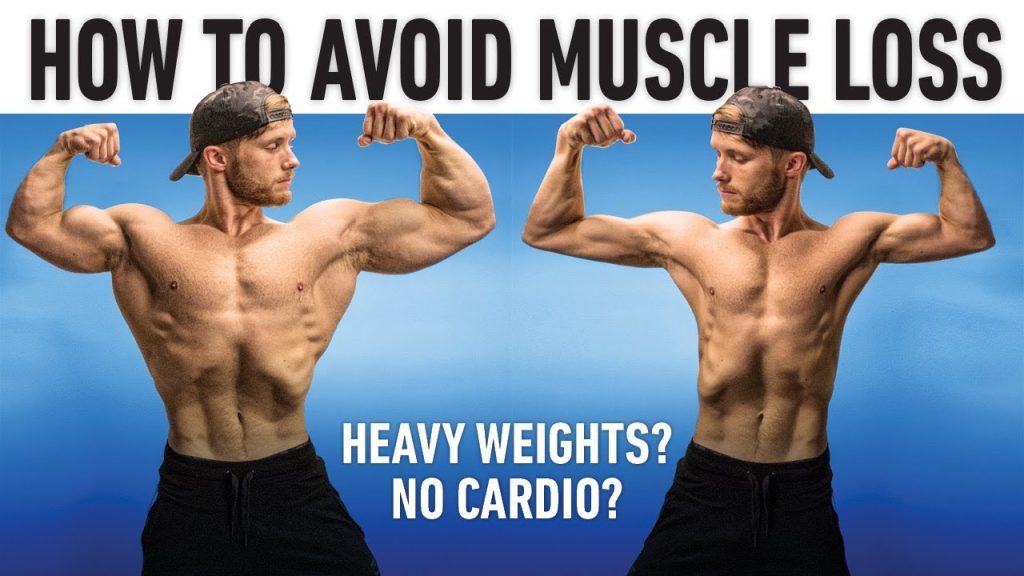
Video by Jeff Nippard on YouTube
Here is a number worth sitting with: in a landmark 68-week trial published in the New England Journal of Medicine, participants using semaglutide lost an average of 14.9% of their body weight — but roughly 40% of that weight loss came from lean mass, not fat. That means a man who drops 40 pounds on a GLP-1 medication could be losing 16 pounds of muscle along the way. For metabolic health, longevity, and the way you look when the weight finally comes off, that is a problem — and it is entirely preventable.
Body recomposition — the simultaneous loss of fat and preservation or gain of muscle — is the real goal. GLP-1 receptor agonists like semaglutide (Ozempic, Wegovy) and tirzepatide (Mounjaro, Zepbound) create a powerful caloric deficit through appetite suppression, which accelerates fat loss. But without a deliberate training and nutrition strategy built around that deficit, the body has no reason to protect its muscle tissue. The 12-week program outlined here is designed to solve exactly that problem: use the appetite-suppressing power of GLP-1 therapy as a lever while giving your body every biological signal it needs to hold onto — and ideally build — lean mass.
The Science of Muscle Preservation Under Caloric Restriction
When calories drop sharply, the body enters a catabolic state. Muscle protein is expensive to maintain, and the body is efficient — it will break down lean tissue for energy if given the opportunity. Research consistently shows that high protein intake combined with resistance training is the most effective strategy for preserving lean mass during a caloric deficit. This is not optional when you are using a GLP-1 medication. The suppressed appetite that makes these drugs so effective also makes it dangerously easy to under-eat protein without realizing it.
The current evidence-based target for men in a fat loss phase sits between 0.7 and 1.0 grams of protein per pound of bodyweight per day. For a 220-pound man, that is 154 to 220 grams of protein daily — a number that feels impossible when your appetite is blunted to near nothing. This is why the nutritional architecture of this program is built around protein first, at every meal, before anything else lands on the plate. Eggs, Greek yogurt, cottage cheese, lean beef, chicken breast, salmon, and protein shakes are not supplements to the diet — they are the foundation of it.
Resistance training is the other half of the equation. A meta-analysis in the Journal of Applied Physiology found that progressive resistance exercise preserves significantly more lean mass than aerobic exercise alone during weight loss. The program runs on a three-day-per-week full-body lifting structure in weeks one through four, transitioning to a four-day upper-lower split in weeks five through twelve. The progression is intentional — early weeks prioritize movement quality and connective tissue adaptation, later weeks push volume and intensity to stimulate hypertrophy even while calories remain controlled.
The 12-Week Structure: Training, Nutrition, and GLP-1 Timing
Weeks one through four function as the base-building phase. Three full-body sessions per week built around compound movements — squat variations, hip hinges, horizontal and vertical pressing and pulling — performed in the three-to-four-set, eight-to-twelve-rep range. Caloric intake should be set at roughly 500 calories below your total daily energy expenditure, with protein anchored at a minimum of 0.8 grams per pound of bodyweight. For men on GLP-1 medications, this phase is also about learning to eat intentionally despite reduced hunger signals. Small, high-protein meals spaced every three to four hours will keep muscle protein synthesis elevated throughout the day even when overall volume feels low.
Weeks five through eight introduce the upper-lower split: two upper-body days and two lower-body days per week. Volume increases modestly — four to five sets per major movement pattern — and intensity climbs toward the six-to-ten-rep range for primary lifts. Research from the Journal of Strength and Conditioning Research confirms that progressive overload — increasing weight or volume over time — is the primary driver of hypertrophic adaptation, regardless of whether the trainee is in a caloric surplus or deficit. This means you can build or maintain muscle while losing fat, provided the training stimulus is sufficient and protein intake is adequate.
Weeks nine through twelve represent the intensification phase. The four-day split continues, but load targets increase and rest periods shorten slightly to elevate training density. Cardio — if included — should remain low-intensity steady-state to minimize muscle catabolism. A 20-to-30-minute walk on non-lifting days is sufficient and supports insulin sensitivity without meaningfully elevating cortisol. Studies show that excess cortisol from overtraining directly inhibits muscle protein synthesis and accelerates fat storage, which is the last outcome you want after 12 weeks of disciplined work.
For men using GLP-1 medications, the injection timing relative to training is less critical than most assume — but scheduling your largest protein feeding within two hours post-workout is non-negotiable. Even with suppressed appetite, a post-training protein bolus of 30 to 40 grams directly supports muscle protein synthesis at the window when it matters most. A high-quality whey isolate shake or a solid whole-food meal both work. The key is consistency, not perfection.
Sleep and recovery deserve equal billing. A study published in the Annals of Internal Medicine found that when dieters slept 5.5 hours versus 8.5 hours, 70% of their weight loss came from lean mass rather than fat. Seven to nine hours of quality sleep is not a lifestyle luxury — it is a performance requirement that directly determines whether your caloric deficit eats muscle or fat.
What This Means For You
GLP-1 medications are a legitimate and powerful tool for men who need them. But they are an accelerant, not a program. Without structured resistance training and deliberate protein intake, they will help you become a smaller, weaker version of yourself. With the right 12-week framework built around compound lifting, protein-forward nutrition, and adequate recovery, they become a genuine metabolic advantage — one that lets you enter a significant caloric deficit while still sending your body clear signals to preserve the muscle you have built or intend to build. At week twelve, the number on the scale matters far less than the ratio of what you have lost. Make sure it is fat.