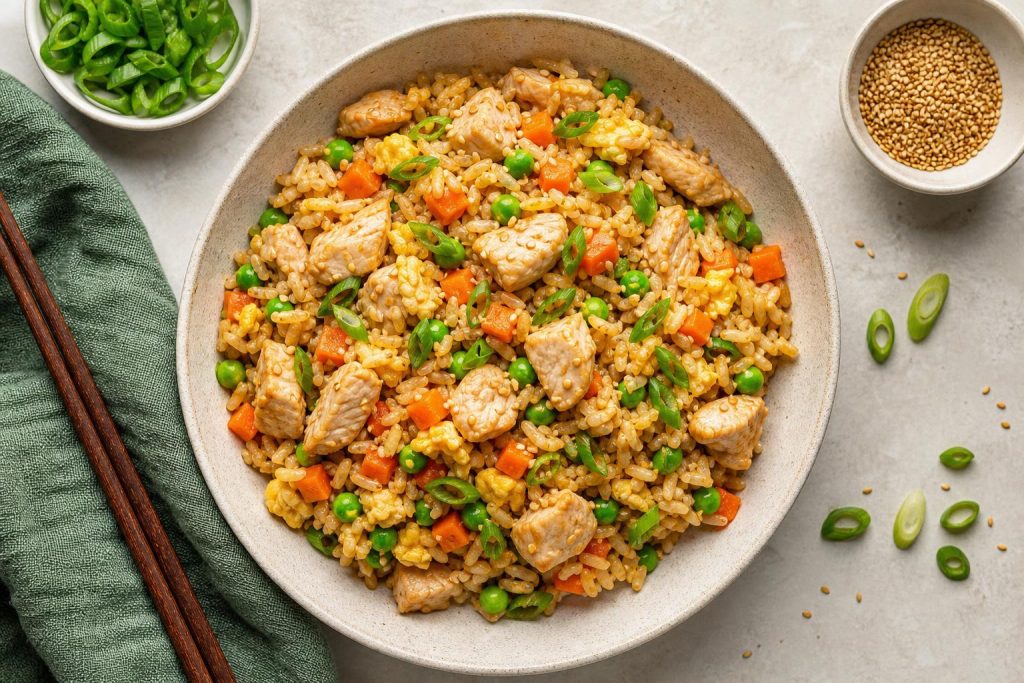
High-Protein Chicken Fried Rice: 42g Protein Per Serving
Chicken fried rice sits at an interesting intersection for men optimizing body composition: it’s satisfying, versatile, and can be engineered to deliver serious protein without excess calories. Most restaurant versions and frozen meals fall short on protein while loading up on refined carbs and oil. This recipe fixes that.
By using a high protein-to-calorie ratio and strategic ingredient choices, you’ll get a meal that keeps you full, preserves muscle during fat loss phases, and tastes better than most frozen alternatives.
Why This Recipe Works for Men’s Body Composition
Standard fried rice recipes rely on oil, white rice, and minimal protein. This version uses:
- Lean chicken breast as the primary protein source
- Cauliflower rice blended with small amounts of brown rice for texture and micronutrients without excess carbs
- Egg whites for additional protein density
- Minimal oil with high heat for flavor without caloric bloat
- Vegetable density for satiety and micronutrient support
Ingredients (Serves 2)
- 1 lb boneless, skinless chicken breast, cut into small cubes
- 2 cups riced cauliflower (fresh or frozen)
- 1/2 cup cooked brown rice (cooled)
- 4 large egg whites
- 1 cup broccoli florets, chopped small
- 1/2 cup diced bell peppers (any color)
- 1/3 cup diced onion
- 2 cloves garlic, minced
- 2 tbsp low-sodium soy sauce
- 1 tbsp sesame oil
- 1 tsp ginger, minced
- 2 tsp avocado oil
- 1/4 tsp white pepper
- Green onions for garnish (optional)
Step-by-Step Instructions
Step 1: Prep the Protein
Season chicken cubes with white pepper and a pinch of salt. Heat 1 tsp avocado oil in a large wok or skillet over medium-high heat. Cook chicken for 6-8 minutes, stirring occasionally, until no pink remains and edges are lightly browned. Transfer to a plate.
Step 2: Cook the Vegetables
Add remaining 1 tsp avocado oil to the same wok. Add onion and garlic, cook for 1 minute until fragrant. Add broccoli and bell peppers, stir-fry for 3-4 minutes until slightly softened but still crisp.
Step 3: Add Rice and Cauliflower
Push vegetables to the side. Add cauliflower rice and brown rice to the center of the wok. Break up any clumps and stir-fry for 2-3 minutes, ensuring even heating. Mix with vegetables.
Step 4: Build Richness with Eggs
Push everything to the sides of the wok, creating a well in the center. Pour sesame oil into the center, then add egg whites. Scramble lightly for 30 seconds, then fold into the rice mixture and stir-fry for 1-2 minutes until cooked through.
Step 5: Finish
Return chicken to the wok. Add ginger and soy sauce. Toss everything for 1-2 minutes until fully incorporated and heated through. Taste and adjust seasoning. Garnish with green onions if desired.
Macro Breakdown Per Serving
- Calories: 385
- Protein: 42g
- Carbohydrates: 28g
- Fat: 11g
- Fiber: 4g
- Protein-to-Calorie Ratio: 44%
This macro profile supports fat loss while preserving muscle mass, and delivers exceptional satiety relative to calorie content.
Pro Tips for Meal Prep Success
Batch Cook for the Week: Double or triple the recipe and portion into glass containers. This meal stores well for 4-5 days in the refrigerator. Reheat in a skillet over medium heat with a splash of water to restore texture.
Customize for Your Goals: For a fat loss phase, keep portions to one serving (385 cal). For a muscle-building phase, increase to 1.5 servings and add an extra egg white. For maintenance, add 1/4 cup additional brown rice per serving.
Frozen Storage Option: Portion into freezer bags and freeze up to 2 months. Thaw overnight in the fridge or reheat directly in a skillet from frozen, adding 2-3 minutes to cook time.
Vegetable Swaps: Frozen mixed vegetables work equally well and reduce prep time. Snap peas, carrots, and green beans are excellent alternatives to the vegetables listed.
Protein Variation: Swap chicken for lean ground turkey (93/7), white fish, or even lean ground beef. Macros remain similar at equivalent protein weights.
Condiment Strategy: Store hot sauce, low-sodium soy sauce, and sriracha separately so you can adjust flavor without adding sodium to the base recipe.
Final Thoughts
This high-protein fried rice delivers restaurant-quality taste without the caloric excess that derails body composition goals. It’s a legitimate frozen meal replacement that you control completely—superior nutrition, better macros, and a fraction of the sodium of commercial frozen options. Make it Sunday, eat it all week.
Inspired by content from Eat This Not That (https://www.eatthis.com/best-frozen-chicken-fried-rice-meals/)