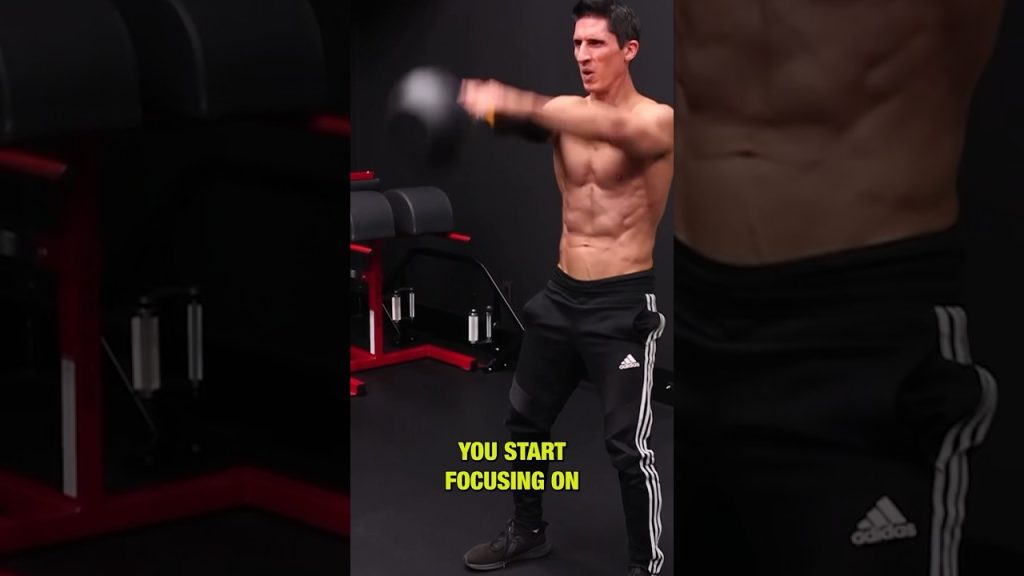
Video by AthleanX on YouTube
Most men underestimate how much muscle they lose during a caloric deficit — and most training programs do nothing to stop it. Research published in Obesity Reviews found that without resistance training, up to 25% of weight lost during a diet can come from lean muscle mass — a metabolic disaster that slows your metabolism, reduces strength, and leaves you looking softer than when you started. The solution isn’t more cardio. It’s loading a barbell — or better yet, a kettlebell — and squatting.
The goblet squat is one of the most underrated tools in that fight. It trains the quads, glutes, hamstrings, core, and upper back simultaneously, demands no spotter, is self-correcting for form errors, and is scalable from complete beginner to seasoned lifter. Whether you’re cutting aggressively, eating at maintenance, or just trying to move better and hold on to the muscle you’ve built over years, this movement belongs in your program.
Why the Goblet Squat Works So Well for Body Composition
The goblet squat was popularized by strength coach Dan John as a teaching tool for squat mechanics, but its value extends far beyond coaching cues. Holding the weight anteriorly — at chest height in front of the body — forces a more upright torso than a traditional back squat, which reduces shear stress on the lower back while increasing demand on the anterior core. Studies on anterior load positioning demonstrate significantly greater trunk muscle activation compared to posterior loading in squat variations, making the goblet squat a rare movement that trains legs and core in the same breath.
From a body composition standpoint, compound movements that recruit large amounts of muscle tissue are irreplaceable during a cut. Research in the Journal of Strength and Conditioning Research consistently shows that multi-joint resistance exercise preserves lean mass during hypocaloric periods more effectively than isolation work or aerobic exercise alone. The goblet squat checks every box: it recruits the largest muscle groups in the body, elevates post-exercise oxygen consumption, stimulates hormonal responses linked to muscle protein synthesis, and it’s accessible enough that men can train it hard even when caloric intake is lower and energy is reduced.
There’s also the hormonal angle. Heavy lower-body compound movements stimulate a meaningful acute testosterone and growth hormone response. Classic research from Medicine & Science in Sports & Exercise demonstrated that compound lower-body exercises like squats produce significantly greater acute anabolic hormone responses than single-joint exercises — an advantage that accumulates over weeks and months of consistent training, especially when you’re trying to hold muscle through a deficit.
Perfect Goblet Squat Form, Step by Step
Technique is where most men lose the benefit of this movement. The setup begins with grip — hold a kettlebell by the horns (the sides of the handle) or cup a dumbbell vertically with both hands underneath the top plate. Either way, the weight sits against your sternum, elbows pointed down and slightly forward. Your feet should be roughly shoulder-width apart with toes turned out 15 to 30 degrees depending on your hip anatomy. Don’t force a perfectly parallel stance if it compresses your hips — your structure determines your ideal toe angle.
Before you descend, take a deep breath into your belly and brace your core as if you’re about to take a punch. This intra-abdominal pressure protects your spine and transfers force more efficiently through the movement. As you squat down, push your knees out in the direction of your toes — this is the single most important cue in the goblet squat. Letting the knees cave inward is not just a form error; valgus knee collapse during loaded squatting is associated with increased ACL stress and patellofemoral pain, two injuries that will derail any training program. Keep your chest tall, your weight distributed through your full foot — not your heels or toes alone — and descend until your elbows touch the inside of your knees, ideally reaching at or below parallel.
At the bottom, pause for a full second. This eliminates the elastic bounce that lets you cheat depth, forces true muscular engagement, and reinforces mobility through the end range. Then drive through your heels and mid-foot simultaneously, maintaining that outward knee pressure as you stand. Exhale at the top, reset your brace, and repeat. Most men benefit from sets of 8 to 15 reps for hypertrophy and muscle retention, though heavy goblet squats in the 4 to 6 rep range can also build significant strength when load allows.
A common programming mistake is treating the goblet squat as a warm-up move forever. It isn’t. Progressive overload — consistently increasing load, volume, or intensity over time — is the primary mechanical driver of muscle protein synthesis and hypertrophy. Use it as a warm-up with lighter weight if you like, then load it seriously as a primary or secondary squat variation. A 70-pound kettlebell goblet squat performed with strict form, full depth, and controlled tempo is genuinely hard work. A 100-pound dumbbell goblet squat is a legitimate strength exercise that most men never reach.
Programming It for Fat Loss Without Losing Muscle
For men focused on fat loss and body recomposition, two to three lower-body sessions per week that include goblet squats will cover most of your muscle retention needs from a squat pattern perspective. You don’t need to squat every day, but you do need to squat consistently with progressive intent. Pairing goblet squats with hip hinge movements like Romanian deadlifts or kettlebell swings in the same session creates a comprehensive lower-body stimulus that drives both metabolic burn and anabolic signaling.
Protein intake amplifies everything the goblet squat does for muscle retention. A 2017 meta-analysis in the British Journal of Sports Medicine found that dietary protein supplementation significantly increased muscle mass gains with resistance training, with benefits plateauing around 1.62 grams per kilogram of body weight per day. If you’re in a caloric deficit — regardless of whether that deficit comes from dieting, a GLP-1 medication, or intermittent fasting — hitting that protein target while squatting hard is the most evidence-backed combination for preserving lean tissue that exists. The squat provides the mechanical signal. The protein provides the building materials. Neither works as well without the other.
Sleep and recovery matter here too. Research published in the Annals of Internal Medicine showed that sleep restriction during a caloric deficit significantly reduced the proportion of weight lost from fat while increasing lean mass loss — meaning a poor night’s sleep can functionally undermine the muscle retention work you’re doing in the gym. Seven to nine hours remains the non-negotiable foundation that makes every training and nutrition decision work better.
The Takeaway
The goblet squat won’t make headlines and it doesn’t require a gym membership or a spotter. But in terms of sheer return on investment — muscle preserved, calories burned, mechanics improved, injury risk reduced — it may be the most practical movement a man can put in his program while pursuing fat loss. Master the form, load it progressively, eat enough protein, and sleep. That’s not a complicated protocol. It’s just the one that actually works.