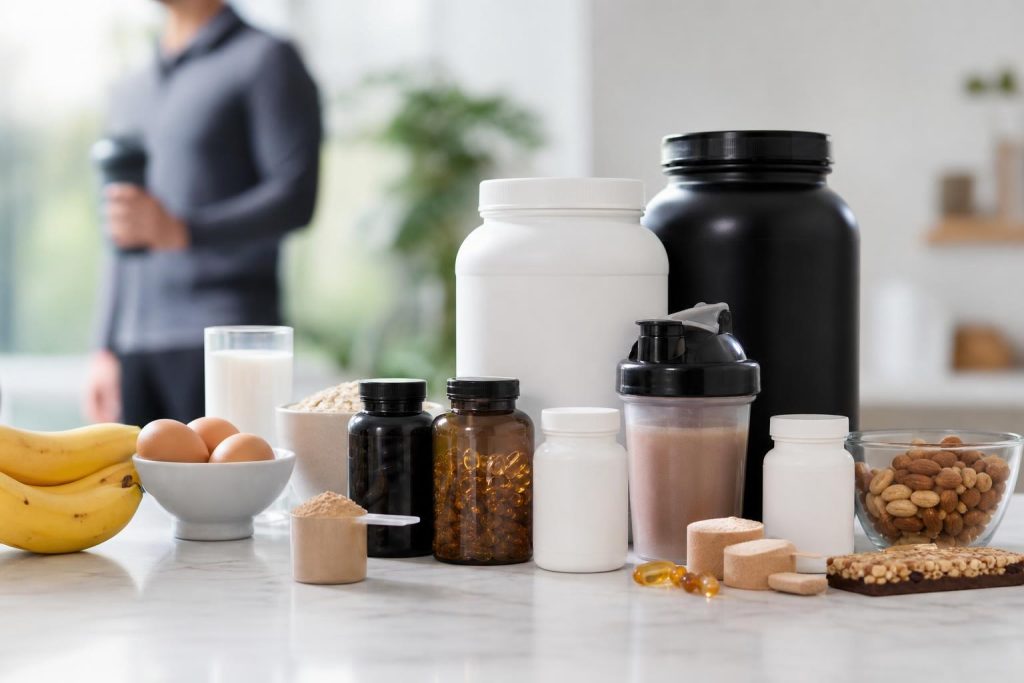
Semaglutide works. There’s no serious debate about that anymore. But here’s what the clinical trials don’t tell you: losing weight fast — especially on a drug that cuts your appetite by a third or more — comes with nutritional collateral damage. Muscle loss, micronutrient gaps, fatigue, and digestive disruption are common side effects that have nothing to do with how well the medication is working, and everything to do with how little most men on Ozempic are eating. The right supplements don’t make semaglutide more powerful. They protect your body from the trade-offs that come with it.
This isn’t about stacking pills for the sake of it. It’s about identifying the specific physiological gaps that open up when you’re eating significantly less food, losing weight rapidly, and running a GLP-1 receptor agonist through your system every week. Some of these gaps are obvious. Others are subtler — and if you ignore them long enough, they’ll undermine the results you’re working toward.
The Nutritional Reality of Eating Less
The mechanism that makes Ozempic effective — suppressing appetite and slowing gastric emptying — is also the mechanism that makes nutritional deficiencies nearly inevitable. When you’re eating 1,200 to 1,600 calories a day instead of 2,500, you’re not just cutting fat. You’re cutting protein, vitamins, minerals, and fiber. Over weeks and months, those shortfalls compound.
Protein is the most urgent priority. Rapid weight loss without adequate protein intake accelerates muscle breakdown — a process called sarcopenic obesity, where you lose fat and muscle simultaneously, leaving you lighter but metabolically weaker. Most men on Ozempic are not hitting their protein targets. When appetite is blunted, protein-rich foods like chicken, eggs, and Greek yogurt often feel the heaviest and least appealing. A high-quality whey or casein protein supplement — aiming for 0.7 to 1 gram per pound of bodyweight daily — is the single most impactful nutritional intervention you can make while on semaglutide. If whey doesn’t sit well, which is common given the GI sensitivity many users report, a plant-based blend with pea and rice protein is a solid alternative.
Creatine monohydrate deserves equal attention and is often overlooked in this conversation. Beyond its well-documented role in supporting strength and power output, creatine has been shown to help preserve lean mass during caloric restriction — precisely the scenario Ozempic creates. Three to five grams daily is all it takes, and the research supporting it is among the most robust in all of sports nutrition.
Then there’s the liver. Research published in Frontiers in Endocrinology found that GLP-1 receptor agonists like semaglutide meaningfully reduce liver fat content in men with nonalcoholic fatty liver disease and type 2 diabetes — with weekly semaglutide producing a mean reduction of 3.51% in liver fat. That’s a genuine therapeutic benefit. But it also highlights something important: men on Ozempic often have elevated liver enzymes and underlying hepatic stress to begin with. Supporting liver health through this process isn’t optional. N-acetylcysteine (NAC) and milk thistle (silymarin) are two evidence-adjacent options that have been studied in the context of liver protection. Berberine is another compound worth considering — it supports insulin sensitivity and has demonstrated modest effects on liver fat independently of GLP-1 medications.
What Your Body Is Actually Depleted Of
Micronutrient depletion on a reduced-calorie diet is well-documented, but a few specific deficiencies show up repeatedly in men on appetite-suppressing medications. Magnesium is the most common and the most consequential. It’s involved in over 300 enzymatic reactions, including glucose metabolism and muscle function. Most American men are already marginally deficient before they start cutting calories. A glycinate or malate form at 200 to 400mg before bed supports sleep quality and reduces the muscle cramping that some Ozempic users report.
Zinc and B vitamins — particularly B12 and folate — are next on the list. These are concentrated in animal proteins and organ meats, foods that tend to disappear from the diet when appetite tanks. B12 deficiency develops slowly but shows up as fatigue, brain fog, and mood disruption — symptoms that are easy to misattribute to the medication itself. A methylated B-complex covers this ground efficiently without overloading on individual doses.
Vitamin D3 paired with K2 is worth adding regardless of medication status, but particularly relevant here because adipose tissue sequesters vitamin D — meaning as you lose fat, vitamin D bioavailability can shift. Aim for 2,000 to 5,000 IU of D3 daily with a meal containing fat, alongside 100mcg of K2 MK-7 to ensure proper calcium metabolism. Get your levels tested if you can — most men are deficient, and optimal ranges for metabolic health sit between 50 and 80 ng/mL.
Fiber supplementation deserves a mention because Ozempic slows gastric motility, and if fiber intake from food drops alongside overall caloric intake, constipation becomes a real issue. Psyllium husk at five to ten grams daily, taken with plenty of water, supports gut motility and also helps with blood sugar regulation — a relevant bonus for the metabolic goals most men on semaglutide are chasing.
Omega-3 fatty acids round out the core stack. Fish oil at two to three grams of combined EPA and DHA daily supports cardiovascular health, reduces systemic inflammation, and has demonstrated muscle-preserving effects during weight loss phases. Given that heart health is a primary concern for many men who end up on GLP-1 medications, this one earns its place at the table.
The Takeaway
Ozempic is a powerful metabolic tool, but it doesn’t operate in a nutritional vacuum. The men who get the best long-term results — losing fat, holding onto muscle, and actually feeling better in the process — are the ones who treat supplementation as infrastructure, not an afterthought. Protein and creatine protect your lean mass. Magnesium, B vitamins, D3, and zinc fill the gaps that a reduced-calorie diet inevitably creates. Fiber and omega-3s keep your gut and cardiovascular system moving in the right direction. None of this is complicated. But it does require intentionality — which, frankly, is the same thing that makes any health strategy work.
Scientific References
-
Yuan, Gao, Yang et al. (2023).
Comparing the effectiveness of long-term use of daily and weekly glucagon-like peptide-1 receptor agonists treatments in patients with nonalcoholic fatty liver disease and type 2 diabetes mellitus: a network meta-analysis..
Frontiers in endocrinology.
View on PubMed →