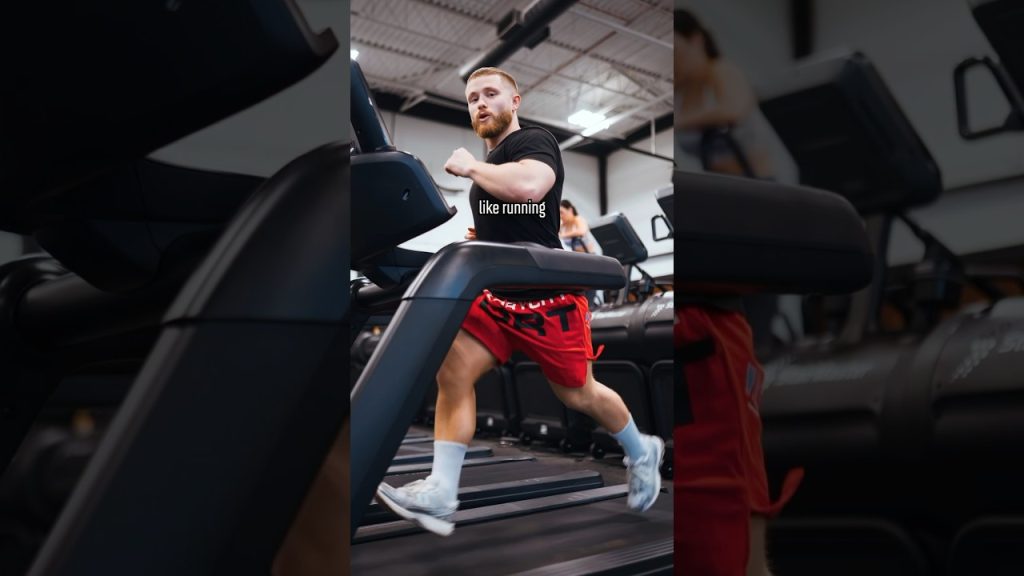
Video by Jeff Nippard on YouTube
A landmark randomized controlled trial published in Sports Medicine put a number to something many clinicians had suspected but couldn’t yet prove: men and women on GLP-1 receptor agonist therapy who also followed a structured exercise program improved their peak oxygen consumption by 3.0 mL/min/kg of fat-free mass compared to those on medication alone — and shaved nearly nine percent off their stair-climb time. The medication group, by contrast, showed no meaningful improvement in physical fitness whatsoever. If you’re on a GLP-1 drug and not exercising, you are leaving the most important adaptation on the table. And if you’re not on a GLP-1 drug at all, this research still tells you something fundamental: weight loss without structured physical training consistently underdelivers on the outcomes that actually extend your life and improve how you function in it.
This article is a practical training framework built around the best available evidence. Whether you’re using semaglutide, liraglutide, or nothing at all — whether you’re 220 pounds trying to get to 185, or 185 trying to get to 175 with better muscle — the exercise principles here apply to you. The research referenced throughout comes from controlled trials involving real people with obesity, real medications, and real exercise programs. The takeaways are concrete, the science is current, and the goal is simple: give you a plan that actually works for your body and your goals.
Why Exercise Changes the Equation on GLP-1 Therapy
GLP-1 receptor agonists work primarily by mimicking the appetite-suppressing hormone glucagon-like peptide-1, slowing gastric emptying and reducing caloric intake. They produce meaningful weight loss on their own — typically 10 to 15 percent of body weight in clinical trials. But weight loss is not the same as improved metabolic health, and it is absolutely not the same as improved physical fitness. The S-LITE trial, a rigorous randomized controlled trial out of the University of Copenhagen, makes this distinction unavoidable. Participants who combined liraglutide with a moderate-to-vigorous exercise program saw clinically meaningful improvements in cardiorespiratory fitness and functional performance, while the liraglutide-alone group did not.
There’s another layer to this that most people haven’t heard about. A 2026 exploratory analysis of the same trial followed 195 adults through 52 weeks of either usual activity, structured exercise, GLP-1 receptor agonist treatment, or a combination. The researchers were tracking something specific: late-phase postprandial GLP-1 secretion — essentially, how much appetite-suppressing GLP-1 your own gut produces in response to a meal. After one year, the exercise group increased this endogenous GLP-1 response by 37 percent — a 25 percent greater increase compared to the usual activity group — while the medication groups showed no change in their own GLP-1 production. The implication is striking: structured exercise may train your body to produce more of its own appetite-suppressing hormones, giving you a biological brake on hunger that persists independently of any drug. This is one of the most compelling arguments for exercise not as an add-on to GLP-1 therapy, but as a parallel and self-reinforcing intervention.
The muscle preservation angle matters just as much. GLP-1 drugs create a caloric deficit that, without adequate protein and resistance training, will pull from lean mass as readily as fat. Relative muscle strength — strength normalized to body weight — told a revealing story in the S-LITE secondary analysis. The placebo group lost 7.8 percent of relative muscle strength over the year. The liraglutide-only group held ground at plus 1.0 percent, primarily because weight loss improved the strength-to-bodyweight ratio. But the combined treatment group reached plus 3.3 percent, and the exercise-only group reached minus 0.4 percent — both dramatically outperforming the no-exercise conditions. Training with resistance while in a GLP-1-induced caloric deficit is not optional if preserving and building functional strength is a goal. It is the mechanism by which you keep the muscle you have.
Building the Plan: Frequency, Intensity, and Structure
The exercise protocol used in the S-LITE trial gives us a real-world template to work from. Participants completed a median of 2.65 sessions per week, accumulating roughly 116 minutes of weekly moderate-to-vigorous intensity exercise at approximately 79 percent of maximum heart rate — predominantly aerobic training. That’s a meaningful benchmark: not daily two-a-days, not weekend warrior bursts, but consistent, moderately hard cardiovascular work three times a week. For men building a GLP-1 exercise plan or any structured fat-loss training program, this forms the cardiorespiratory foundation.
To that base, resistance training needs to be added explicitly, because the trial’s exercise protocol was aerobically focused and yet muscle preservation still emerged as a differentiator. The American Association of Clinical Endocrinologists and the American College of Endocrinology, in their comprehensive clinical practice guidelines for medical care of patients with obesity, The ACSM guidelines they reference suggest 150 to 250 minutes of moderate-intensity exercise weekly for weight management, with two to three days of resistance training targeting all major muscle groups. Think of this as a non-negotiable minimum if you’re in a caloric deficit — the kind created either by GLP-1 medications or disciplined dietary control.
Practically, this looks like three days of resistance training — compound movements anchored around squats, deadlifts, bench press, rows, and overhead pressing — paired with two to three dedicated cardio sessions weekly. The cardio can take any form that gets your heart rate into that moderate-to-vigorous zone: cycling, rowing, incline treadmill walking, swimming, or zone 2 runs. What matters more than modality is consistency and intensity. Seventy-nine percent of maximum heart rate is hard enough that conversation becomes difficult, but you’re not sprinting — it’s the kind of sustained effort that builds aerobic capacity over weeks and months rather than days.
Protein intake becomes the critical nutritional variable that determines whether your training produces the outcome you want. Men in a caloric deficit, particularly those on GLP-1 medications suppressing appetite, are at high risk of under-eating protein. Research broadly supports 1.6 to 2.2 grams of protein per kilogram of body weight for individuals engaged in resistance training during a fat-loss phase. If you’re eating less because the medication blunts hunger, the protein target doesn’t change — the distribution of your calories shifts toward protein as a priority. This is where tracking, even briefly, pays dividends: it reveals whether you’re hitting protein targets or slowly burning through the muscle you’ve worked to build.
Rest and recovery also deserve more attention than they typically receive in fat-loss programming. GLP-1 medications, reduced caloric intake, and a structured training load all place physiological demands on the body simultaneously. Sleep quality directly influences muscle protein synthesis, cortisol regulation, and appetite hormone balance. Seven to nine hours of sleep is not a luxury in this context — it is part of the recovery protocol. Men who short-change sleep during a structured training and fat-loss phase consistently underperform on both body composition and training adaptation metrics.
The Broader Metabolic Argument for Exercise-First Thinking
Even setting aside GLP-1 medications entirely, the global metabolic health picture makes a compelling case for structured physical training as a primary intervention. The Global Burden of Disease Study 2023 identified high BMI, high fasting plasma glucose, and high systolic blood pressure as among the top modifiable contributors to disability-adjusted life years globally, with metabolic risk factors increasing in risk-attributable burden by 30.7 percent between 2010 and 2023. The study’s authors explicitly called for policies and interventions that promote physical activity alongside expanded access to treatments like GLP-1 receptor agonists — framing exercise not as an adjunct but as a co-equal pillar of metabolic disease prevention.
For men, this carries particular weight because the diseases clustering around poor metabolic health — cardiovascular disease, type 2 diabetes, erectile dysfunction, low testosterone, sleep apnea — disproportionately affect men who are physically inactive and carrying excess visceral adipose tissue. Structured aerobic and resistance training addresses the upstream drivers: it improves insulin sensitivity, reduces visceral fat, lowers resting blood pressure, increases lean mass, and improves hormonal profiles. No medication currently available replicates all of these effects simultaneously. GLP-1 drugs are powerful tools that accelerate fat loss and improve glycemic control, and the evidence increasingly supports their use in appropriate clinical contexts — but they do not replace the metabolic adaptations that only training produces.
There’s also a fertility angle worth noting for men in their reproductive years. The S-LITE trial’s substudy found that an 8-week low-calorie diet increased sperm concentration 1.49-fold and sperm count 1.41-fold in men with obesity — and that these improvements were maintained at the one-year mark in men who sustained their weight loss through either exercise training or GLP-1 analogue treatment, but not in men who regained weight. Exercise, in other words, isn’t just about how you look or how fast you can climb stairs — it’s a systemic intervention that touches hormonal health, reproductive health, cardiovascular risk, and metabolic function simultaneously.
The Takeaway
The research here converges on a single conclusion: GLP-1 medications without exercise produce weight loss but not fitness. Exercise without GLP-1 medications produces fitness, muscle preservation, improved cardiorespiratory capacity, and — remarkably — increases in your body’s own natural GLP-1 secretion. Combine them intelligently and the outcomes compound in ways neither approach delivers alone. If you are on a GLP-1 drug, treat exercise not as something you’ll add later when you feel better, but as the mechanism that makes the medication’s benefits durable. If you’re not on a GLP-1 drug, the same evidence tells you that consistent moderate-to-vigorous aerobic training and progressive resistance work are the most powerful metabolic tools available to you without a prescription. Three days of resistance training. Two to three days of cardio at 75 to 80 percent of maximum heart rate. Protein prioritized at every meal. Sleep protected. Built around that framework, a GLP-1 exercise plan — or any fat-loss exercise plan — stops being a supplement to a medication and starts being a foundation for how you’re built to function.
Scientific References
-
Garvey, Mechanick, Brett et al. (2016).
AMERICAN ASSOCIATION OF CLINICAL ENDOCRINOLOGISTS AND AMERICAN COLLEGE OF ENDOCRINOLOGY COMPREHENSIVE CLINICAL PRACTICE GUIDELINES FOR MEDICAL CARE OF PATIENTS WITH OBESITY..
Endocrine practice : official journal of the American College of Endocrinology and the American Association of Clinical Endocrinologists.
View on PubMed → -
Unknown Authors (2025).
Burden of 375 diseases and injuries, risk-attributable burden of 88 risk factors, and healthy life expectancy in 204 countries and territories, including 660 subnational locations, 1990-2023: a systematic analysis for the Global Burden of Disease Study 2023..
Lancet (London, England).
View on PubMed → -
Andersen, Juhl, Kjøller et al. (2022).
Sperm count is increased by diet-induced weight loss and maintained by exercise or GLP-1 analogue treatment: a randomized controlled trial..
Human reproduction (Oxford, England).
View on PubMed → -
Jensen, Fiorenza, Juhl et al. (2026).
Physical Fitness with Exercise and GLP-1 Receptor Agonist Treatment Alone or Combined After Diet-Induced Weight Loss: A Secondary Analysis of a Randomized Controlled Trial in Adults with Obesity..
Sports medicine (Auckland, N.Z.).
View on PubMed → -
Holt, Sandsdal, Byberg et al. (2026).
One Year of Exercise After Weight Loss Increases Postprandial GLP-1 Secretion in Contrast to Usual Activity or GLP-1 Receptor Agonist Treatment..
Obesity (Silver Spring, Md.).
View on PubMed →