For years, GLP-1 receptor agonists lived exclusively in the world of injections — weekly shots, cold storage, and a learning curve that kept many people on the sidelines. Then came the pills. Oral semaglutide (Rybelsus) arrived first for type 2 diabetes management, and now oral formulations of GLP-1 medications are moving into the weight loss conversation with increasing force. The question most men are asking is simple: do the pills actually work, or is this just a more convenient way to feel like you’re doing something?
The short answer is yes — but with important nuance around dosing, bioavailability, expectations, and what you’re doing alongside the medication. Understanding how these drugs work mechanically gives you a significant edge, whether you’re currently taking one, considering it, or just trying to understand the landscape of modern metabolic medicine.
How GLP-1 Receptor Agonists Work — and Why the Delivery Method Matters
GLP-1 stands for glucagon-like peptide-1, an incretin hormone your gut naturally releases after eating. It tells your pancreas to secrete insulin, suppresses glucagon (which would otherwise raise blood sugar), and — critically for weight loss — signals your brain that you’re full. Synthetic GLP-1 receptor agonists mimic and amplify this process, essentially turning down the hormonal volume on hunger and cravings while improving how efficiently your body handles glucose.
The challenge with oral delivery is biology. GLP-1 peptides are proteins, and your digestive system is exceptionally good at breaking down proteins before they can be absorbed. Injectable semaglutide sidesteps this entirely by going directly into subcutaneous tissue. Oral semaglutide gets around the problem using an absorption enhancer called SNAC (sodium N-[8-(2-hydroxybenzoyl) amino] caprylate), which temporarily raises gastric pH in the local environment around the tablet, allowing a meaningful fraction of the drug to pass through the stomach lining intact. The bioavailability is still only around 1%, but the doses are calibrated accordingly — the oral version is dosed in milligrams rather than micrograms to compensate.
Newer oral GLP-1 formulations are pushing the technology further. Orforglipron, a small-molecule GLP-1 receptor agonist currently in late-stage trials, doesn’t have the same bioavailability limitations because it isn’t a peptide — it’s a non-peptide molecule that can be absorbed orally far more efficiently. Early data from phase 2 trials has shown weight reductions of up to 14.7% over 36 weeks, numbers that begin approaching injectable territory. This is where the field is heading, and it’s moving fast.
Research has also examined how these incretin-based therapies stack up against each other and against traditional pharmacological approaches. A 2025 scoping review published in Cureus evaluated GLP-1 receptor agonists, dual agonists like tirzepatide (which targets both GLP-1 and GIP receptors), and the investigational triple agonist retatrutide. The review found that all three classes produced significant improvements in weight loss and insulin sensitivity compared to traditional pharmacological management — and that adding GIP receptor activity through dual and triple agonism resulted in even greater metabolic benefits. This matters for the oral pill question because tirzepatide’s oral formulation is currently in development, meaning the next generation of oral incretin medications may offer substantially more potency than what’s available today.
What the Clinical Evidence Says About Weight Loss Outcomes
The PIONEER trial series is the most substantial body of evidence for oral semaglutide specifically. PIONEER 1 through 10 examined oral semaglutide across different populations and comparators. In PIONEER 1, patients taking 14mg daily lost approximately 4.1 kg over 26 weeks compared to 0.5 kg on placebo — meaningful, though modest compared to injectable semaglutide’s typical outcomes of 10–15% body weight reduction. PIONEER 6 and subsequent data showed that uptitrating the dose and ensuring strict adherence to administration protocols (taking the pill 30 minutes before any food or drink, with a small amount of plain water) significantly influenced how much drug actually reached systemic circulation.
That administration protocol isn’t a suggestion — it’s pharmacologically critical. Even a small amount of food in the stomach before taking the pill can reduce absorption by up to 50%. This is one of the primary reasons some men report that oral GLP-1 medications feel less effective: they’re inadvertently blunting absorption through casual dosing habits. If you’re taking an oral GLP-1 medication, treating the 30-minute pre-meal window as non-negotiable is one of the highest-leverage things you can do to maximize its efficacy.
Beyond weight on the scale, GLP-1 receptor agonists — in both oral and injectable form — are demonstrating cardiovascular, hepatic, and metabolic benefits that extend well beyond appetite suppression. Improvements in insulin sensitivity, reductions in liver fat, lower inflammatory markers, and favorable changes in lipid profiles have all been documented across multiple trial populations. For men dealing with visceral adiposity, metabolic syndrome, or early insulin resistance, these effects compound meaningfully over time.
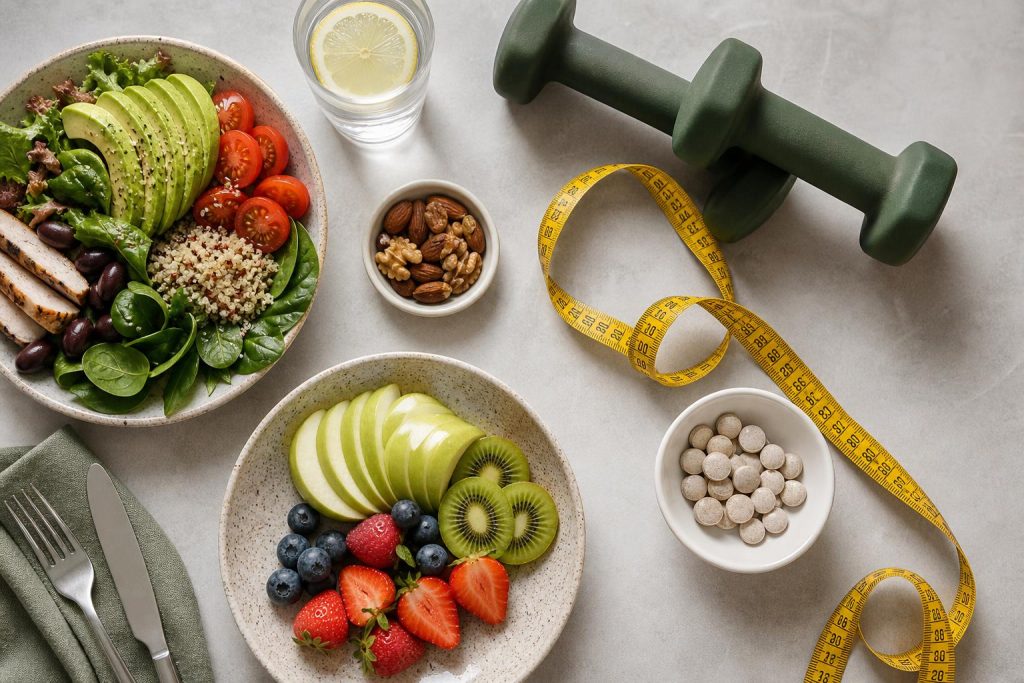
It’s also worth being honest about what these medications don’t do on their own. GLP-1 agonists reduce appetite and improve metabolic signaling, but they don’t selectively preserve or build muscle mass. Studies consistently show that a significant portion of weight lost on GLP-1 therapy — in some analyses, 25 to 40% — comes from lean mass rather than fat tissue alone. This is why resistance training and adequate protein intake aren’t optional add-ons for men on these medications; they’re the primary defense against losing the muscle that drives your metabolism and physical capability. Targeting 1.6 to 2.2 grams of protein per kilogram of body weight daily, combined with progressive resistance training at least three times per week, is the evidence-supported approach to preserving lean mass while losing fat on any weight-loss intervention, including GLP-1 therapy.
Who Benefits Most — and What to Realistically Expect
Oral GLP-1 medications make the most practical sense for men who have a physiological need for GLP-1 receptor agonism — meaning those with metabolic dysfunction, insulin resistance, significant excess body weight, or type 2 diabetes — but who either have an aversion to injections or are in an earlier stage of intervention where the lower potency of oral forms is appropriate. They’re also a reasonable option during travel, for men who want to step down from injectable doses, or as a bridge during periods where injection access is difficult.
For men who are already lean, training consistently, and eating well, oral GLP-1 medications are unlikely to be a meaningful tool — and they’re not positioned as one. The medications work best when there’s actual dysregulation in appetite signaling and glucose metabolism to correct. Using them as a performance-enhancement tool for already-optimized physiques is outside their clinical purpose and lacks meaningful evidence.
Realistic expectations matter. On current oral semaglutide at approved doses, most men can expect 4 to 7% body weight reduction over 6 months with strong adherence and lifestyle support — a clinically meaningful outcome, but one that requires patience and commitment to the full protocol. As oral small-molecule agonists like orforglipron advance toward approval, that ceiling will likely rise considerably.
The Takeaway
GLP-1 pills do work for weight loss — but they work best when you understand their mechanics, respect their administration requirements, and treat them as one component of a broader metabolic strategy rather than a standalone solution. The oral delivery format has real limitations in bioavailability that make adherence to dosing protocols essential, and the field is evolving quickly toward more potent non-peptide options that will close the efficacy gap with injectables. Whatever form of GLP-1 therapy you’re considering or currently using, the fundamentals don’t change: lift heavy, eat enough protein, sleep consistently, and let the medication do its job within a system that’s already working in your favor.
Scientific References
-
Hudanich, Smith, Marino et al. (2025).
The Effects of Glucagon-Like Peptide-1 (GLP-1) Receptor Agonists on Polycystic Ovarian Syndrome: A Scoping Review..
Cureus.
View on PubMed →