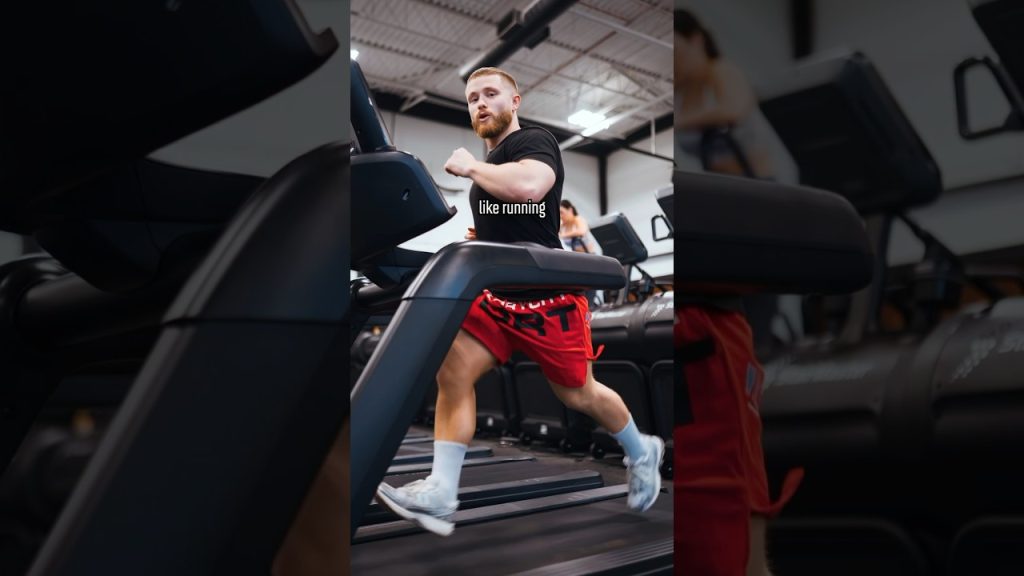
Video by Jeff Nippard on YouTube
Here is a number that should stop every man on a GLP-1 medication cold: clinical trial participants receiving semaglutide or tirzepatide for obesity lost 10% or more of their total muscle mass during 68- to 72-week intervention periods. To put that in perspective, researchers described it as roughly equivalent to 20 years of age-related muscle loss compressed into roughly 16 months. If you are injecting a GLP-1 receptor agonist right now and you are not actively fighting back with a structured resistance training program, you may be trading fat for something you did not bargain for.
This is not a reason to stop your medication or panic. GLP-1 receptor agonists are genuinely transformative tools. Semaglutide significantly reduces major adverse cardiovascular events in men with established atherosclerotic cardiovascular disease, and both semaglutide and tirzepatide improve outcomes in heart failure, chronic kidney disease, and metabolic liver disease, according to a 2025 precision obesity medicine framework synthesizing randomized trials, meta-analyses, and international guidelines. The GBD Study 2023, published in The Lancet, went so far as to identify GLP-1 receptor agonists as a priority treatment to address the rising global burden of metabolic disease, with high BMI and elevated fasting plasma glucose among the few leading risk factors whose age-standardized attributable DALY rates have actually increased since 2010. These drugs matter. But their full benefit is only realized when you pair them with a deliberate, science-informed strength training program and a nutrition strategy built to preserve lean mass.
What follows is exactly that — a practical, evidence-based framework for men on GLP-1 medications who want to make sure the weight they lose stays fat, not muscle.
Why Muscle Loss on GLP-1s Is a Bigger Problem Than Most Men Realize
The core mechanism driving muscle loss on GLP-1 medications is not the drug itself — it is the caloric deficit the drug creates. Semaglutide and tirzepatide work partly by suppressing appetite and slowing gastric emptying, which means most users eat significantly less without really trying. That is the point. But aggressive caloric restriction, if unaccompanied by adequate protein and resistance training, triggers a well-documented physiological response: your body draws on lean tissue for energy alongside fat stores.
The problem is compounded in a condition researchers are calling sarcopenic obesity — the coexistence of excess body fat and impaired muscle mass or function. This is far more common than most people assume, and it carries a disproportionate cardiometabolic risk. A 2025 review in Current Opinion in Clinical Nutrition and Metabolic Care found that weight loss induced by incretin-based medications results in a variable but significant reduction in fat-free mass, including skeletal muscle, and that the long-term functional consequences of this loss remain genuinely uncertain. In practical terms, that uncertainty should motivate action rather than complacency.
Muscle is not just aesthetic scaffolding. It is the primary site of glucose disposal in the body, meaning the more muscle you carry, the more insulin-sensitive your metabolism becomes. Losing muscle while on a GLP-1 drug that is already improving your insulin signaling is a metabolic own goal. It also sets you up for weight cycling — one of the most common and frustrating patterns in obesity treatment — because muscle tissue is metabolically active and its loss lowers your resting energy expenditure. The moment you taper or stop your medication, a depleted muscle mass means your body is burning fewer calories at rest and storing excess energy more aggressively. Strength training is not a bonus add-on to your GLP-1 protocol. It is load-bearing infrastructure.
The Science-Based Strength Training Program for GLP-1 Users
The good news is that the research on what actually works here is unusually clear. A 2025 review in Obesity Reviews, authored by Mechanick, Butsch, Christensen, and colleagues, examined available evidence and concluded that concurrent physical activity, especially resistance training, has been shown to effectively minimize loss of muscle mass and function during weight reduction therapy, and that all patients receiving incretin-mimetic drugs for obesity should be enrolled in comprehensive programs emphasizing resistance training alongside adequate protein intake. This is not a soft recommendation — it is as close to a clinical imperative as the literature currently offers.
The program structure that emerges from both clinical evidence and applied exercise science centers on several non-negotiable principles. Frequency matters: training each major muscle group at least twice per week is the minimum threshold for meaningful muscle protein synthesis stimulation. Volume matters: somewhere between 10 and 20 working sets per muscle group per week, distributed across those sessions, appears to be the effective range for most men. Intensity matters: you need to be working with loads that bring you close to muscular failure — generally within 1 to 4 repetitions of your limit — to trigger the adaptive response that preserves and builds lean tissue.
For the practical structure, a four-day upper-lower split works exceptionally well for men on GLP-1 medications. Two upper-body days and two lower-body days, spread across the week with at least one rest day between sessions, gives you the frequency and recovery balance you need. On your upper days, anchor your sessions around compound pulling and pushing movements — barbell or dumbbell rows, pull-ups or lat pulldowns, bench press variations, and overhead pressing. On your lower days, build around the squat pattern and the hip hinge — back squats, goblet squats, Romanian deadlifts, and conventional deadlifts. These compound movements recruit the largest muscle groups and deliver the most systemic anabolic stimulus per unit of training time, which matters significantly when your caloric intake may be reduced and recovery resources are at a premium.
Accessory work — curls, tricep extensions, lateral raises, calf raises, face pulls — belongs at the end of sessions, not at the beginning. When you are in a caloric deficit, your capacity to recover from training is reduced. Front-loading your sessions with the movements that matter most ensures the highest-priority work gets done even on days when energy flags partway through. Aim for 3 to 4 sets of 6 to 12 repetitions on your primary compound movements, and 2 to 3 sets of 10 to 15 repetitions on accessories. Rest periods of 2 to 3 minutes between heavy compound sets are not laziness — they are a physiological requirement for maintaining the load quality that drives adaptation.
Progressive overload is the engine of the entire enterprise. Each week, or every other week depending on your recovery capacity, you should be adding either weight to the bar, repetitions at the same weight, or density — meaning more total work in the same amount of time. Without progressive overload, your body has no reason to preserve or build muscle tissue. Track your lifts. A simple training log, even a notes app on your phone, gives you the data you need to ensure you are moving forward rather than just going through the motions.
One adjustment that men on GLP-1 medications often need to make is managing training intensity relative to energy availability. On days when appetite suppression is particularly strong and you have eaten less than usual, scaling back training volume slightly — dropping from 4 sets to 3 sets, for instance — is a pragmatic choice rather than a failure. What you cannot scale back is the intensity of individual sets. A shorter session done with genuine effort is vastly more effective than a longer session done at reduced load in the name of hitting a set target on paper.
Cardiorespiratory work has a place in this program, but it needs to be positioned correctly. Low-to-moderate intensity cardiovascular exercise — walking, cycling, swimming — supports cardiovascular health, aids recovery, and contributes to overall caloric expenditure without meaningfully interfering with muscle protein synthesis or recovery from resistance training. High-intensity interval training (HIIT), while effective for metabolic conditioning, should be used judiciously when you are already in a caloric deficit on a GLP-1 medication. The additional recovery demand of frequent high-intensity cardio stacked on top of a four-day lifting program and reduced caloric intake is a combination that tends to accelerate lean mass loss rather than prevent it. Two to three sessions of moderate cardio per week, capped at 30 to 45 minutes, is a reasonable and evidence-consistent target.
Physical exercise has also demonstrated direct benefits for the metabolic conditions that often coexist with obesity. A 2023 study in the European Journal of Translational Myology followed 90 participants with type 2 diabetes across six months and found that active participants showed significantly greater improvements in blood glucose, HbA1c, BMI, and cholesterol compared to their sedentary counterparts, with the researchers concluding that physical activity functions as an additional therapy alongside pharmacological treatment. For men on GLP-1 medications who are managing insulin resistance or early-stage type 2 diabetes, the synergy between resistance training and their medication is additive — each amplifies the metabolic benefit of the other.
Nutrition: The Other Half of the Equation
No strength training program survives contact with inadequate protein intake. The research is unambiguous on this point: nutrition therapy ensuring adequate intake and absorption of high-quality protein and micronutrients is a co-equal intervention alongside resistance training for preserving muscle mass during GLP-1-induced weight loss. The two pillars reinforce each other — protein provides the amino acid substrate that resistance training signals your body to incorporate into muscle tissue. Remove either one and the system breaks down.
The current evidence-based target for men in a caloric deficit who are resistance training sits at approximately 1.6 to 2.2 grams of protein per kilogram of body weight per day. For a 220-pound (100 kg) man, that means 160 to 220 grams of protein daily. This is a range that many GLP-1 users find genuinely challenging to hit, because appetite suppression reduces overall food intake and protein-dense foods — meat, fish, eggs, dairy, legumes — can feel particularly filling and sometimes difficult to tolerate in larger quantities when gastric emptying is slowed.
The practical solution is to distribute protein across multiple smaller meals and snacks throughout the day rather than trying to consume large protein portions at a few sittings. Four to five protein-containing eating occasions spread across waking hours generally works better than three large meals for men dealing with GLP-1-induced satiety. High-quality protein sources to prioritize include lean beef, chicken breast, salmon and other fatty fish, Greek yogurt, cottage cheese, eggs and egg whites, and whey or casein protein supplements when whole food intake falls short. The 2025 precision obesity medicine review noted specifically that adequate protein intake alongside resistance training is particularly important for older and sarcopenic individuals on anti-obesity medications, a category that applies to a significant portion of men currently using these drugs.
Micronutrient status deserves attention that it rarely gets in conversations about GLP-1 and muscle loss. Reduced food volume means reduced intake of vitamins and minerals across the board. Vitamin D, magnesium, zinc, and B vitamins are all involved in muscle protein synthesis, hormonal function, and energy metabolism. A comprehensive multivitamin and targeted supplementation based on bloodwork provides a reasonable safety net for men eating at a significant caloric deficit. Creatine monohydrate, at 3 to 5 grams per day, is the single most robustly supported sports supplement for preserving and building lean mass and is particularly valuable during periods of caloric restriction — it has no meaningful interaction with GLP-1 medications and a decades-long safety record.
Hydration is a practical concern that often goes unaddressed. GLP-1 medications can reduce thirst perception in some users, and adequate water intake supports both training performance and the metabolic processes involved in muscle protein synthesis. Aiming for a minimum of 2.5 to 3.5 liters of water daily, adjusted upward on training days, is a reasonable baseline.
The Takeaway
The men who come out of a GLP-1 medication cycle in the best physical condition are not the ones who simply took their injection and watched the scale drop. They are the men who treated the medication as the metabolic accelerant it is, and built a training and nutrition program worthy of that acceleration. The research from Mechanick and colleagues is unambiguous: muscle loss of this magnitude is not an acceptable side effect to absorb passively. It is a predictable outcome that deliberate resistance training and adequate protein intake can meaningfully counteract.
Four days of structured lifting per week, progressive overload tracked session to session, 1.6 to 2.2 grams of protein per kilogram of body weight distributed throughout the day, and a modest amount of low-intensity cardio — this is not an exotic or complicated program. It is the evidence-based minimum for protecting the lean mass that makes your metabolism resilient, your body functional, and your long-term results sustainable. Whether you are six weeks into your first prescription or you have been on tirzepatide for a year, the time to build this foundation is now.
Scientific References
-
Mechanick, Butsch, Christensen et al. (2025).
Strategies for minimizing muscle loss during use of incretin-mimetic drugs for treatment of obesity..
Obesity reviews : an official journal of the International Association for the Study of Obesity.
View on PubMed → -
Caturano, Amaro, Berra et al. (2025).
Sarcopenic obesity and weight loss-induced muscle mass loss..
Current opinion in clinical nutrition and metabolic care.
View on PubMed → -
Unknown Authors (2025).
Burden of 375 diseases and injuries, risk-attributable burden of 88 risk factors, and healthy life expectancy in 204 countries and territories, including 660 subnational locations, 1990-2023: a systematic analysis for the Global Burden of Disease Study 2023..
Lancet (London, England).
View on PubMed → -
Tuccinardi, Masi, Watanabe et al. (2025).
Precision obesity medicine: A phenotype-guided framework for pharmacologic therapy across the lifespan..
Journal of endocrinological investigation.
View on PubMed → -
Messina, Alioto, Parisi et al. (2023).
Experimental study on physical exercise in diabetes: pathophysiology and therapeutic effects..
European journal of translational myology.
View on PubMed →