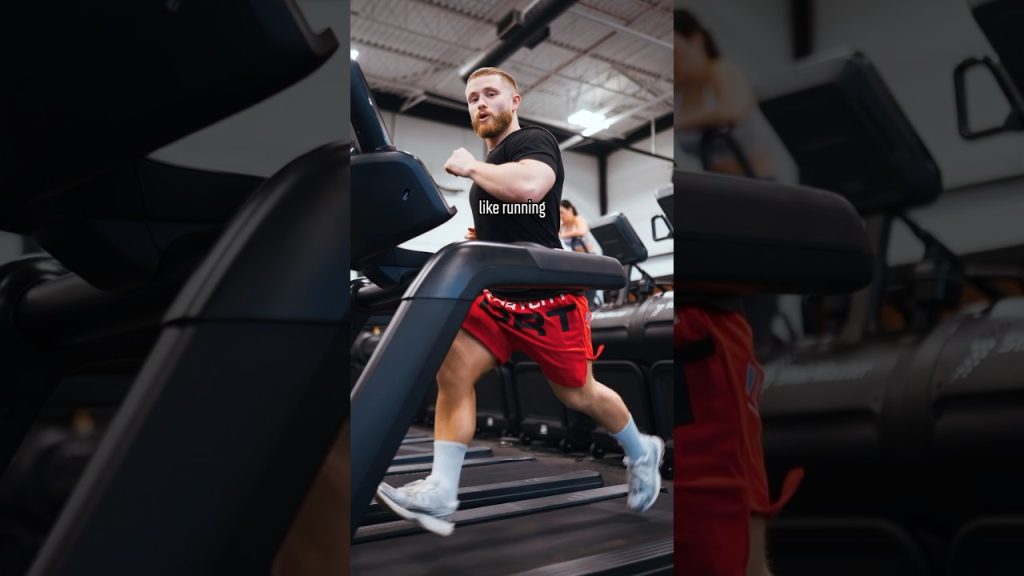
Video by Jeff Nippard on YouTube
There’s a quiet crisis unfolding inside the bodies of men who are losing weight on GLP-1 receptor agonists like semaglutide and tirzepatide. The scale is moving in the right direction — but so is something else. Research published in Diabetes, Obesity and Metabolism found that up to 40% of total weight lost on GLP-1 medications can come from lean mass, not fat. That’s muscle — the metabolically active tissue that determines how you look, how strong you are, and how well your body handles glucose for the rest of your life. The fix isn’t complicated, but it is non-negotiable: you have to lift.
Strength training while on a GLP-1 medication isn’t just a good idea — it’s a clinical imperative. And for men who aren’t on these medications at all, the same principle applies. Whether you’re using semaglutide, doing a caloric deficit the old-fashioned way, or simply trying to build a better physique, resistance training is the single most effective tool for preserving and building muscle while losing fat. The research here is unambiguous. A 2017 meta-analysis in Obesity Reviews confirmed that combining resistance training with caloric restriction significantly reduces lean mass loss compared to diet alone — a finding that applies whether your appetite suppression comes from a medication or sheer willpower.
Why Muscle Loss Is the Hidden Cost of Rapid Weight Loss
The body doesn’t distinguish between a GLP-1-induced deficit and any other kind. When calories drop sharply and protein intake isn’t optimized, the body turns to muscle tissue for fuel. This process — muscle protein catabolism — accelerates when training stimulus is absent. GLP-1 users are particularly at risk because appetite suppression is so effective that many men significantly undereat protein without realizing it. A 2022 review in Current Obesity Reports highlighted that inadequate protein intake during GLP-1 therapy is one of the primary drivers of unfavorable body composition outcomes — meaning men lose more muscle and less fat than they should.
Beyond aesthetics, muscle loss has serious downstream consequences. Reduced muscle mass is associated with lower insulin sensitivity, higher risk of type 2 diabetes, impaired metabolic rate, and worse long-term weight maintenance. Research from the Journal of Clinical Endocrinology & Metabolism demonstrates that skeletal muscle is a primary site of glucose disposal — meaning the more muscle you have, the better your body handles carbohydrates and the more metabolically resilient you become. Losing it while on a weight loss journey trades one problem for another.
The good news is that a well-designed strength training program, combined with sufficient protein intake, can almost entirely offset these losses. In some cases — particularly for men who are new to resistance training or returning after a long break — it’s possible to build muscle and lose fat simultaneously, a process known as body recomposition. This isn’t a theoretical outcome. A 2019 study in Nutrients demonstrated meaningful body recomposition in previously sedentary men who began resistance training with adequate protein, even in a caloric deficit.
Building Your GLP-1 Strength Training Protocol
The most effective approach centers on compound, multi-joint movements performed with progressive overload — meaning you gradually increase the challenge over time. Squats, deadlifts, Romanian deadlifts, bench press, rows, and overhead pressing should form the foundation. These exercises recruit the largest muscle groups, generate the highest anabolic hormone response, and burn the most calories per session. Isolation work like curls and tricep extensions has its place, but it shouldn’t come at the expense of the big lifts.
Frequency matters more than volume when you’re eating in a deficit. Hitting each major muscle group at least twice per week is supported by meta-analytic evidence in the Journal of Strength and Conditioning Research as the threshold for maximizing muscle protein synthesis over time. A three-day full-body program or a four-day upper/lower split works well for most men on GLP-1 medications because it keeps training frequency high without demanding excessive recovery capacity — which is already taxed by reduced caloric intake.
Rep ranges should sit between 6 and 15 repetitions per set, with most sets taken close to muscular failure — within 2 to 3 reps of the point where you couldn’t complete another rep with good form. This range of effort, known as proximity to failure, is a more important driver of hypertrophy than the specific rep count. Research published in Sports Medicine confirms that loads ranging from moderate to heavy can all produce comparable muscle growth when sets are taken to near-failure. That’s good news for men who are fatigued or training at lower energy levels — you don’t need to max out to get results.
Protein intake needs to be treated as a non-negotiable alongside training. The current evidence supports a target of 0.7 to 1.0 grams of protein per pound of bodyweight per day during periods of caloric restriction. For GLP-1 users fighting reduced appetite, this often means prioritizing protein at every meal before anything else — eating chicken, eggs, Greek yogurt, or a protein shake before reaching for carbohydrates or fats. Spreading intake across three to four meals further maximizes muscle protein synthesis, as research in the Journal of Nutrition has shown that muscle-building response plateaus above roughly 40 grams of protein per meal in most men.
What This Means For You
GLP-1 medications can be a powerful catalyst for fat loss — but they are not a complete solution. Without resistance training, the weight you lose may cost you muscle, metabolic capacity, and long-term health. The prescription is simple even if the execution takes discipline: lift heavy, eat enough protein, and let the medication or your caloric deficit do the work on fat. Men who combine structured strength training with smart nutrition don’t just lose weight — they come out the other side leaner, stronger, and more metabolically resilient than when they started. That’s not a side effect. That’s the goal.