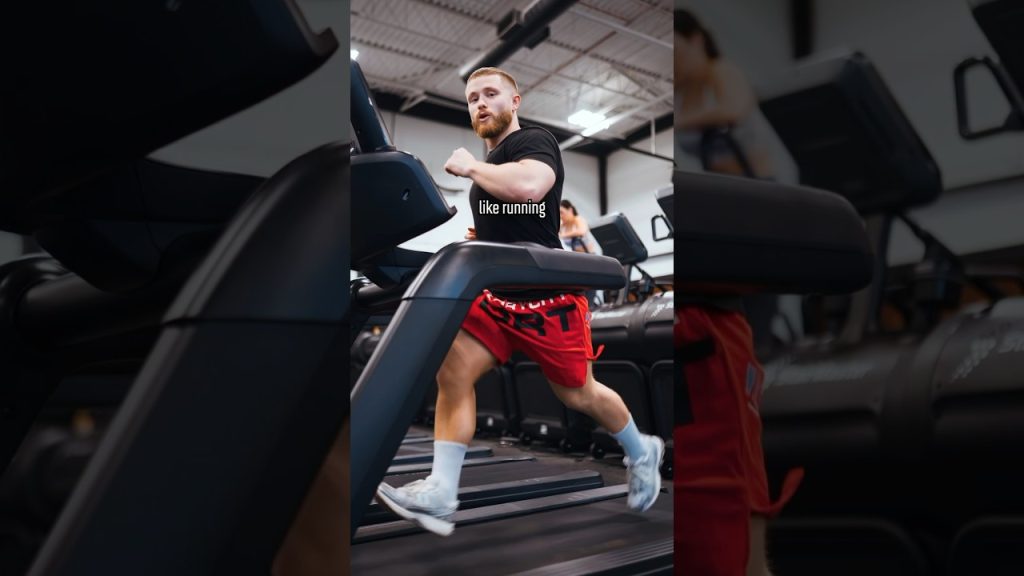
Video by Jeff Nippard on YouTube
Here’s something most men on GLP-1 medications like semaglutide or tirzepatide aren’t told upfront: the scale going down doesn’t guarantee you’re losing fat. Research published in Diabetes Care found that without resistance training, individuals on GLP-1 receptor agonists lost significant lean mass alongside fat — a metabolic setback that can slow your resting metabolism and make long-term weight management harder. The medication handles appetite. You have to handle the muscle.
This is why a structured strength training program isn’t optional for men on GLP-1 therapy — it’s the other half of the prescription. And if you’re not on a GLP-1 medication at all, this still applies. Whether you’re cutting calories the traditional way, dialing in macros, or doing intermittent fasting, resistance training is the single most effective strategy for preserving and building muscle during a caloric deficit. The principles here apply to every man working toward a leaner, stronger body — not just those with a weekly injection in their routine.
Why Muscle Preservation Is the Real Priority
When you eat less — regardless of how you got there — your body doesn’t exclusively burn fat. It also catabolizes muscle tissue for energy, especially if protein intake is low and there’s no mechanical stimulus telling the body to hold onto it. A landmark meta-analysis in Obesity Reviews confirmed that combining resistance training with caloric restriction significantly attenuates lean mass loss compared to diet alone. That mechanical signal — the tension of lifting — is what tells your muscle fibers they’re still needed.
For GLP-1 users specifically, the appetite suppression is often so effective that caloric intake drops sharply in the first weeks. This accelerates the need for resistance work. But the same logic holds for any beginner: starting strength training early in a fat loss phase means you’re building the infrastructure for a faster metabolism, better insulin sensitivity, and a body composition that holds up long-term. Studies consistently show resistance training improves insulin-mediated glucose uptake — a benefit that stacks on top of whatever dietary approach you’re using.
The Beginner Strength Program: What to Actually Do
For beginners, simplicity wins. The goal in the first eight to twelve weeks isn’t to get complicated — it’s to learn movement patterns, accumulate progressive overload, and create a training habit. Three full-body sessions per week, spaced with at least one rest day between them, gives your body enough stimulus and enough recovery. Monday, Wednesday, Friday works well for most men.
Each session should anchor around compound movements: the squat, deadlift, bench press, row, and overhead press. These multi-joint lifts recruit the most muscle tissue, produce the highest anabolic hormonal response, and burn more calories both during and after training. Start with three sets of eight to twelve reps per exercise, using a weight that’s genuinely challenging for the last two to three reps but doesn’t compromise form. Add five to ten pounds to lower body lifts and two to five pounds to upper body lifts each week as long as you can maintain technique — this is progressive overload, and it’s the engine of all muscle growth.
If you’re on a GLP-1 medication and appetite is suppressed, pay close attention to protein timing. Research shows consuming at least 20 to 40 grams of high-quality protein within two hours post-training maximizes muscle protein synthesis. Even if you’re not hungry, prioritize a protein source after your session — Greek yogurt, a protein shake, eggs, or lean meat. Aim for 0.7 to 1 gram of protein per pound of bodyweight daily. This number isn’t flexible if your goal is to hold onto muscle while losing fat.
Sleep matters just as much as the sessions themselves. A study in the Annals of Internal Medicine found that sleep restriction during caloric restriction reduced the proportion of weight lost as fat by 55% while simultaneously increasing muscle loss. Seven to nine hours isn’t a luxury — it’s when the adaptation from training actually happens.
The Takeaway
GLP-1 medications are a powerful tool for appetite control and metabolic support — but they don’t build muscle. Neither does dieting alone. For any man serious about transforming his body composition, strength training three days a week, anchored by compound lifts, progressive overload, and adequate protein, is what turns weight loss into genuine physical improvement. Start simple, stay consistent, and let the hard work compound. The medication — or the calorie deficit — handles the fat. The barbell handles everything else.