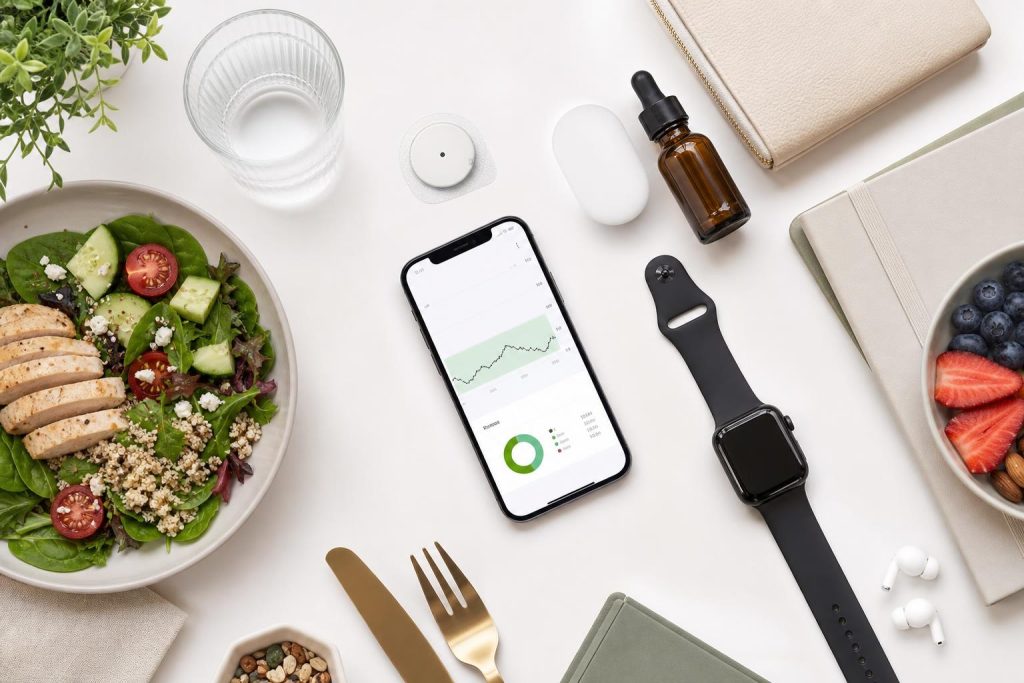
Most men have no idea what their blood sugar is doing between meals — and that gap in awareness is quietly sabotaging fat loss, energy, and metabolic health. A 2019 study published in PLOS Biology found that glucose responses to identical foods varied dramatically between individuals, meaning generic dietary advice may be working against your specific metabolism. That’s where continuous glucose monitors — CGMs — have gone from niche clinical tool to legitimate performance and fat loss technology for everyday men.
If you’re using a GLP-1 receptor agonist like semaglutide or tirzepatide, pairing it with a CGM is one of the smartest moves you can make. These medications lower blood glucose and reduce appetite, but they don’t tell you how your body is responding to specific foods, meals, or exercise timing. A CGM does. That said, you don’t need to be on a GLP-1 to benefit from one. Whether you’re doing keto, eating in a calorie deficit, lifting five days a week, or simply trying to understand why your energy crashes at 3pm, real-time glucose data gives you leverage that guesswork never will.
How CGMs Work and Why the Data Matters
A CGM is a small wearable sensor — typically worn on the back of the upper arm or abdomen — that measures interstitial glucose levels every few minutes and syncs to a smartphone app. The flagship consumer options in 2024 are the Dexcom Stelo and the Abbott Libre 3, both now available over the counter in the US without a prescription. For men who want real-time alerts and tighter monitoring, the Dexcom G7 remains the gold standard, though it typically requires a prescription.
What you’re watching for isn’t just your fasting glucose — it’s the shape of your glucose curve after eating. A sharp spike followed by a steep crash is associated with increased hunger, fatigue, and greater risk of insulin resistance over time. For GLP-1 users specifically, CGM data can confirm whether the medication is blunting post-meal spikes as expected, or whether certain foods are still driving outsized responses that undercut your progress.
Research published in Diabetes Care demonstrated that time-in-range — the percentage of hours spent between 70 and 180 mg/dL — is a more meaningful metabolic marker than HbA1c alone. Aiming for 90% or more time-in-range is a practical daily target whether you’re managing blood sugar on medication or optimizing metabolic health through diet and training.
What to Actually Look For in Your Data
The first week wearing a CGM is usually humbling. Foods you assumed were healthy — oatmeal, fruit smoothies, whole grain bread — may spike your glucose more than expected, while others surprise you in the opposite direction. This is the personalization piece that population-level nutrition guidelines can’t give you. A landmark study from the Weizmann Institute showed that postprandial glucose responses to the same food differed so significantly between people that a personalized nutrition approach — guided by continuous monitoring — outperformed standard dietary recommendations for glucose control.
For men focused on fat loss and body composition, the practical takeaway is this: use your CGM to identify which meals keep glucose stable and which cause reactive hypoglycemia — the post-crash that triggers cravings and overeating. Meal sequencing matters here too. Research shows that eating vegetables and protein before carbohydrates meaningfully reduces post-meal glucose excursions — a simple behavioral hack you can confirm works for your body within days of wearing a sensor.
Exercise timing is another lever CGM data makes visible. Strength training and walking after meals have both been shown to blunt glucose spikes — a 2022 meta-analysis confirmed that post-meal walking significantly reduced postprandial glucose compared to sitting. Seeing this play out in real time on your app is more motivating than any study — it turns abstract advice into immediate feedback.
The Takeaway
A CGM isn’t a medical device reserved for diabetics anymore. It’s a metabolic feedback tool that closes the loop between what you eat, how you train, and how your body actually responds. For GLP-1 users, it validates and optimizes what the medication is doing. For everyone else, it replaces guesswork with data. The Abbott Libre 3 and Dexcom Stelo are the most accessible entry points — affordable, prescription-free, and accurate enough for actionable insight. Wear one for 30 days. The patterns you find will change how you eat, move, and perform more than almost any other single intervention you can make.