High Protein Diets Accelerate Fat Loss While Preserving Muscle
If you’re serious about losing fat while keeping your hard-earned muscle, the research is clear: higher protein intake during calorie deficits produces measurably better results. A landmark 2016 study published in the American Journal of Clinical Nutrition found that men consuming 2.4g of protein per kilogram of body weight lost significantly more fat and gained lean mass compared to those eating just 1.2g/kg—even though both groups were in the same aggressive 40% calorie deficit.
The numbers tell the story: the high-protein group gained 1.2 kg of lean mass while losing 4.8 kg of fat. The lower-protein group? They gained almost no lean mass (0.1 kg) and lost only 3.5 kg of fat. That’s the difference between preserving your physique during a cut and losing hard-earned muscle.
Whether you’re using GLP-1 medications, counting macros, or just eating intuitively—protein intake is non-negotiable if fat loss while maintaining muscle is your goal.
The Protein Threshold: How Much Do You Actually Need?
Research demonstrates that 2.4g of protein per kilogram of body weight is the effective dose for fat loss and muscle preservation during aggressive deficits combined with resistance training. But what does this mean practically?
Protein targets by body weight:
- 150 lbs (68 kg): 163g protein daily
- 180 lbs (82 kg): 197g protein daily
- 200 lbs (91 kg): 218g protein daily
- 220 lbs (100 kg): 240g protein daily
These aren’t arbitrary numbers—they’re based on body weight, not calories. The study used lean body mass to calculate protein needs, which matters: if you’re carrying significant fat, use your goal weight or lean mass estimate, not your current total weight.
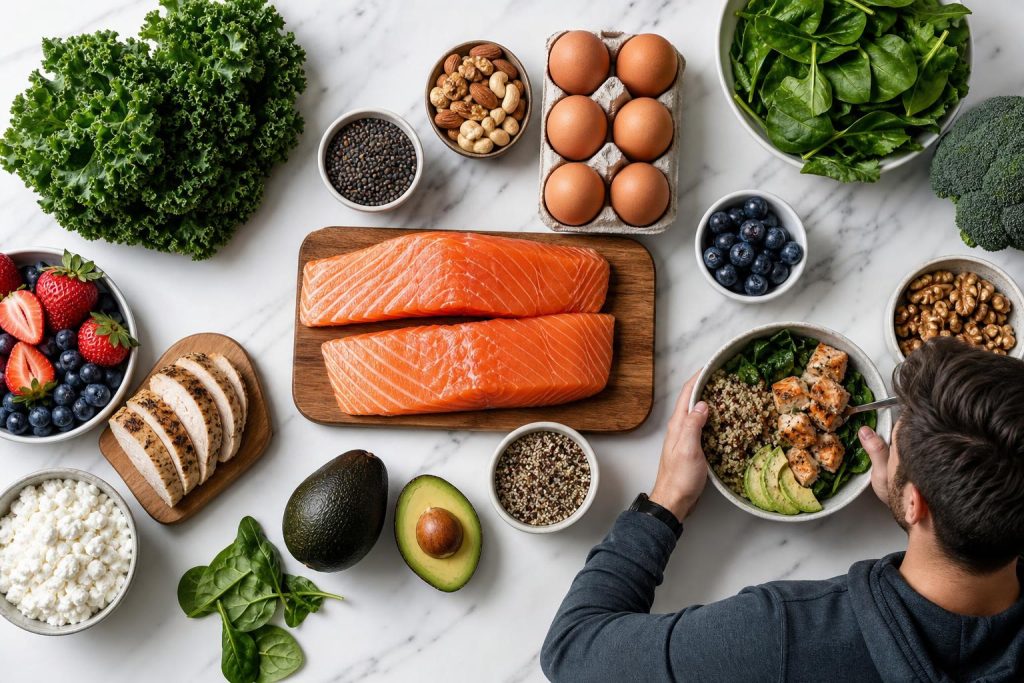
Practical sources: A 4-ounce chicken breast has ~35g protein. A scoop of whey powder has ~25g. A whole egg has ~6g. Most men find a combination of whole foods plus one protein shake daily gets them there easily.
Why Protein Works: The Metabolic and Muscular Advantages
Protein’s fat-loss advantage operates through multiple mechanisms:
Thermic Effect: Your body burns 20-30% of protein calories just digesting it, compared to 5-10% for carbs and 0-3% for fat. This isn’t huge, but it adds up over months.
Satiety: Protein is the most satiating macronutrient. Higher intake means you feel fuller longer, making calorie deficits more sustainable without constant hunger.
Muscle Preservation Under Stress: When you’re in a calorie deficit—especially an aggressive one—your body catabolizes muscle for energy. High protein intake signals your muscles to stay, particularly when combined with resistance training. The studied group performed resistance exercise 6 days per week, which amplified protein’s protective effect.
Hormonal Resilience: Changes in serum cortisol were associated with fat loss and lean mass changes, suggesting protein’s role in managing the stress hormone response during aggressive dieting.
Carbohydrate Strategy Matters More Than You Think
While protein is the priority, how you fill the rest of your calories—especially carbohydrate choices—affects long-term success and health outcomes.
Translation for your fat-loss diet: You don’t need to go keto or restrict carbs aggressively to lose fat. A Cochrane systematic review of 61 randomized trials found low-carb and balanced-carb diets produce similar weight loss when calories are matched—meaning adherence matters more than macronutrient composition.
If you’re dropping carbs, prioritize plant-based proteins and fats. If you’re keeping carbs moderate (40-55%), ensure your protein still hits the 2.4g/kg target and includes quality sources like fish, lean beef, chicken, eggs, and plant proteins.
The Calorie Deficit: How Aggressive Can You Go?
The study’s 40% calorie deficit is substantial—but it was paired with elite training volume (6 days/week of resistance + HIIT). For most men, this is unsustainable long-term.
Practical guideline:
- Moderate deficit (12-15%): Sustainable long-term, good for most men, slower but steadier progress
- Aggressive deficit (25-35%): Faster results, requires high protein (2.4g/kg) + intense training + good recovery
- Very aggressive (>35%): Reserved for short 4-8 week phases; risks muscle loss, hormonal dysregulation, and poor adherence
For GLP-1 users: the medication naturally reduces hunger, making moderate deficits feel easier. This is an advantage—work with it rather than trying to create a double deficit through food restriction and medication.
Low-Carb vs. Balanced Carbs: The Head-to-Head Evidence
Many men ask: “Should I go low-carb for faster fat loss?”
When calories are equated, low-carb and balanced-carb diets produce nearly identical weight loss. However, a 12-month randomized trial found low-carb diets did produce superior results in weight loss, fat loss, triglycerides, and HDL cholesterol compared to low-fat diets—but this advantage appeared when the diets weren’t strictly calorie-matched, suggesting low-carb’s real edge comes from being naturally more satiating.
For fat loss + muscle preservation: Choose whichever approach you can sustain while hitting your protein target. If low-carb helps you stick to calories and protein, use it. If you perform better in the gym with carbs and can still maintain a deficit, balanced carbs work equally well.
The research suggests the key is consistency, not restriction type.
Bottom Line: The Protein-First Fat Loss Protocol
High protein intake (2.4g per kilogram of body weight) is the most important variable for losing fat while preserving muscle. Combine it with:
- Consistent resistance training: Signals your body to keep muscle during a deficit
- Moderate to aggressive calorie deficit: 12-35% below maintenance depending on your tolerance and timeline
- Sustainable macronutrient approach: Low-carb, balanced carbs, or keto—pick whichever you’ll stick to while hitting protein
- Adequate recovery: Sleep, stress management, and deloads become critical in a deficit
Whether you’re using GLP-1 medications, traditional dieting, or intermittent fasting—these principles remain constant. The medication is a tool that makes the deficit easier to sustain. Protein is the fuel that keeps you muscular while losing fat.
Next Steps
Ready to build your fat-loss plan? Start by calculating your protein target (2.4g × your body weight in kg), then structure the rest of your calories around foods you actually enjoy. Track for 2-3 weeks to establish a baseline, adjust calories down by 10-15% if weight isn’t moving, and focus on progressive strength training.
Want specific meal plans? Check out our guides on protein timing for muscle loss, best foods for fat loss, and training splits for cutting.
Scientific References
-
Longland, Oikawa, Mitchell et al. (2016).
Higher compared with lower dietary protein during an energy deficit combined with intense exercise promotes greater lean mass gain and fat mass loss: a randomized trial..
The American journal of clinical nutrition.
View on PubMed → -
Seidelmann, Claggett, Cheng et al. (2018).
Dietary carbohydrate intake and mortality: a prospective cohort study and meta-analysis..
The Lancet. Public health.
View on PubMed → -
Naude, Brand, Schoonees et al. (2022).
Low-carbohydrate versus balanced-carbohydrate diets for reducing weight and cardiovascular risk..
The Cochrane database of systematic reviews.
View on PubMed → -
Kraus, Bhapkar, Huffman et al. (2019).
2 years of calorie restriction and cardiometabolic risk (CALERIE): exploratory outcomes of a multicentre, phase 2, randomised controlled trial..
The lancet. Diabetes & endocrinology.
View on PubMed → -
Bazzano, Hu, Reynolds et al. (2014).
Effects of low-carbohydrate and low-fat diets: a randomized trial..
Annals of internal medicine.
View on PubMed →