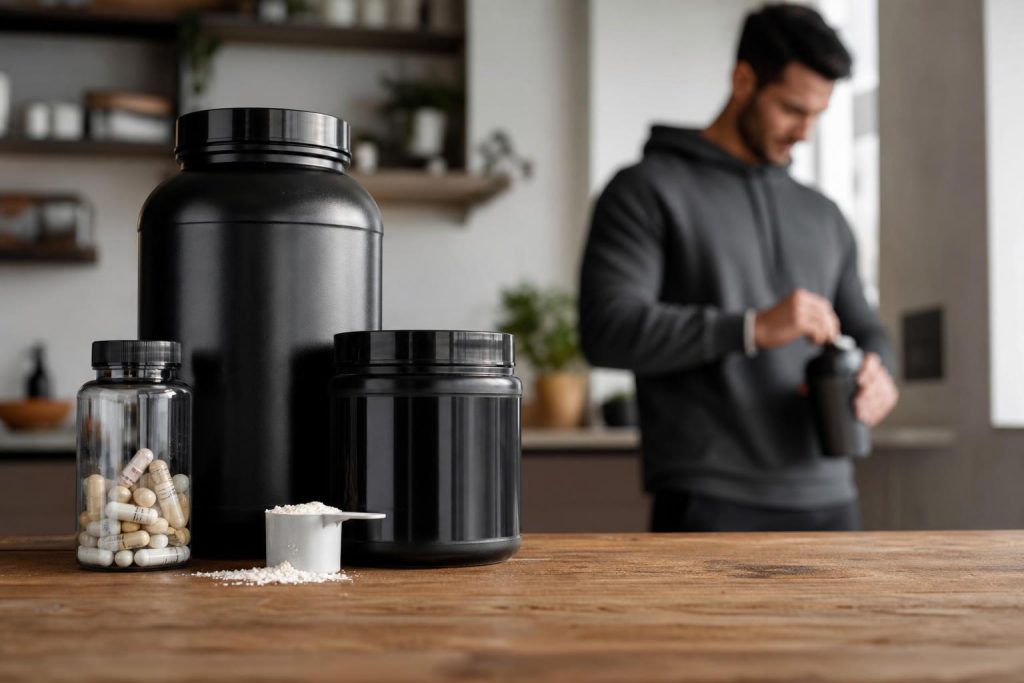
When it comes to losing fat, most men know the fundamentals: eat in a caloric deficit, train consistently, and prioritize protein. But after nailing those basics, the question becomes: can supplements move the needle?
The answer is nuanced. While no supplement replaces solid nutrition and training, research indicates that certain compounds—including conjugated linoleic acid (CLA), epigallocatechin gallate (EGCG), and hydroxycitrate—show measurable effects on body composition and metabolic health. The key is understanding which ones work, what the evidence actually says, and how to integrate them into a coherent fat-loss strategy.
This guide breaks down the supplements with legitimate scientific backing, the realistic expectations you should have, and how to use them smartly alongside diet and training.
Why Most Fat-Loss Supplements Fail (And What Actually Works)
The supplement industry is saturated with overhyped fat-loss products. Walk into any nutrition store and you’ll see dozens of “thermogenic” blends, appetite suppressants, and metabolic boosters—most backed by minimal evidence.
The reason most fail: they either have no mechanism of action supported by human research, doses far below what studies used, or they expect supplements to overcome poor diet and training.
What works instead is focusing on supplements that:
- Have peer-reviewed human studies demonstrating fat-loss or metabolic benefits
- Are used at research-validated doses (not proprietary blends with micro-doses)
- Complement a solid foundation of nutrition and training, not replace it
- Support secondary mechanisms—like preserving lean mass, improving adherence, or enhancing energy for training
Scientific analysis of weight management supplements shows that agents targeting reduced adipogenesis (fat cell formation) and increased thermogenesis (heat production) represent the primary evidence-based routes for supplemental fat loss. This is important context: supplements don’t create a dramatic caloric deficit, but they can optimize the environment your body operates in while you’re already in one.
The Best Supplements for Fat Loss, Ranked by Evidence
1. Conjugated Linoleic Acid (CLA)
What it is: A naturally occurring fatty acid found in dairy and beef. It’s available as a supplement derived from safflower oil.
How it works: CLA affects fat cell metabolism by increasing fat breakdown and reducing fat storage. Research demonstrates that CLA was proven to ameliorate signs of body composition changes and fat loss, making it one of the few supplements with demonstrable effects on how your body stores and mobilizes fat.
The evidence: Multiple studies show CLA reduces body fat mass by approximately 0.5-1.5 lbs per month when combined with consistent training and adequate nutrition. The effect is modest but measurable.
How to use it:
- Dose: 3-4 grams daily (typically 1-2 grams with meals, 2-3 times per day)
- Timing: With meals to enhance absorption
- Duration: Minimum 8-12 weeks to assess effectiveness
- Quality: Look for non-GMO, safflower oil-derived CLA
Realistic expectations: CLA is not dramatic. If you’re already in a caloric deficit with solid training, CLA may help preserve lean mass and optimize fat loss rate—not transform your body alone.
2. Green Tea Extract (EGCG)
What it is: A concentrated extract of the polyphenol EGCG (epigallocatechin gallate) from green tea leaves.
How it works: EGCG appears in the scientific literature as one of several agents being investigated for weight management and metabolic optimization. It works primarily by inhibiting catechol-O-methyltransferase (COMT), an enzyme that breaks down norepinephrine—a hormone that promotes fat mobilization and thermogenesis.
The evidence: Studies show EGCG combined with caffeine produces a synergistic fat-burning effect, particularly during fasted cardio or training. The effect is small (200-300 extra calories burned per day in some studies) but reliable.
How to use it:
- Dose: 300-500 mg of EGCG daily (often provided in 2-3 capsules)
- Synergy: EGCG works better with caffeine (50-100 mg per dose)
- Timing: Before training or morning cardio on an empty stomach for maximal effect
- Duration: Can be used continuously; some studies show benefits plateau after 12 weeks
Realistic expectations: EGCG is a mild thermogenic. It won’t melt fat solo, but it’s one of the safest, most researched supplements available and stacks well with caffeine for pre-workout energy and metabolic support.
3. Hydroxycitrate (Garcinia Cambogia)
What it is: An extract from the Garcinia cambogia fruit, rich in hydroxycitric acid (HCA).
The evidence: The research is mixed. Some studies show modest appetite suppression; others show minimal fat-loss benefit beyond placebo. It’s one of the weaker options on this list, but may help if adherence to a deficit is your primary challenge.
How to use it:
- Dose: 500-1000 mg of HCA, 2-3 times daily
- Timing: 30-60 minutes before meals
- Quality: Look for products standardized to at least 50% HCA
- Duration: 8-12 weeks minimum
Realistic expectations: If appetite is sabotaging your deficit, hydroxycitrate may provide modest support. It’s not a primary fat-loss tool, but a potential aid for dietary adherence.
Supplements to Skip (Or Approach With Caution)
Yohimbine: While research exists, it’s often overstimulating and the fat-loss benefit is small relative to the side effects (anxiety, elevated heart rate). Better to optimize training and nutrition first.
Caffeine alone: Effective in context (pre-workout energy, mild thermogenesis), but not a primary fat-loss tool. Most men get adequate caffeine from coffee or tea.
Proprietary fat-burner blends: Usually contain under-dosed ingredients, fillers, and aggressive marketing. Stick to single, research-backed compounds.
Chromium picolinate: Limited evidence in non-diabetic populations. Skip unless deficient.
The Real Strategy: Supplements as the 5% Solution
Here’s what research-minded men need to understand: supplements optimize the edges, they don’t build the foundation.
Your primary levers for fat loss are:
- Caloric deficit (the non-negotiable)
- Adequate protein (preserve muscle, enhance satiety)
- Resistance training (maintain muscle mass, boost metabolism)
- Sleep and stress management (regulate hunger hormones, cortisol)
- Consistency over 8-12+ weeks (time compounds results)
Once these are solid, supplements can:
- Provide a 5-10% boost to fat loss rate through improved thermogenesis
- Support adherence (appetite control, energy for training)
- Preserve lean mass during aggressive cuts
- Enhance training performance and recovery
Research suggests that synergies between multiple agents—such as combining botanicals with polyunsaturated fatty acids or pairing thermogenic compounds—may provide superior results compared to single interventions. In practical terms: a stack of CLA + EGCG + caffeine + solid training will outperform any single supplement.
Bottom Line: What to Actually Buy and Use
If you’re serious about fat loss and want supplement support, here’s the protocol:
Tier 1 (Essential):
- Whey protein powder (for hitting protein targets)
- Caffeine or green tea extract (pre-workout energy and thermogenesis)
Tier 2 (Optimizing):
- CLA, 3-4g daily with meals
- EGCG, 300-500mg daily (ideally with caffeine)
Tier 3 (Conditional):
- Hydroxycitrate if appetite control is limiting your deficit
- Electrolytes and micronutrient support (magnesium, zinc, vitamin D) if deficient
Reality check: Expect realistic results. If you’re in a 500-calorie deficit with solid training, supplements might accelerate fat loss by 0.5-1 extra pound per month. Over a 12-week cut, that’s 6-12 extra pounds of fat lost—meaningful, but not miraculous.
The men who succeed don’t rely on supplements. They nail fundamentals first, then use supplements as force multipliers. That’s where the evidence points, and that’s the honest answer.
Next step: Before buying anything, audit your nutrition, training, and sleep. Those three factors determine 90% of your fat-loss success. Once locked in, revisit supplements with realistic expectations.
Scientific References
-
Rawlings et al. (2006).
Cellulite and its treatment..
International journal of cosmetic science.
View on PubMed →