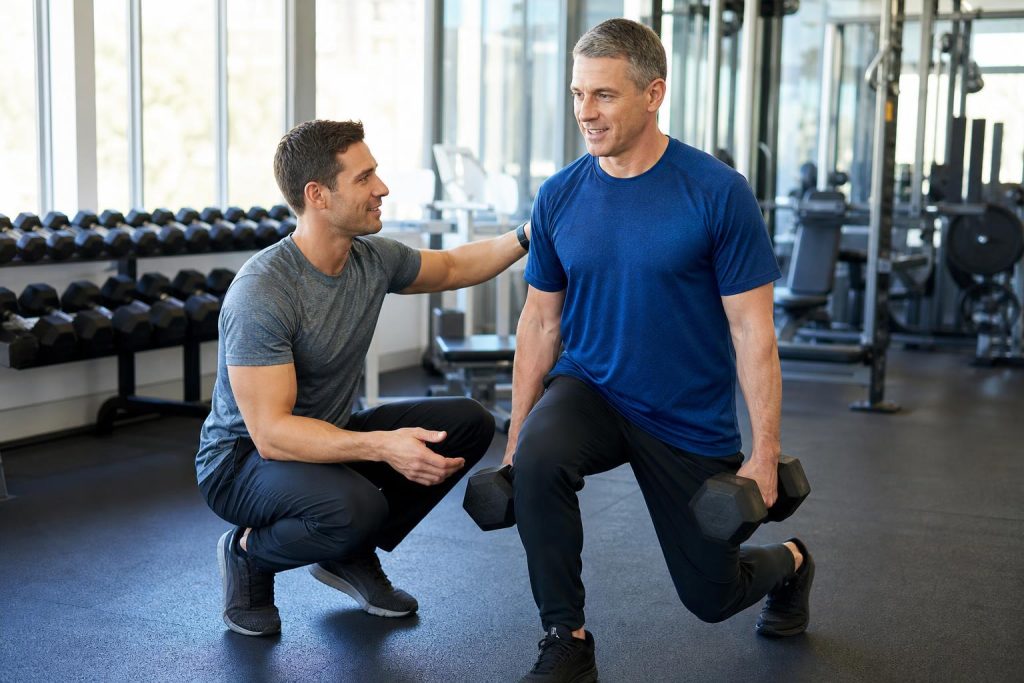
If you’re on a GLP-1 medication like semaglutide or tirzepatide, you’re experiencing rapid weight loss—which is metabolically powerful but comes with a hidden cost: bone loss accelerates during significant caloric deficit and weight reduction. Research shows that men losing weight quickly can lose 1-2% of bone mineral density annually, particularly in the spine and hip—the same sites critical for fracture prevention.
But here’s the good news: progressive resistance training directly stimulates bone formation through mechanical loading, counteracting medication-induced and deficit-related bone loss. Even on aggressive fat loss protocols, strategic strength training can preserve—or build—bone density while you’re losing fat.
This guide breaks down exactly how to structure your training, nutrition, and recovery to protect and strengthen your skeleton, whether you’re using GLP-1s, traditional calorie restriction, or any other fat loss approach.
Why GLP-1 Users (and All Men in Caloric Deficit) Lose Bone Density
Bone is living tissue. It remodels constantly, and that process requires three things: mechanical load, hormonal signaling, and adequate nutrition. Weight loss disrupts all three.
During caloric deficit, bone loss increases because reduced body weight means reduced mechanical stress on the skeleton, and lower estrogen and testosterone levels (even in men, as they lose weight) suppress bone-building osteoblasts. GLP-1 medications amplify this effect because they suppress appetite so effectively that nutritional intake—particularly protein and micronutrients essential for bone metabolism—often falls short.
The takeaway: Bone loss during weight loss is normal, but it’s not inevitable or permanent. Resistance training + adequate protein + micronutrient sufficiency can offset or reverse it.
The Resistance Training Protocol That Protects Bone Density
Not all exercise is equal for bone health. High-impact and heavy resistance training generate the greatest osteogenic (bone-building) stimulus—specifically, exercises that create high ground reaction forces or require moving heavy external loads.
Principle 1: Progressive Overload and Heavy Loads
Bone responds to progressive mechanical stress. Resistance training with loads ≥70% of 1-rep max produces the strongest bone-building signal, particularly when combined with compound movements involving multiple joints.
Your protocol:
- Main lifts 3x/week: Back squats, deadlifts, leg press, bent-over rows, overhead press—performed at 6-8 reps (heavy) or 8-12 reps with slower tempo (60-90 second time under tension). Rest 2-3 minutes between sets.
- Secondary strength work 2x/week: Isolation exercises (leg extensions, chest press, lat pulldowns) at 10-15 reps to accumulate volume without excessive nervous system fatigue.
- Impact work 2x/week (optional but powerful): Jump squats, box jumps, or plyometric movements for 3-5 reps x 3 sets. Even on a GLP-1, you can perform low-volume plyometrics if you manage energy intake around training.
Principle 2: Frequency and Consistency Over Intensity Alone
Studies show that 2-4 sessions per week of resistance training produces superior bone density gains compared to single weekly sessions, even when total volume is equated. This is because bone responds to repeated mechanical stimulus—frequency matters.
Recommended split:
- Monday: Lower body (squats, deadlifts, leg press, leg curls)
- Tuesday: Upper body (rows, overhead press, bench press, pull-ups)
- Wednesday: Active recovery or light cardio
- Thursday: Lower body (deadlift variations, lunges, leg extensions)
- Friday: Upper body (bench variations, rows, dips)
- Saturday/Sunday: Rest or optional light activity
This 4-day split ensures you’re training each skeletal region (hip, spine, forearm) twice weekly—optimal for bone remodeling without overtraining.
Principle 3: Time Under Tension and Range of Motion
Full range-of-motion resistance training produces greater bone density improvements than partial range work, particularly for exercises targeting the spine and hip. The eccentric (lowering) phase is particularly potent for bone stimulus.
Practical tip: Use controlled tempo on every rep. Example: 3 seconds down, 1 second pause, 1 second up = 5 seconds per rep. Even at lighter loads, this generates bone-building stimulus through metabolic stress and increased time under tension.
Nutrition to Support Bone Density During Weight Loss
Training creates the stimulus. Nutrition provides the raw materials. Men losing weight rapidly while on GLP-1s are at particularly high risk for micronutrient deficiency—calcium, vitamin D, magnesium, and phosphorus are critical for bone mineralization and are often undersupplied in hypocaloric diets.
Protein: The Non-Negotiable Baseline
Adequate protein intake (1.6-2.2g/kg bodyweight) is required to maintain bone mineral density during resistance training and weight loss. Without sufficient protein, your body cannot build or repair bone matrix collagen, which comprises 30% of bone structure.
Target: 0.8-1.0g per pound of bodyweight daily.
On GLP-1s, appetite suppression makes hitting this challenging. Strategy:
- Front-load protein early in the day (high-protein breakfast when appetite is highest)
- Use whey or casein protein powder to reach targets without feeling overstuffed
- Pair high-protein foods with fat to improve satiety signaling and nutrient absorption
Micronutrients: The Foundation Layer
Calcium: 1,000-1,200 mg daily (dairy, fortified plant milks, sardines, leafy greens)
Vitamin D3: 1,000-2,000 IU daily (sun exposure, fatty fish, egg yolks, supplementation). Vitamin D is required for intestinal calcium absorption and direct bone mineralization; deficiency accelerates bone loss.
Magnesium: 400-500 mg daily (nuts, seeds, dark chocolate, leafy greens)
Vitamin K2: 100-200 mcg daily (fermented foods, certain cheeses). Vitamin K2 activates osteocalcin, the key protein that binds calcium into bone matrix.
Practical approach: If supplementing micronutrients beyond food, use a broad-spectrum multivitamin + targeted calcium and vitamin D3 supplementation rather than dozens of single-nutrient pills.
Caloric Deficit Strategy: How Aggressive Can You Go?
GLP-1s make large deficits easier to tolerate, but that doesn’t mean they’re optimal for bone. Deficits exceeding 750 kcal/day produce accelerated bone loss even with resistance training; moderate deficits (300-500 kcal/day) combined with heavy lifting preserve bone while allowing steady fat loss.
Recommended approach for bone health:
- Target 0.5-1.0% bodyweight loss per week (not 2-3% weekly, despite GLP-1 making this possible)
- This typically requires a 300-500 kcal deficit
- Adjust based on training performance and recovery—if strength drops sharply week-to-week, increase calories slightly
- Every 8-12 weeks of aggressive dieting, take a 1-2 week diet break at maintenance calories to allow hormonal recovery and bone remodeling acceleration
Recovery and Hormonal Support for Bone Remodeling
Bone remodeling happens at rest, not during training. Inadequate sleep (less than 7 hours nightly) impairs osteoblast function and accelerates bone loss; conversely, 8-9 hours of sleep enhances bone formation markers.
Bone remodeling also depends on adequate circulating testosterone. Men in severe caloric deficit for extended periods experience suppressed testosterone, which directly reduces bone formation; moderate deficits combined with regular resistance training maintain testosterone levels and bone density.
Actionable recovery protocol:
- Target 7-9 hours sleep nightly (non-negotiable for bone health)
- Manage training frequency—avoid overtraining (excessive volume + frequency) which suppresses testosterone
- Include 1-2 deload weeks per month: reduce volume by 40-50% while maintaining load
- Manage stress through meditation, walking, or other low-intensity activities—chronic stress elevates cortisol, which antagonizes bone formation
Monitoring Progress: When to Check Bone Density
You can’t see bone density changes without testing. DXA (dual-energy x-ray absorptiometry) scans are the gold standard for measuring bone mineral density (BMD) in clinical settings.
Testing recommendations:
- Baseline scan before starting aggressive weight loss or GLP-1 therapy
- Follow-up scan at 12-24 months—this is the minimal timeframe for detecting meaningful change
- If initial scan shows low bone density (T-score below -1.0), repeat at 12 months; if normal, every 2 years is sufficient
Functionally, also track:
- Strength gains: Increasing squat, deadlift, or bench press maxes indicates bone is adapting to load
- Grip strength: Lower grip strength correlates with lower bone density; track this with a dynamometer every 3 months
- Injury frequency: Increasing fractures or stress injuries suggest bone loss is outpacing training stimulus
Bottom Line
Bone loss during weight loss is real—but it’s not inevitable. Whether you’re using GLP-1 medications, traditional calorie restriction, or any other approach, the principles are the same: progressive resistance training 3-4x weekly, adequate protein (0.8-1.0g/lb), micronutrient sufficiency, moderate caloric deficits (not aggressive ones), and prioritized sleep create the metabolic environment for bone preservation and building.
The research is clear: men who combine heavy resistance training with adequate nutrition maintain or gain bone density even while losing significant fat mass. The cost is consistency and patience—but the payoff is longevity, injury prevention, and metabolic resilience for decades to come.
Don’t optimize for weight loss at the expense of bone health. They’re not mutually exclusive—they’re complementary when trained and fueled correctly.
Ready to Build Your Training Program?
Explore our complete guide on resistance training protocols for fat loss, or dive deeper into protein optimization for muscle and bone health.