When you’re in a caloric deficit—whether through GLP-1 medications, traditional dieting, or deliberate calorie restriction—your body faces a metabolic crossroads: lose fat, lose muscle, or ideally, lose fat while preserving lean tissue.
The stakes are high. Research published in the Journal of the International Society of Sports Nutrition shows that during weight loss, 25-30% of total weight lost can come from lean muscle mass if protein intake is inadequate. For men using GLP-1 medications like semaglutide (Ozempic, Wegovy) or tirzepatide (Mounjaro, Zepbound)—which can suppress appetite and reduce overall caloric intake by 20-35%—this risk is even more pronounced.
The good news: a deliberate protein strategy can flip this equation. By optimizing protein intake, timing, and total daily consumption, you can preserve muscle mass, maintain metabolic rate, and actually improve body composition outcomes during fat loss.
This guide breaks down exactly how to use protein strategically, whether you’re using GLP-1 medications or pursuing fat loss through any other method.
Why GLP-1 Users Face Higher Muscle Loss Risk
GLP-1 receptor agonists work primarily through appetite suppression and altered nutrient sensing in the brain. They’re remarkably effective for weight loss—clinical trials show average weight loss of 15-22% body weight over 68 weeks with tirzepatide—but this creates a unique nutritional challenge.
Three factors increase muscle loss risk specifically for GLP-1 users:
1. Reduced Total Food Intake
GLP-1 medications reduce hunger signals and increase satiety. Users often report feeling full after 30-50% of their normal meal volume. This is therapeutically valuable, but it means meeting protein targets becomes harder without deliberate strategy.
2. Accelerated Caloric Deficit
The appetite suppression creates a larger deficit than traditional dieting. A study in Diabetes Care found that GLP-1 users averaged a 600-900 kcal daily deficit without conscious restriction. Larger deficits = greater muscle loss risk without compensatory protein intake.
3. Reduced Meal Frequency Incentive
Because satiety is mechanically enhanced, users naturally eat fewer meals per day. Since research indicates distributed protein intake across 3-4 meals optimizes muscle protein synthesis versus concentrated intake, this behavioral shift can undermine muscle preservation.
The Protein Target: How Much Do You Actually Need?
The standard RDA of 0.8g per kilogram bodyweight is insufficient for fat loss. You need more.
International Society of Sports Nutrition consensus guidelines recommend 1.6-2.2g of protein per kilogram of body weight daily during caloric deficit and resistance training. For practical purposes with American measurements:
Target: 0.7-1.0g protein per pound of body weight
Examples:
- 180 lb man: 126-180g protein daily (aim for 140-160g)
- 200 lb man: 140-200g protein daily (aim for 160-180g)
- 220 lb man: 154-220g protein daily (aim for 180-200g)
For GLP-1 users specifically, consider the upper end of this range because:
- Reduced meal frequency requires more protein per eating occasion to trigger muscle protein synthesis
- Larger caloric deficits demand greater protein support
- Protein has the highest thermic effect of food (25-30% of calories burned in digestion), partially offsetting the appetite suppression
Protein Timing and Distribution: The Meal Strategy
Total daily protein matters most, but distribution across meals significantly impacts muscle preservation. Research in the Journal of the International Society of Sports Nutrition shows that spreading 20-40g of protein across 3-4 meals optimizes muscle protein synthesis better than consuming the same total in 1-2 meals.
However, GLP-1 users often naturally eat 2 larger meals rather than 3-4 moderate ones. Here’s how to adapt:
The 2-Meal Protocol (GLP-1 Adapted)
- Meal 1 (breakfast or early eating window): 40-50g protein
Examples: 2 whole eggs + 2 scoops protein powder (smoothie or mixed with Greek yogurt), 8oz chicken breast with rice - Meal 2 (dinner/evening): 40-50g protein
Examples: 8-10oz fish or lean beef with vegetables, ground turkey with pasta - Optional light snack (if not suppressed by GLP-1): 20-30g protein
Examples: Greek yogurt, cottage cheese, protein shake, beef jerky
Pro tip: Whey protein isolate or casein powder becomes nearly essential for GLP-1 users because it allows you to meet protein targets without excessive food volume. A single shake (20-30g protein) can be consumed quickly and requires minimal appetite capacity.
The 3-Meal Protocol (Traditional Approach)
If you maintain normal eating patterns:
- Breakfast: 25-35g protein
- Lunch: 35-45g protein
- Dinner: 40-50g protein
This distribution is superior for muscle protein synthesis rates but requires normal appetite signals.
Protein Quality and Type: Prioritize Essential Amino Acids
Not all proteins are equal for muscle preservation. A study in Nutrients journal found that protein sources high in leucine (an essential amino acid) triggered 20-30% greater muscle protein synthesis compared to leucine-poor sources.
Best Protein Sources (ranked by muscle-building potential):
Tier 1 – Highest Leucine & Complete Amino Acids:
- Whey protein powder (isolate or concentrate): ~3g leucine per 25g serving
- Greek yogurt: ~2g leucine per 20g protein
- Beef (all cuts): ~2.5g leucine per 25g protein
- Chicken breast: ~2.3g leucine per 25g protein
- Eggs: ~1.5g leucine per egg (6g protein)
- Cottage cheese: ~2.2g leucine per 25g protein
Tier 2 – Good but Slightly Lower Leucine:
- Fish (salmon, cod): ~2g leucine per 25g protein
- Milk: ~0.5g leucine per 8oz (8g protein)
- Casein protein powder: ~2.8g leucine per 25g serving
Tier 3 – Plant-Based (Lower Leucine, Incomplete Amino Profiles):
- Legumes (beans, lentils): ~0.8g leucine per 15g protein—supplement with grains for complete profile
- Tofu: ~1.1g leucine per 20g protein
- Hemp/pea protein powder: ~1.5g leucine per 25g serving
Strategy for GLP-1 Users: Prioritize Tier 1 sources, especially whey protein and Greek yogurt, because they deliver maximum amino acid density in minimal volume. A single scoop of whey (25-30g protein, 3g leucine) requires minimal appetite capacity but maximally stimulates muscle protein synthesis.
Resistance Training: The Non-Negotiable Complement
Protein alone cannot preserve muscle without mechanical stimulus. Research shows that protein intake’s muscle-preserving effect during caloric deficit depends entirely on concurrent resistance training. Without lifting, excess protein becomes excess calories.
Minimum Resistance Training Protocol:
- Frequency: 3-4 sessions per week
- Duration: 30-45 minutes per session
- Focus: Compound movements (squat, deadlift, bench press, rows) hitting each muscle group 2x weekly
- Intensity: Weights heavy enough that you can only perform 6-12 reps before failure
Practical Implementation: The Day-to-Day Protocol
Step 1: Calculate Your Target
Multiply your body weight in pounds by 0.8: this is your minimum daily protein target in grams.
Step 2: Choose Your Eating Pattern
Decide whether you’re eating 2 larger meals (GLP-1 adapted) or 3-4 moderate meals. Pick the pattern you can sustain.
Step 3: Build Your Meal Framework
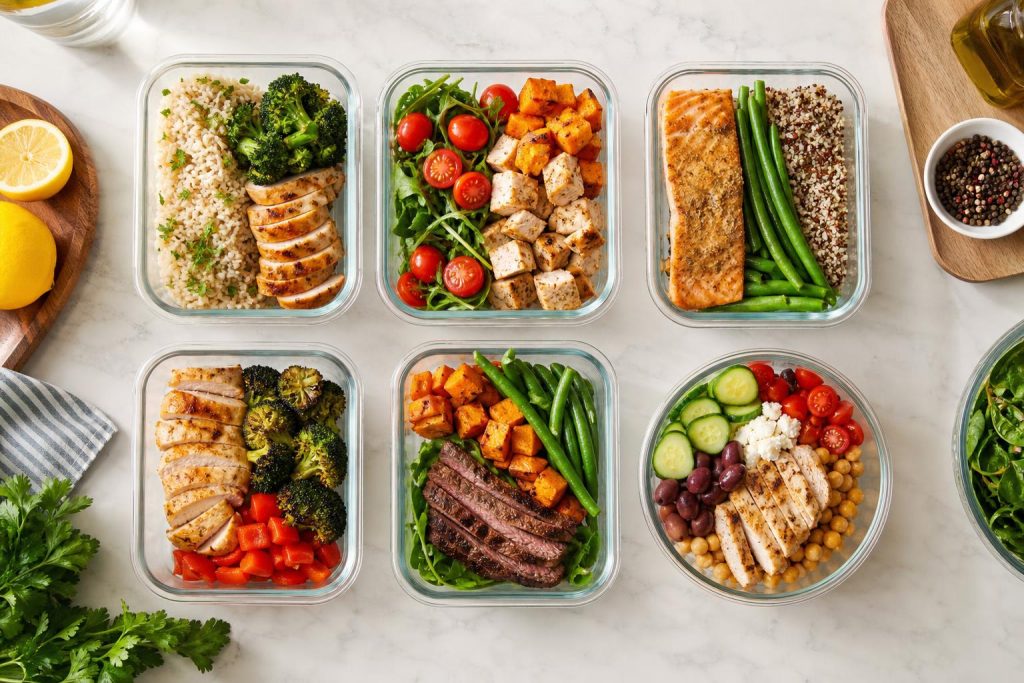
For each meal, include one Tier 1 protein source. Examples:
- Breakfast: 3 whole eggs (18g protein) + Greek yogurt (20g protein) = 38g
- Lunch: 8oz chicken breast (56g protein) + rice
- Dinner: 10oz beef (70g protein) + vegetables
- Snack (optional): Whey protein shake (25-30g protein)
Step 4: Track for 2 Weeks
Use MyFitnessPal or Cronometer to log protein intake and ensure you’re hitting your target daily. After 2 weeks, it becomes intuitive.
Step 5: Monitor Body Composition
Track weekly weight, take monthly photos, and monitor strength in the gym. If weight is dropping but strength is stable or improving, muscle is being preserved. If strength plummets, increase protein further.
Bottom Line
Muscle loss during fat loss is not inevitable—it’s a choice. Whether you’re using GLP-1 medications, traditional calorie restriction, or any other approach, a deliberate protein strategy creates the metabolic conditions for fat-preferential weight loss.
The formula is simple:
- Protein Target: 0.7-1.0g per pound of body weight daily (0.8g for GLP-1 users at the higher end)
- Distribution: 40-50g per meal, 2-3 times daily, prioritizing high-leucine sources
- Training: 3-4 weekly resistance sessions, compound-focused
- Consistency: Track for 2 weeks until the pattern becomes automatic
Men who implement this framework consistently report better muscle retention, maintained strength, faster metabolic recovery post-diet, and superior long-term body composition compared to those who under-prioritize protein during fat loss.
Ready to optimize your nutrition strategy further? Explore our complete guides on calorie deficit protocols, resistance training for fat loss, and metabolic health optimization.