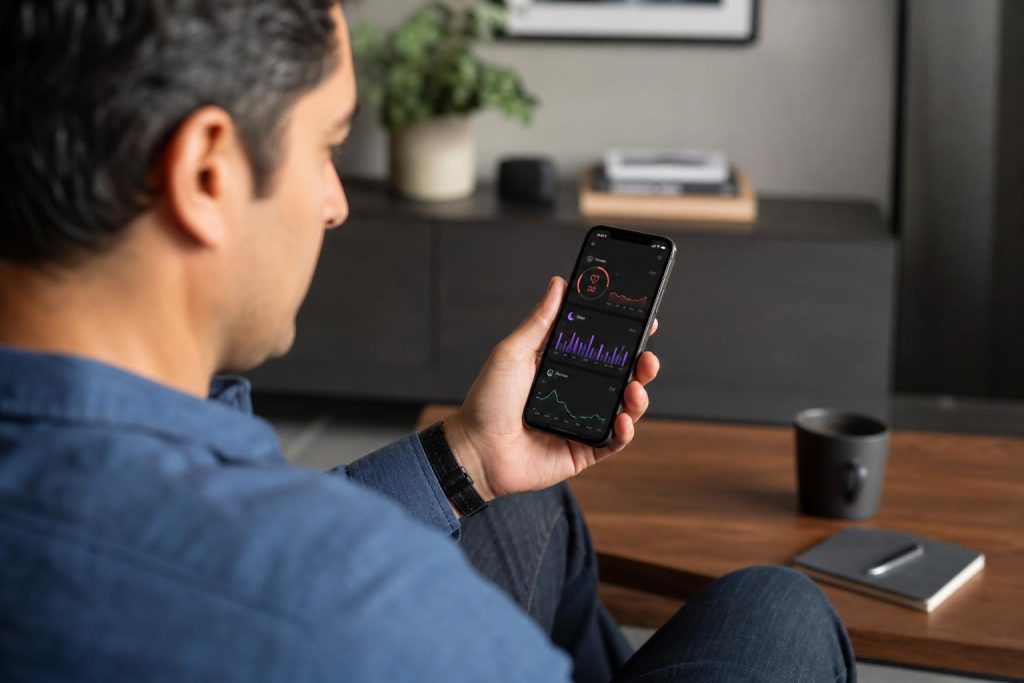
If you’re serious about optimizing your metabolism, losing fat, building muscle, or simply understanding how your body responds to food and training, continuous glucose monitoring (CGM) is one of the most revealing tools at your disposal.
For decades, we’ve measured metabolic health through snapshots: a fasting glucose test, an HbA1c number once every few months, maybe a blood panel. But research shows that continuous glucose monitoring provides real-time glucose patterns and enables individuals to optimize their dietary and lifestyle choices based on personalized metabolic responses.
What’s remarkable is that glucose responses aren’t one-size-fits-all. The same meal might spike one man’s blood sugar dramatically while another processes it with minimal impact. CGM technology reveals these individual differences and allows athletes and health-focused individuals to understand how carbohydrate intake, timing, and food combinations directly influence their metabolic performance and glucose stability.
This guide breaks down everything you need to know about using CGM technology—whether you’re managing diabetes, optimizing athletic performance, pursuing fat loss, or simply taking control of your metabolic health.
What is Continuous Glucose Monitoring and How Does It Work?
A continuous glucose monitor is a small wearable sensor, typically worn on the back of your arm or abdomen, that measures interstitial glucose (glucose in the fluid between cells) every 5-15 minutes. Most devices send data wirelessly to your smartphone, giving you real-time insight into how your body processes food, stress, sleep, and exercise.
Unlike finger-prick glucose tests that give you a single data point, CGM provides a complete picture of your glucose patterns throughout the day and night. You see peaks, valleys, trends, and the specific timing of glucose responses to meals and activities.
Primary CGM Devices Available
- Freestyle Libre: 14-day wear time, scanned with your phone or reader
- Dexcom G7: 10.5-day wear time, real-time smartphone alerts
- Medtronic Guardian: 7-day wear time, integrated with insulin pump systems
- Eversense: Implanted sensor, 90-day wear time, longer-term data collection
For most men focused on metabolic optimization and fitness, Freestyle Libre or Dexcom G7 are the most practical choices—affordable enough for personal use and providing the data depth you need.
The Science: How CGM Improves Metabolic Health Outcomes
For men without diabetes, the clinical benefits extend far beyond traditional glucose management:
1. Personalized Nutrition Optimization
You discover your individual glucose response to specific foods. One man might tolerate white rice without major spikes; another shows significant glucose elevation from the same serving. Research comparing Mediterranean and plant-based diet patterns in adults with prediabetes shows that calorie-restricted diets combined with real-time dietary feedback produce measurable improvements in glucose control and metabolic markers.
CGM accelerates this learning curve. Instead of waiting 3 months for an HbA1c test, you see immediate results from dietary changes within days or weeks.
2. Athletic Performance Enhancement
If you’re training hard, CGM shows whether you’re:
- Eating enough carbs pre-workout (glucose should be stable, not declining)
- Properly fueling during long training sessions
- Recovering with appropriate post-workout nutrition
- Over-relying on fasted training (some benefit, but risk of energy crashes)
3. Fat Loss Without the Metabolic Damage
Aggressive calorie restriction often tanks metabolic health—your glucose becomes unstable, energy plummets, and you lose muscle. CGM lets you pursue fat loss while maintaining stable glucose throughout the day, which correlates with better hormone levels, preserved muscle mass, and more sustainable adherence.
4. Sleep and Recovery Optimization
Glucose spikes before bed suppress melatonin production and disrupt sleep architecture. CGM allows you to identify which evening meals cause midnight blood sugar surges, then adjust timing or composition accordingly. Better glucose control = better sleep quality = faster recovery and better training adaptation.
How to Use CGM for Metabolic Health Optimization: Practical Protocols
Phase 1: Baseline Data Collection (Weeks 1-2)
Start by eating normally while wearing a CGM. Don’t change anything yet—the goal is to establish your baseline patterns.
Track:
- Average fasting glucose (target: 70-100 mg/dL)
- Post-meal glucose peaks (target: below 140 mg/dL for non-diabetics)
- Time in range (target: 70% or higher time between 70-180 mg/dL)
- Glucose variability (lower is better—means more stable energy)
- Sleep-time glucose patterns (should remain relatively flat)
Don’t obsess—just observe. Use your CGM app’s reporting features to identify patterns.
Phase 2: Single-Variable Testing (Weeks 3-6)
Now systematically test one change at a time to isolate what impacts your glucose control.
Test variables like:
- Meal composition: Eat the same meal with high carb vs. high fat vs. high protein to see individual response
- Meal timing: Breakfast vs. skipping breakfast—how does it affect your mid-day glucose?
- Food order: Eat vegetables first, then protein, then carbs (fiber and protein slow glucose absorption)
- Exercise timing: Test fasted cardio, post-meal walking, and pre-meal training to see impact on glucose stability
- Sleep quality: Track how late-night meals and sleep duration influence morning fasting glucose
Real example: A 45-year-old man discovers that adding 15g of olive oil to his rice bowl slows his glucose spike by 30%, extending his stable energy window by 2 hours. That’s actionable personalized data no textbook can provide.
Phase 3: Protocol Implementation (Weeks 7+)
Based on your discoveries, build a sustainable eating and training protocol optimized for YOUR glucose metabolism.
Common optimizations men implement:
- Pre-workout nutrition timing: Eat carbs 30-45 minutes before training if your data shows improved performance with stable pre-training glucose
- Post-workout refeed: Time your carb intake within 1-2 hours post-training when glucose sensitivity is highest
- Fat loss macros: If you’re cutting calories, use CGM to ensure you’re losing fat without extreme glucose crashes (which trigger muscle loss)
- Evening meal composition: Shift toward more protein and fat, less carbs, if your data shows evening glucose spikes disrupt sleep
- Intermittent fasting windows: Extend fasting periods based on how long your fasting glucose remains stable
CGM Data Interpretation: Key Metrics You Should Understand
1. Time in Range (TIR)
The percentage of time your glucose stays within target range (typically 70-180 mg/dL for non-diabetics).
- Target: 70% or higher
- Why it matters: Higher TIR correlates with better insulin sensitivity, stable energy, and protective metabolic health
2. Fasting Glucose
Your glucose reading after 8+ hours without food, typically taken first thing in the morning.
- Optimal range: 70-100 mg/dL
- 100-125 mg/dL: Prediabetic range (insulin resistance emerging)
- Over 125 mg/dL: Diabetic range
- Why it matters: Elevated fasting glucose indicates liver glucose production is dysregulated, a sign of insulin resistance
3. Postprandial Peak (After-Meal Spike)
The highest glucose reading you hit within 2 hours of eating.
- Target: Below 140 mg/dL for non-diabetics
- Why it matters: Large postprandial spikes (over 180 mg/dL) increase oxidative stress and inflammation, damage blood vessels, and impair muscle protein synthesis
4. Glucose Variability (Standard Deviation)
How much your glucose bounces around throughout the day.
- Better: Low variability (steady glucose means stable energy and hormones)
- Worse: High variability (glucose spikes and crashes stress your system)
- Why it matters: Paradoxically, two people with the same average glucose can have very different metabolic health—the one with steady glucose does better
5. Glucose Trends (Rate of Change)
How quickly your glucose is rising or falling.
- Fast rise (arrow pointing sharply up): High insulin demand, potential for steep crash later
- Steady rise/fall: Balanced nutrient absorption, stable energy
- Why it matters: Rapid glucose changes trigger stress hormone release and energy crashes that sabotage training and fat loss
CGM for Specific Goals: Fat Loss, Muscle Building, and Athletic Performance
Fat Loss Protocol
Goal: Lose fat while preserving muscle and maintaining energy for training.
CGM strategy:
- Maintain TIR above 65% even in a calorie deficit (dropping below this often means you’re cutting too aggressively)
- Ensure pre-workout glucose is stable (not crashing), even if you’re in a deficit
- Avoid large glucose crashes post-workout (eat carbs/protein within 1-2 hours)
- Monitor fasting glucose—if it starts creeping up despite weight loss, you’re losing muscle (reduce deficit)
Typical optimization: A man in a 300-400 calorie/day deficit discovers his glucose crashes hard if he trains fasted. He adds 20-30g carbs pre-workout, maintains his deficit elsewhere, and preserves muscle while losing fat faster.
Muscle Building Protocol
Goal: Build muscle while staying lean.
CGM strategy:
- Post-workout glucose should rise within 30-60 minutes of training (signals nutrient uptake window)
- Maintain stable glucose throughout the day (supports anabolic hormone balance)
- If cutting carbs to stay lean, ensure you’re not cutting them so much that pre-workout glucose crashes (kills performance)
- Track how different protein/carb ratios affect your training energy and recovery
Typical optimization: A man realizes his 6am fasted training crushes his glucose (dips to 60 mg/dL), impairing his strength. Adding 30g carbs before training increases his lifting performance by 15% and supports muscle growth.
Athletic Performance Protocol
Goal: Optimize carb timing and fueling for endurance and power.
CGM strategy:
- Test how different carb sources affect glucose stability during and after training (some athletes digest complex carbs better than simple carbs)
- Identify the minimum carb intake you need during long efforts to prevent bonking (glucose dropping too low)
- Optimize recovery carb timing—research shows carbohydrate intake in the post-exercise window when glucose sensitivity is highest improves glycogen repletion and training adaptations
- Monitor how sleep glucose impacts next-day performance
Typical optimization: An endurance athlete discovers he performs best when maintaining glucose between 100-150 mg/dL during training, not spiking above 180. He adjusts his hydration sports drink concentration accordingly.
CGM Limitations and When to Use Other Markers
CGM is powerful, but it’s not a complete metabolic picture.
What CGM Doesn’t Measure
- Insulin levels: Your glucose can look good while your insulin is high (meaning your pancreas is working too hard). Measure fasting insulin occasionally.
- Long-term control: CGM shows real-time, but HbA1c (3-month average) reveals whether your changes stick. Test HbA1c every 3 months.
- Lipid metabolism: You need lipid panels to track cholesterol, triglycerides—not just glucose.
- Hormonal health: Cortisol, testosterone, thyroid status—all affect metabolic health but aren’t directly visible on CGM.
- Inflammation and oxidative stress: High sensitivity C-reactive protein, fasting insulin, and other inflammatory markers give context CGM doesn’t.
Recommended Integrated Testing
Every 6-12 weeks: Get basic blood work—fasting glucose, HbA1c, fasting insulin, lipid panel, hs-CRP.
CGM every 2-4 weeks if optimizing: Wear a CGM device continuously or in cycles to track how your interventions (diet, training, supplementation) actually impact your glucose in real time.
Common Mistakes Men Make with CGM
1. Obsessing Over Individual Data Points
One glucose spike above 150 doesn’t mean failure. CGM is about patterns, not perfection. Focus on your 14-day TIR, not every single reading.
2. Not Testing Variables Systematically
Changing diet AND exercise AND sleep simultaneously means you don’t know what actually worked. Test one variable at a time, hold others constant.
3. Ignoring Context: Stress, Sleep, and Illness
Even perfect nutrition won’t keep your glucose stable if you’re sleep-deprived or under high stress. Use CGM to see how lifestyle factors beyond food and training affect glucose.
4. Abandoning CGM Too Soon
Real insights emerge over 2-3 cycles (4-8 weeks). Don’t make major conclusions from a single week of data.
5. Using CGM as an Excuse for Restrictive Eating
Some men use CGM obsessively to justify cutting entire food groups or calories to extremes. Remember: metabolic health requires sustainable patterns, not perfection. If CGM triggers disordered eating, step back and focus on broader habits instead.
Bottom Line: Using CGM to Optimize Your Metabolic Health
Continuous glucose monitoring transforms metabolic health from abstract (“my HbA1c is 5.2%”) to concrete (“I now know exactly how my body responds to this meal and this workout”).
Whether you’re pursuing fat loss, muscle building, athletic performance, or simply optimizing your metabolic health, here’s your takeaway:
Start with 2-4 weeks of baseline CGM data. Observe patterns without judgment—fasting glucose, postprandial peaks, time in range, and how different meals affect your energy.
Then systematically test variables. Change one thing (meal composition, exercise timing, sleep, stress management) and see how it impacts your glucose metrics within days or weeks.
Build a personalized protocol based on YOUR glucose metabolism, not generic advice. Your optimal macros, meal timing, and training nutrition are unique to how your body processes food.
Layer in other markers. Use CGM insights alongside blood work (HbA1c, fasting insulin, lipids) to get a complete metabolic picture.
Remember: CGM is a tool, not a lifestyle. Use it to learn, then build sustainable habits that keep your glucose stable without obsessive monitoring.
The men getting the best results aren’t the ones checking their CGM 100 times a day—they’re the ones who gathered data, made one or two key changes, and committed to them long-term.
Next Steps
Ready to take control of your metabolic health? Explore our complete guides on optimizing nutrition for fat loss, evidence-based training protocols for muscle building, and metabolic biomarkers every man should track.
Scientific References
-
Schubert-Olesen, Kröger, Siegmund et al. (2022).
Continuous Glucose Monitoring and Physical Activity..
International journal of environmental research and public health.
View on PubMed → -
Flockhart, Larsen et al. (2024).
Continuous Glucose Monitoring in Endurance Athletes: Interpretation and Relevance of Measurements for Improving Performance and Health..
Sports medicine (Auckland, N.Z.).
View on PubMed → -
Nwokolo, Hovorka et al. (2023).
The Artificial Pancreas and Type 1 Diabetes..
The Journal of clinical endocrinology and metabolism.
View on PubMed → -
Albairmani, Basheer, Macky et al. (2025).
Management of Diabetes in Pregnancy: A Review of Clinical Guidelines and Practices..
Cureus.
View on PubMed → -
Luo, Wang, Sun et al. (2022).
Isocaloric-restricted Mediterranean Diet and Chinese Diets High or Low in Plants in Adults With Prediabetes..
The Journal of clinical endocrinology and metabolism.
View on PubMed →