You’ve cleaned up your diet. You’re hitting the gym consistently. But you’re still looking for that extra edge to accelerate fat loss and preserve muscle.
Here’s the truth: supplements are not magic bullets. But when combined with solid nutrition and training, certain compounds have demonstrated measurable effects on body composition, metabolic rate, and fat oxidation.
This guide breaks down the supplements with the strongest evidence for fat loss in men—what actually works, what doesn’t, and how to use them strategically.
The Foundation: Why Most Supplements Fail (And What Actually Works)
The supplement industry generates over $150 billion annually, yet most products deliver minimal results. Why? Because they’re built on marketing hype rather than mechanism.
Fat loss requires three non-negotiable pillars:
- Caloric deficit — You must consume fewer calories than you burn
- Protein intake — Preserve muscle mass during fat loss (0.8-1g per pound of bodyweight)
- Consistent training — Resistance work to maintain strength and metabolic rate
Supplements work within this framework. They can enhance appetite control, boost thermogenesis by 5-15%, improve workout performance, or support recovery. But they cannot override poor nutrition or training.
The supplements below have peer-reviewed evidence supporting their use for fat loss. None are revolutionary—but each offers a specific, measurable benefit when used correctly.
Caffeine: The Most Proven Fat Loss Tool
Caffeine is the most researched and consistently effective fat loss supplement available. It’s not exciting, but it works.
Mechanism: Caffeine increases norepinephrine release, which stimulates lipolysis (fat breakdown) and thermogenesis (heat production). It also improves workout performance, allowing you to train harder and longer.
Evidence: Meta-analyses consistently show that caffeine increases fat oxidation by approximately 3-11% depending on dose, tolerance, and individual sensitivity. The effect is most pronounced in individuals with lower baseline caffeine consumption.
Effective Protocol:
- Dose: 3-6mg per kilogram of bodyweight, taken 30-60 minutes before training or morning cardio
- Timing: Best consumed pre-workout or early morning to avoid sleep disruption
- Form: Black coffee, green tea, or caffeine anhydrous powder are most cost-effective
- Consideration: Caffeine tolerance develops rapidly; take 1-2 week breaks every 8-12 weeks to reset sensitivity
For most men, starting with 200-400mg daily is sufficient. Higher doses don’t necessarily yield better results and can cause jitteriness or anxiety.
Protein Powder: The Muscle-Preservation Essential
Protein powder isn’t exotic, but it’s absolutely critical during fat loss. It’s nearly impossible to hit adequate protein intake without supplementation—especially if you’re training hard.
Why It Matters for Fat Loss: When you’re in a caloric deficit, muscle tissue becomes a target for catabolism. High protein intake (1.6-2.2g per kg of bodyweight) combined with resistance training preserves lean mass and increases satiety, making your deficit more sustainable.
The Evidence: Research consistently demonstrates that protein supplementation during caloric restriction preserves muscle mass, increases thermic effect of food (TEF), and improves body composition outcomes compared to lower protein intake.
Practical Implementation:
- Minimum daily intake: 0.8-1g per pound of target bodyweight
- Best timing: Distributed across 4-5 meals (not all at once)
- Type: Whey isolate or concentrate works equally well; choose based on budget and digestion tolerance
- Cost-effective option: bulk whey protein powder provides 20-30g protein per serving for under $0.50
If you’re not hitting your protein targets through whole foods, a quality protein powder is one of the few supplements with proven ROI.
Green Tea Extract (EGCG): Modest But Real Thermogenic Effect
Green tea extract contains catechins, particularly epigallocatechin gallate (EGCG), which have been studied for fat loss effects.
Mechanism: EGCG inhibits catechol-O-methyltransferase (COMT), an enzyme that breaks down norepinephrine. By prolonging norepinephrine’s metabolic activity, EGCG enhances fat oxidation and thermogenesis.
The Research: A 2010 meta-analysis found that green tea extract supplementation resulted in an average fat loss of 1.3-3.2 kg over 12 weeks when combined with a caloric deficit. Results are modest but statistically significant. The effect appears greatest in individuals with lower caffeine habituation.
Evidence-Based Protocol:
- Dose: 300-400mg EGCG daily (typically 2-3 cups of steeped green tea or standardized extract)
- Timing: Split across meals; can be consumed with or without food
- Duration: Minimum 8-12 weeks to assess individual response
- Cost: Whole green tea or extract supplements are inexpensive ($0.20-0.50 per dose)
Green tea extract works synergistically with caffeine. If you’re already consuming coffee, adding green tea provides additional EGCG benefit without excessive stimulation.
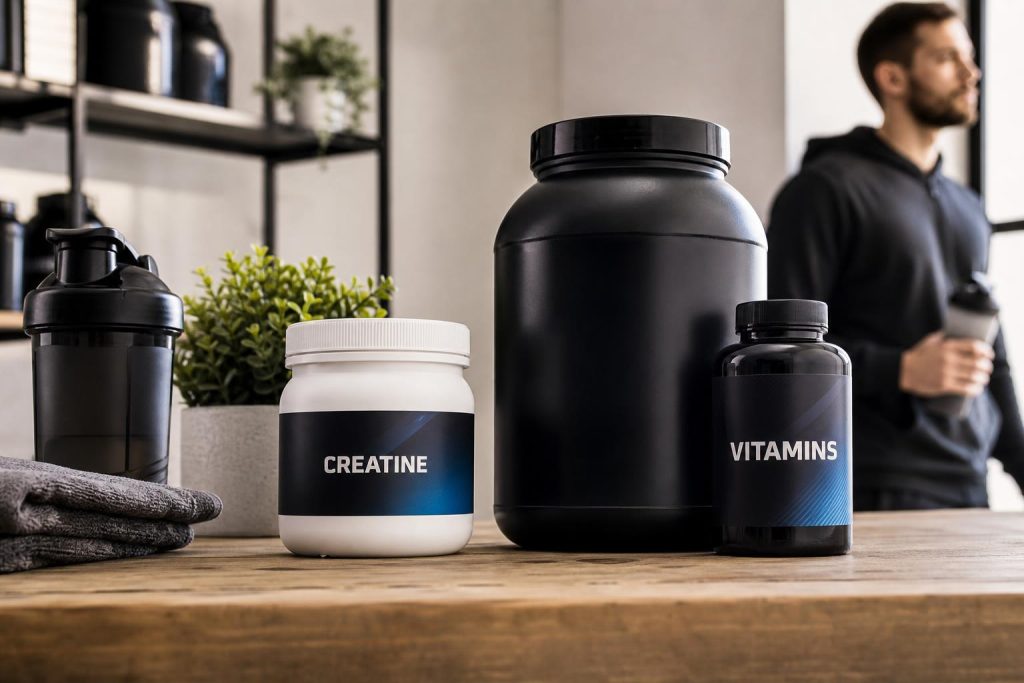
Creatine Monohydrate: Preserve Strength and Muscle During Deficit
Creatine is traditionally thought of as a muscle-building supplement, but it’s equally valuable for fat loss—specifically for maintaining performance and strength when calories are restricted.
How It Helps Fat Loss: During a caloric deficit, strength and workout intensity often decline. Creatine improves ATP regeneration in muscles, allowing you to maintain higher training volume and intensity. This preservation of mechanical tension is critical for preventing muscle loss.
Research Support: Studies show creatine supplementation during caloric restriction preserves lean mass better than placebo, even in a hypocaloric state. The effect appears most pronounced in individuals already engaged in resistance training.
Dosing Protocol:
- Standard approach: 5g monohydrate daily (no loading phase necessary, though 20g/day for 5-7 days followed by 5g daily accelerates saturation)
- Timing: Inconsistent with meal timing; daily consistency matters more than timing
- Hydration: Ensure adequate water intake (creatine increases intramuscular water retention)
- Cost: Approximately $0.05-0.10 per dose; creatine monohydrate is extremely inexpensive
- Safety: Well-researched; no adverse effects in healthy individuals at standard doses
If you’re training hard in a deficit and want to preserve strength, creatine is one of the highest-ROI supplements available.
Beta-Alanine: Enhanced Workout Capacity (With Realistic Expectations)
Beta-alanine increases muscle carnosine levels, which buffers lactic acid accumulation during high-intensity exercise. This allows you to sustain higher intensity for slightly longer duration.
The Reality Check: Beta-alanine provides a modest 2-3% improvement in muscular endurance and high-intensity work capacity. It’s not transformational, but when combined with training and nutrition, small performance gains translate to slightly more training volume and better fat loss outcomes.
Effective Protocol:
- Dose: 3-5g daily (split into 750-1000mg doses throughout the day)
- Duration: Minimum 4 weeks for saturation effects; continues improving for 8-12 weeks
- Side effect: Harmless paresthesia (tingling sensation) commonly occurs; not dangerous
- Cost: $0.10-0.20 per dose
Beta-alanine is lower priority than caffeine or protein but offers measurable benefit if you’re already optimizing training and nutrition.
What About Fat Burners and Thermogenics? (The Honest Assessment)
The fat burner market is built largely on hype. Most commercial “fat burning” supplements contain caffeine, green tea extract, and various other stimulants in under-dosed quantities, wrapped in marketing language.
The Problem: They’re expensive. A quality fat burner costs $30-60 monthly. You can achieve the same effect with:
- Black coffee (free to $2/day)
- Green tea extract supplement ($10-15/month)
- Creatine monohydrate ($5-8/month)
Unless a fat burner provides a specific advantage (convenience, ingredient combination you prefer, clinical dosing), you’re paying a premium for marketing.
Supplements NOT Worth Your Money for Fat Loss
- CLA (Conjugated Linoleic Acid): Minimal fat loss effect (0.5-1 lb difference); expensive for marginal results
- Garcinia Cambogia: Weak appetite suppression; inconsistent results in studies
- Carnitine: Only effective if deficient (rare); limited benefit in adequately nourished individuals
- Chitosan: Minimal fat-binding effect; poor bioavailability
- Proprietary blends: Impossible to assess effective dosing; marketing smoke screen
These supplements exist because they’re profitable, not because they’re effective.
Bottom Line: Your Fat Loss Supplement Stack
Priority Tier 1 (Non-negotiable foundation):
- Caloric deficit (track intake consistently)
- High protein intake (1.6-2.2g per kg bodyweight)
- Resistance training (3-4x weekly)
Priority Tier 2 (Worth adding if Tier 1 is locked in):
- Caffeine: 200-400mg daily, pre-workout or morning (cost: free-$2/day)
- Protein powder: If you can’t hit protein targets with whole foods ($0.30-0.80/serving)
- Creatine monohydrate: 5g daily for strength preservation ($0.05-0.10/day)
Priority Tier 3 (Nice-to-have optimizations):
- Green tea extract: 300-400mg EGCG daily ($0.20-0.50/day)
- Beta-alanine: 3-5g daily if training intensity is high ($0.10-0.20/day)
Total monthly cost for an optimized stack (Tier 1 + Tier 2 + Tier 3): Approximately $40-80, compared to $100-300 for commercial fat burners with similar or inferior ingredients.
Remember: Supplements amplify the results of solid training and nutrition. They don’t replace them. A man with perfect nutrition, consistent training, and no supplements will outperform a man with mediocre training, inconsistent diet, and an expensive supplement stack.
Common Questions About Fat Loss Supplements
Q: Will supplements work for me if I’m using GLP-1 medications?
A: Yes. Protein powder, creatine, and caffeine remain beneficial alongside GLP-1 use. Maintain adequate protein intake (often becomes harder with reduced appetite) and continue resistance training to preserve muscle. Adjust stimulant doses based on individual tolerance.
Q: Can I stack all these supplements together?
A: Yes. Caffeine + protein + creatine + green tea extract + beta-alanine have no contraindications. A combined approach provides modest additive benefits.
Q: How long until I see results from supplements?
A: Caffeine and creatine effects are noticeable within days to weeks (improved performance). Fat loss becomes visible only when combined with a deficit, typically 4-8 weeks for measurable changes.
Q: Are there supplements that speed up metabolism dramatically?
A: No. Most supplements increase metabolic rate by 3-15% at best. A 200-lb man at rest burns ~1,800 kcal daily; even a 15% increase equals ~270 kcal—meaningful but not revolutionary. Consistent training and adequate protein have larger metabolic effects.
Next Steps: Making It Stick
The best supplement is the one you’ll actually use consistently. Start with one or two—perhaps caffeine and protein powder—and master those before adding complexity.
Track your results objectively: weight on the scale, progress photos, and strength metrics. Supplements should produce visible changes within 8-12 weeks when combined with proper training and nutrition.
If you’re serious about optimizing your body composition, explore our complete guides on nutrition for fat loss and training programs for men. Supplements are the final 5% of the equation.
Scientific References
-
Rawlings et al. (2006).
Cellulite and its treatment..
International journal of cosmetic science.
View on PubMed →