Protein Intake on GLP-1 Medications: The Complete Guide to Muscle Preservation During Weight Loss
GLP-1 receptor agonists like semaglutide and tirzepatide are delivering unprecedented weight loss results—sometimes 15-20% of body weight in a matter of months. But here’s the problem most users aren’t discussing: research shows that rapid weight loss without proper nutrition strategies can strip away 25-30% of lost weight as lean muscle mass, not just fat.
This isn’t just about aesthetics. Muscle is your metabolic engine. Lose it during GLP-1 therapy, and you compromise insulin sensitivity, long-term fat-loss sustainability, and your health span. The good news? emerging 2025 clinical guidelines on minimizing muscle loss during incretin-mimetic drug use identify high protein intake as a cornerstone strategy.
This guide breaks down the exact protein protocols, timing strategies, and training approaches to preserve muscle while maximizing fat loss on GLP-1 therapy.
Why GLP-1 Users Lose Muscle (and How to Stop It)
Recent research in the European Journal of Clinical Investigation highlights that while GLP-1 agonists produce excellent weight loss, the proportion of lean mass loss can actually be higher than traditional caloric restriction alone. This happens for several reasons:
- Rapid weight loss speed: GLP-1s produce such fast fat loss that the body doesn’t have adequate signaling to spare muscle tissue.
- Reduced appetite = reduced protein intake: GLP-1s suppress hunger so aggressively that many users unknowingly eat insufficient protein to maintain muscle.
- Reduced training stimulus: Lower calories + reduced appetite energy can impair workout performance and recovery if not managed deliberately.
- Anabolic hormone suppression: Rapid weight loss and caloric deficit can temporarily reduce testosterone and IGF-1 signaling.
The clinical solution is straightforward but requires intention: maximize protein intake specifically because appetite signals are dampened. Unlike someone on a natural diet who “feels” hunger cues reminding them to eat, GLP-1 users must consciously consume adequate protein regardless of appetite.
The Optimal Protein Intake Protocol for GLP-1 Users
Target protein intake: 1.6–2.2 grams per kilogram of body weight daily.
This is higher than the standard 0.8 g/kg RDA, but it’s the evidence-based range for individuals in a caloric deficit who want to preserve lean mass. For a 200-pound (91 kg) individual, this means 145–200 grams of protein daily.
Why this range? Clinical guidelines on minimizing muscle loss during incretin-mimetic drug therapy recommend protein intake in the range of 1.6–2.2 g/kg as a key intervention strategy, particularly for individuals combining weight loss medication with resistance training.
Practical Protein Distribution Strategy
Rather than trying to hit your protein target in three meals (which becomes difficult with GLP-1 appetite suppression), distribute it across 4–5 smaller eating occasions:
- Breakfast: 30–40g protein (eggs, Greek yogurt, protein powder)
- Mid-morning snack: 20–25g protein (Greek yogurt, protein shake, lean deli meat)
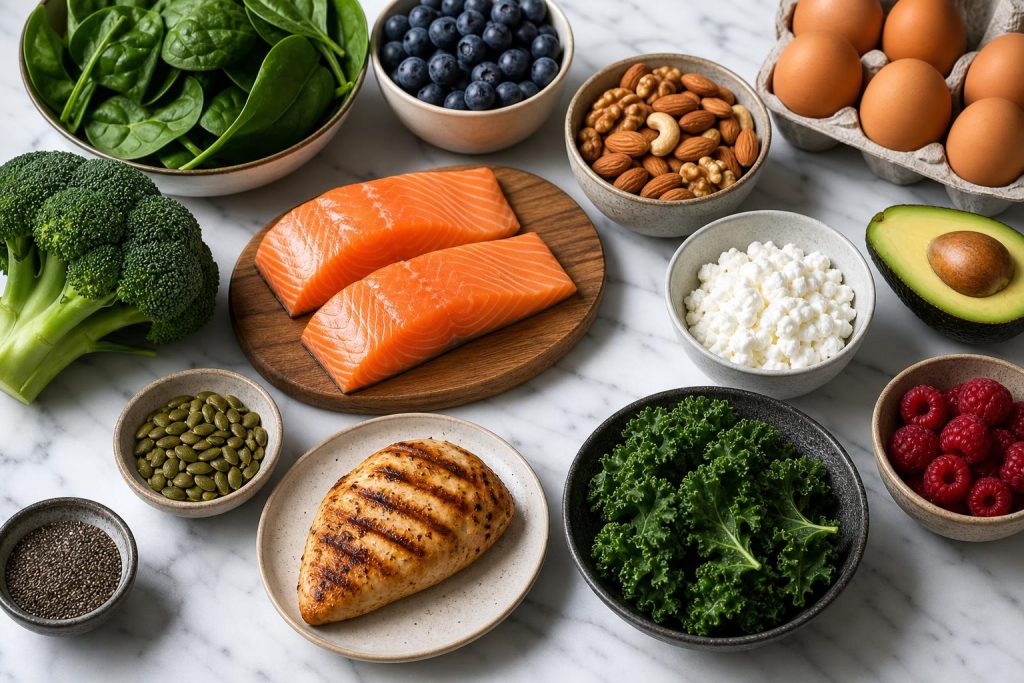
- Lunch: 40–50g protein (chicken, fish, lean beef, cottage cheese)
- Afternoon snack: 20–25g protein (protein bar, protein shake)
- Dinner: 40–50g protein (salmon, steak, poultry)
Pro tip for GLP-1 users: Liquid and semi-solid proteins are easier to consume when appetite is suppressed. High-quality whey protein isolate mixes, bone broth, and Greek yogurt require less physical effort to consume than large chicken breasts.
Protein Quality Matters
Not all proteins are created equal for muscle preservation. Prioritize complete proteins with adequate leucine (the amino acid that directly triggers muscle protein synthesis):
- Animal proteins: beef, poultry, fish, eggs, dairy (all ~40% leucine content)
- Plant proteins: legumes, tofu, tempeh (lower leucine; combine with grains)
- Supplemental proteins: whey isolate, casein (high leucine, fast absorption)
Leucine threshold for muscle stimulation: Aim for 2.5–3.0g of leucine per meal to maximize muscle protein synthesis signaling. A 30g serving of whey protein contains approximately 2.7g leucine; 3 whole eggs contain ~2.4g.
Resistance Training: The Non-Negotiable Complement to High Protein
Protein alone doesn’t preserve muscle on GLP-1 therapy. Current research on GLP-1 agonists and exercise indicates that combining resistance training with GLP-1 therapy and adequate protein produces superior body recomposition outcomes—specifically, greater fat loss with minimal lean mass loss compared to medication plus caloric restriction alone.
The GLP-1 User’s Resistance Training Protocol
Frequency: 3–4 resistance training sessions per week (full-body or upper/lower split)
Rep range: 6–12 repetitions per set (hypertrophy range, which signals muscle preservation even in a deficit)
Volume: 10–15 sets per muscle group per week
Intensity: Load that brings you close to muscular failure (RPE 7–9 per set)
Recovery consideration: GLP-1 users often experience rapid weight loss and caloric deficit. Prioritize form and controlled tempos (3-second eccentric, 1-second concentric) to maximize mechanical tension with less joint stress.
Example weekly structure:
- Monday: Upper body push (chest, shoulders, triceps)
- Tuesday: Lower body (quads, glutes, hamstrings)
- Wednesday: Rest or low-intensity cardio
- Thursday: Upper body pull (back, biceps)
- Friday: Lower body (deadlift variation, accessory)
- Saturday–Sunday: Rest or optional cardio
Nutrition Timing and GLP-1 Medication Schedule
GLP-1 medications peak in effect 1–3 days after injection (for weekly semaglutide/tirzepatide). Appetite suppression is strongest in this window, making it harder to hit protein targets. Strategic timing helps:
- Post-injection days (1–2 days after): Prioritize liquid proteins, protein shakes, and soft foods. Consume them first in meals before more calorie-dense foods.
- Mid-to-late week (3–6 days post-injection): Appetite naturally rises slightly. Use this window to hit whole food protein targets (steak, salmon, eggs).
- Post-workout (within 2 hours of resistance training): Consume 30–40g of high-quality protein to maximize muscle protein synthesis. This is non-negotiable for muscle preservation.
Common Protein-Related Questions for GLP-1 Users
Q: “I’m not hungry on GLP-1. How do I eat 150+ grams of protein when I feel full?”
A: This is the most common challenge. Solutions:
- Liquid calories first: Drink a protein shake (30–40g) before meals. It’s easier to consume than solid food.
- Protein-first eating: Eat protein-dense foods first at each meal before vegetables or grains—when you have appetite capacity.
- Frequent, small meals: Five 30g protein meals spread throughout the day is easier than three 50g meals.
- High-protein density foods: Choose high-protein, low-volume foods like beef jerky, string cheese, and canned fish—maximum protein with minimal eating effort.
Q: “Will high protein intake affect my weight loss on GLP-1?”
A: No—and in fact, it improves it. Higher protein intake increases thermogenesis (calories burned during digestion), preserves metabolic rate by maintaining lean mass, and improves satiety. You’ll lose slightly less weight initially because muscle is denser than fat, but the body composition outcome is far superior.
Q: “Do I need creatine supplementation on GLP-1?”
A: While not essential, creatine monohydrate (5g daily) is evidence-backed for muscle preservation in caloric deficit scenarios. It improves strength, training performance, and water retention in muscle cells. Quality creatine monohydrate supplements are inexpensive and safe. Cost-benefit is excellent for GLP-1 users combining strength training with high protein.
Q: “What if I have GI issues with high protein intake?”
A: GLP-1 users sometimes experience constipation with high protein. Mitigate by:
- Increasing water intake to 3–4 liters daily
- Choosing more digestible proteins (whey isolate, fish, eggs) over harder-to-digest beef
- Consuming 25–35g fiber daily from vegetables, fruit, and psyllium husk
- Adding digestive enzymes (bromelain, papain) if needed
Bottom Line: Protein Strategy for GLP-1 Success
GLP-1 medications are transformative for fat loss, but without intentional protein intake and resistance training, you’ll sacrifice muscle along the way. Here’s your action plan:
- Consume 1.6–2.2 g/kg of body weight in protein daily (higher than standard recommendations because appetite suppression makes natural hunger cues unreliable).
- Distribute protein across 4–5 eating occasions to align with GLP-1 appetite suppression—smaller, frequent doses beat large meals.
- Prioritize high-quality, complete proteins with adequate leucine (animal proteins, whey isolate).
- Combine protein intake with 3–4 resistance training sessions weekly—training is the signal that tells your body to keep muscle during weight loss.
- Time protein intake strategically: always post-workout, and prioritize liquid proteins on high-appetite-suppression days.
- Consider creatine supplementation (5g daily) for additional muscle preservation support.
Emerging 2025 research frames skeletal muscle as the therapeutic target in obesity pharmacotherapy—meaning the future of GLP-1 success isn’t just about weight loss, it’s about preserving the metabolic engine that keeps you healthy long-term.
Your GLP-1 medication is the tool. Protein, training, and intention are what determine whether you lose fat or muscle.
Ready to optimize your GLP-1 results? Explore our full guide on GLP-1 side effects and nutrition strategies or dive into our comprehensive peptide protocol resource center for evidence-based training and supplement recommendations for weight loss medications.
Scientific References
-
Mechanick, Butsch, Christensen et al. (2025).
Strategies for minimizing muscle loss during use of incretin-mimetic drugs for treatment of obesity..
Obesity reviews : an official journal of the International Association for the Study of Obesity.
View on PubMed → -
Caturano, Amaro, Berra et al. (2025).
Sarcopenic obesity and weight loss-induced muscle mass loss..
Current opinion in clinical nutrition and metabolic care.
View on PubMed → -
De Girolamo, Sangineto, Di Gioia et al. (2026).
Muscle health in the modern era of incretin-based therapies..
European journal of clinical investigation.
View on PubMed → -
Codella, Senesi, Luzi et al. (2025).
GLP-1 agonists and exercise: the future of lifestyle prioritization..
Frontiers in clinical diabetes and healthcare.
View on PubMed → -
Sanchis-Gomar, Neeland, Ruiz-Lozano et al. (2025).
Preserving the Metabolic Engine: Muscle as the Therapeutic Target for Cardiovascular Prevention in Obesity Pharmacotherapy..
Current cardiology reports.
View on PubMed →