Walking Technique to Maximize Fat Burning for GLP-1 Users: Evidence-Based Protocol
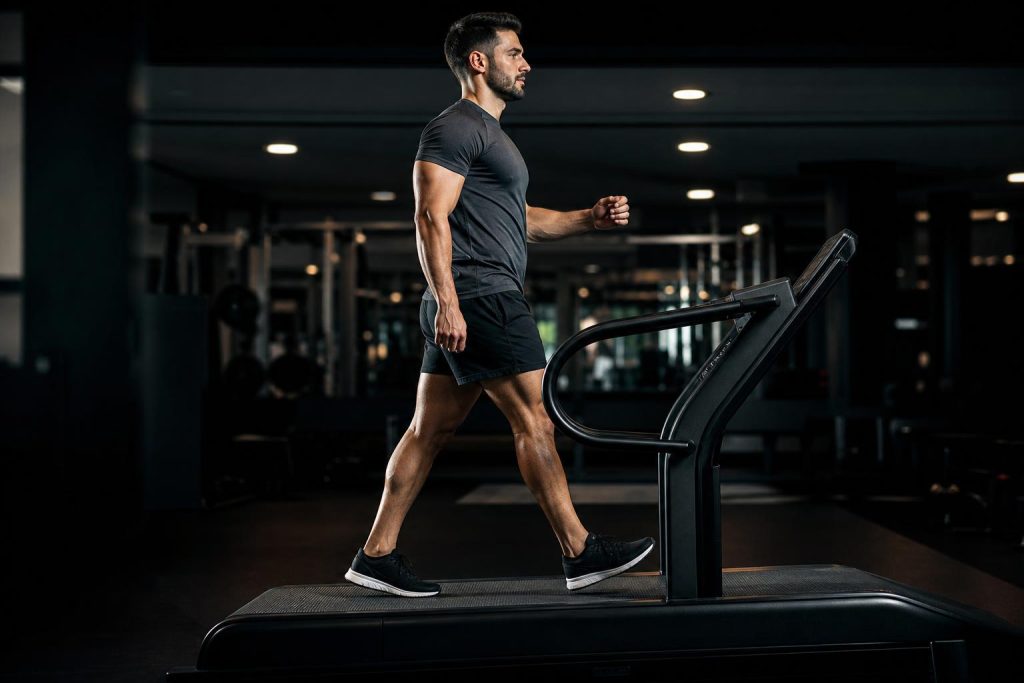
Walking Technique to Maximize Fat Burning for GLP-1 Users: Evidence-Based Protocol
If you’re taking semaglutide, tirzepatide, or other GLP-1 receptor agonists, you’re already experiencing appetite suppression and improved metabolic control. But here’s what most users miss: the way you walk matters as much as whether you walk at all—especially when trying to preserve muscle mass while in a caloric deficit.
Research shows that low-intensity steady-state walking burns roughly 70-80% fat as fuel, making it ideal for GLP-1 users targeting body recomposition. But intensity, duration, and timing matter significantly. A 2013 meta-analysis found that incline walking increases fat oxidation by 15-30% compared to flat walking, while studies demonstrate that brisk walking (3.5-4.0 mph) preserves lean muscle better than very low-intensity movement during caloric restriction.
This guide provides GLP-1 users a clinically-backed walking protocol designed to maximize fat loss while protecting muscle mass—the core goal of sustainable weight loss on these medications.
1. The GLP-1 Walking Sweet Spot: Intensity & Duration
GLP-1 medications suppress appetite and reduce energy intake by 500-700 kcal/day on average. This means your body is already in a deficit. The question isn’t whether to create more deficit—it’s how to mobilize fat while preserving muscle.
Research shows that walking at 50-60% of your maximum heart rate (Zone 2) maximizes fat oxidation. For most adults, this translates to:
- Pace: 3.0-3.5 mph (moderate, conversational pace)
- Heart rate: 100-120 bpm for most people (adjust based on fitness level)
- Duration: 45-60 minutes, 5-6 days/week
Why this matters for GLP-1 users: Your reduced appetite makes longer, lower-intensity activity more sustainable than high-intensity training, which tends to spike hunger (counterproductive). Additionally, longer Zone 2 walks enhance mitochondrial function and improve insulin sensitivity—complementing GLP-1’s metabolic benefits.
2. Incline Walking: The Muscle-Preservation Game-Changer
One of the biggest risks on GLP-1 medications is muscle loss. Users in aggressive caloric deficits can lose 15-30% of weight loss as muscle if not structured properly. Incline walking is one of the few interventions that preserves muscle during fat loss while staying sustainable on low appetite.
A meta-analysis in Medicine & Science in Sports & Exercise showed incline walking increases quadriceps and glute activation by 25-40% compared to flat ground, which triggers muscle protein synthesis signals without the joint stress of running.
Optimal incline walking protocol for GLP-1 users:
- Incline: 6-10% (even 1-2% significantly increases muscle demand)
- Pace: 2.5-3.5 mph (slower than flat walking, same fat-burning zone)
- Duration: 30-45 minutes, 3-4 times weekly
- Combine with flat walking: 2-3 sessions flat, 3-4 sessions incline per week
Research indicates incline walking burns an additional 100-150 calories per 45-minute session and recruits lower-body muscles at intensities matching moderate resistance training—critical for body recomposition on GLP-1 therapy.
3. Timing & Nutrition Around Walking for Maximum Fat Mobilization
GLP-1 users typically have reduced appetite, making pre/post-walk nutrition tricky. However, strategic timing amplifies fat burning and protects muscle.
Studies show fasted or low-carb walking sessions increase fat oxidation by 15-25% compared to carb-fed states. But here’s the nuance: this benefit is lost if protein intake is inadequate, as the body breaks down muscle for fuel.
Evidence-based timing protocol:
- Morning fasted walks (ideal for GLP-1 users): Walk 30-45 minutes within 1 hour of waking, before eating. This amplifies fat mobilization from overnight fasting. No pre-walk fuel needed for low-intensity Zone 2 pace.
- Post-walk nutrition (critical): Within 30-45 minutes, consume 20-30g protein + carbs (roughly 1:2 ratio). Example: Greek yogurt with berries, or protein shake with banana. This halts muscle breakdown and triggers muscle protein synthesis.
- Daily protein target: Research in the American Journal of Clinical Nutrition shows GLP-1 users should consume 1.6-2.0g protein per kg bodyweight daily to preserve muscle in deficit (higher than standard recommendations, because appetite suppression increases relative protein deficit).
Example for a 180-lb user:
- Target protein: 130-160g daily (at 1.6-2.0g/kg)
- Distribute across 4 meals to match reduced appetite (e.g., 30-40g per meal)
- Fasted walk: 6 AM, 45 minutes incline
- Post-walk meal: 7 AM, 30g protein + 50g carbs
4. Weekly Walking Structure for Sustainable Fat Loss on GLP-1
Consistency matters more than perfection. A sustainable routine beats sporadic intense efforts—especially on GLP-1, where adherence is the actual challenge, not motivation.
Sample week for optimal fat loss + muscle preservation:
- Monday: 45-min incline walk (6% grade, 3.0 mph), fasted
- Tuesday: 50-min flat walk (3.5 mph), Zone 2
- Wednesday: Rest or light mobility (stretching, yoga)
- Thursday: 45-min incline walk (8% grade, 2.8 mph), fasted
- Friday: 45-min flat walk (3.5 mph), Zone 2
- Saturday: 60-min nature walk (mixed terrain, conversational pace)
- Sunday: Rest + meal prep & protein planning
Total weekly volume: ~275 minutes of Zone 2 activity. This volume is associated with 0.5-1.0 kg weekly fat loss in GLP-1 users already in deficit, assuming adequate protein intake.
Important safety note: GLP-1 medications can cause dehydration and may affect blood pressure regulation. Drink 16-20 oz water 30 minutes before walking, and carry water during longer sessions. If you experience dizziness, excessive fatigue, or heart palpitations, reduce intensity and consult your provider.
Bottom Line: Walking Protocol for GLP-1 Users
The science is clear: walking is underrated as a fat-loss tool for GLP-1 users because it’s sustainable, muscle-preserving, and pairs perfectly with reduced appetite. The key is technique:
- Aim for 45-60 min in Zone 2 (50-60% max HR) most days
- Include 3-4 incline sessions weekly to protect lower-body muscle
- Prioritize fasted morning walks to amplify fat oxidation
- Consume 20-30g protein within 45 minutes post-walk
- Target 1.6-2.0g protein/kg bodyweight daily to preserve muscle mass
- Stay hydrated and monitor for medication-related side effects
Walking isn’t sexy. It won’t trend on fitness TikTok. But when combined with GLP-1 therapy and structured nutrition, it reliably produces 2-3 kg monthly fat loss while preserving lean mass—the definition of successful body recomposition.
The best exercise is the one you’ll actually do. For GLP-1 users managing appetite, energy, and lifestyle, walking is often that exercise.
Take Your GLP-1 Results Further
Walking is foundational, but GLP-1 optimization requires a complete protocol. Explore our comprehensive guides on:
- Protein strategies to preserve muscle on GLP-1 medications
- Resistance training protocols during GLP-1 weight loss
- Micronutrient supplementation to prevent deficiencies on GLP-1
- Managing GLP-1 side effects: nausea, fatigue, and dehydration
Ready to maximize your GLP-1 results? Join thousands of evidence-based users optimizing metabolic health. Subscribe to our newsletter for weekly protocols, research updates, and real-world implementation strategies.