Progressive Overload for Body Recomposition: The Evidence-Based Training Protocol for GLP-1 Users
Progressive Overload for Body Recomposition: The Evidence-Based Training Protocol for GLP-1 Users
If you’re using GLP-1 medications like semaglutide or tirzepatide, you face a unique metabolic opportunity—and a critical challenge. Research shows that GLP-1 users can lose 15-22% of body weight within 68 weeks, but here’s the problem: without strategic resistance training and progressive overload, 20-30% of that loss comes from muscle tissue, not just fat.
This is where progressive overload—the cornerstone of body recomposition—becomes non-negotiable. Progressive overload isn’t just about lifting heavier weights. It’s a systematic approach to continuously challenge your muscles while in a caloric deficit, preserving lean mass and metabolically active tissue while your GLP-1 medication accelerates fat loss.
In this guide, we’ll break down the science of progressive overload, how it works synergistically with GLP-1 medications, and the exact protocols to maximize body recomposition outcomes.
What Is Progressive Overload and Why It Matters for GLP-1 Users
Progressive overload is the principle of gradually increasing the demands placed on your muscles during training. This can happen through:
- Increasing weight (primary lever)
- Adding reps or sets (volume increase)
- Reducing rest periods (density)
- Improving exercise form (time under tension)
- Increasing frequency (sessions per week)
A landmark 2014 meta-analysis in the Journal of Sports Sciences found that progressive resistance training prevents muscle loss during caloric deficits, with the most significant protection occurring when individuals progressively increase load over time.
For GLP-1 users specifically, this matters because:
- GLP-1 medications suppress appetite, making it harder to eat adequate protein and maintain caloric intake for muscle building
- Rapid fat loss (which GLP-1 accelerates) can trigger muscle catabolism unless muscles are under constant, increasing tension
- Preserved muscle mass maintains resting metabolic rate, preventing the metabolic adaptation that often derails long-term weight loss
- Body recomposition (losing fat while maintaining/building muscle) is only achievable through progressive resistance training
The Progressive Overload Protocol: Practical Implementation for Body Recomposition
Here’s how to structure progressive overload specifically designed for GLP-1 users focused on body recomposition:
Phase 1: Establish Your Baseline (Weeks 1-2)
Before progressively overloading, you need a solid foundation:
- Select 4-6 compound movements (squat, deadlift, bench press, row, overhead press, pull-ups/lat pulldown)
- Find your working weight: Choose a weight where you can complete 8-12 reps with 2-3 reps remaining in reserve (RPE 7-8)
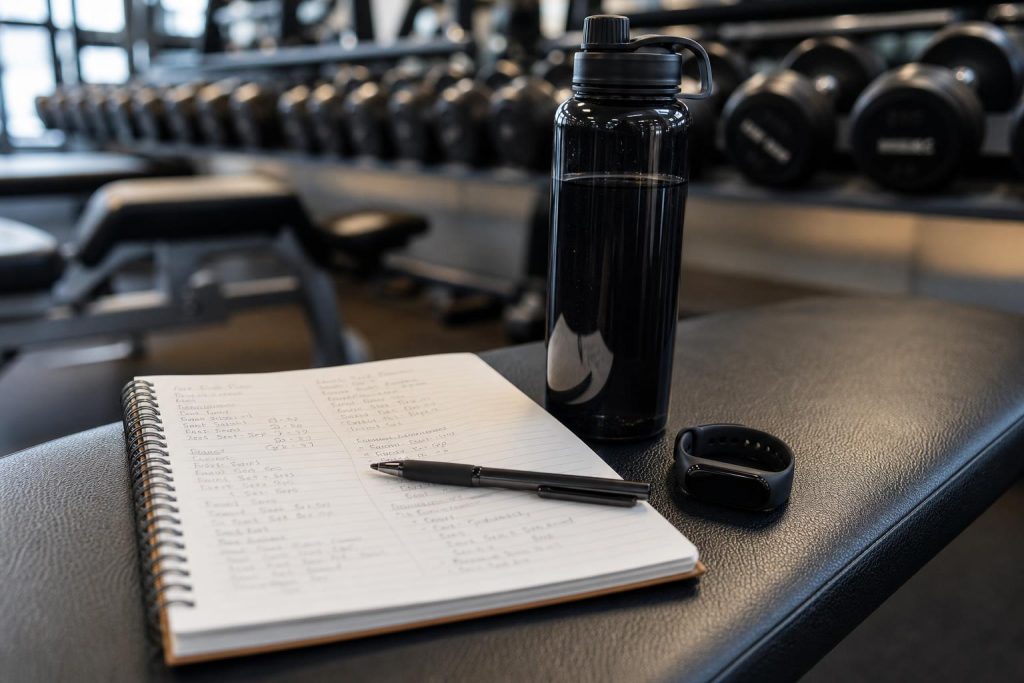
- Record everything: Document weight, reps, sets, and how you felt. This becomes your baseline for progression.
- Aim for 3-4 resistance sessions weekly, allowing 48 hours between sessions targeting the same muscle groups
Phase 2: Linear Progression (Weeks 3-6)
Once baseline is established, apply linear progression:
- Increase weight by 2.5-5% every 1-2 weeks when you hit your target rep range (typically 8-12 reps for hypertrophy on primary lifts, 12-15 for accessories)
- If you can’t add weight, add reps: If you hit 12 reps for 3 sets, try to hit 13 next session, then 14, then add 5 lbs and reset to 8-10 reps
- Track the “big three” metrics: Total volume (sets × reps × weight), strength gains (max weight moved), and body composition (scales and measurements)
Phase 3: Undulating Periodization (Weeks 7+)
As linear gains plateau (typically 4-8 weeks in), implement undulating periodization to continue progressing:
- Day A (Strength): 4-6 reps × 5-6 sets at 85-90% of estimated 1RM
- Day B (Hypertrophy): 8-12 reps × 3-4 sets at 70-80% of estimated 1RM
- Day C (Endurance/Metabolic): 12-15 reps × 2-3 sets at 60-70% of estimated 1RM
- Rotate daily or weekly to keep muscles adapting while managing fatigue
Nutrition Strategy: Fueling Progressive Overload While on GLP-1
Here’s the catch: GLP-1 medications reduce appetite by 30-50%, making adequate protein intake difficult. Yet research in the American Journal of Clinical Nutrition shows that protein intake of 1.6-2.2g per kg of body weight is essential for muscle preservation during resistance training and caloric deficit.
Practical Nutrition for GLP-1 Progressive Overload
- Prioritize protein at every meal: Aim for 30-40g per meal. On GLP-1, smaller, protein-dense meals are easier to tolerate than large carb-heavy ones.
- Use liquid protein sources when appetite is low: Protein shakes, bone broth, and Greek yogurt are less volume-intensive than whole foods
- Time carbs around training: Consume 20-40g of easily digestible carbs (fruit, rice, pasta) 1-2 hours pre-workout and 20-40g post-workout to fuel muscle protein synthesis. Research shows periworkout carbs enhance recovery and strength gains during deficit training.
- Front-load calories early: Eat more protein/carbs when appetite is highest (typically morning on GLP-1), making the day’s targets easier to hit
- Supplement strategically: Creatine monohydrate (5g daily) has robust evidence for muscle preservation during deficit and training intensity. A 2021 meta-analysis in Frontiers in Nutrition shows creatine supplementation preserved 0.5-1kg more lean mass in trained individuals during caloric deficit.
Managing Fatigue and Recovery on GLP-1
GLP-1 medications can increase fatigue, reduce glycogen stores (due to lower carb intake), and slow recovery. Here’s how to adapt progressive overload:
- Monitor autoregulation markers: Track resting heart rate, heart rate variability (HRV via apps like Oura or Apple Watch), and morning mood. If RHR is elevated 5+ bpm above baseline, reduce volume by 20-30% that week.
- Prioritize sleep: Aim for 7-9 hours. Sleep deprivation impairs muscle protein synthesis and increases cortisol, accelerating muscle loss during deficit.
- Reduce frequency if needed, not intensity: If 4x weekly sessions feel unsustainable on GLP-1, drop to 3x weekly but maintain intensity and progressive overload on core lifts. Volume is secondary to tension and progression.
- Implement deload weeks: Every 4-6 weeks, reduce volume by 40-50% while maintaining intensity. This allows central nervous system recovery without losing strength gains.
Measuring Progress: The Body Recomposition Metrics That Matter
Don’t rely solely on scale weight. On GLP-1 + progressive overload, you’re often trading fat for muscle. Track:
- Strength metrics: Target a 5-10% increase in primary lifts every 4-8 weeks
- Body composition: DEXA scans, bioelectrical impedance, or circumference measurements (waist, hips, arms, thighs). Aim to lose 0.5-1 lb of fat weekly while maintaining or gaining muscle.
- How clothes fit: The most practical measure. You can weigh the same or slightly more while losing 2-3 inches off your waist (fat loss + muscle gain = body recomposition win).
- Performance in daily life: Can you carry groceries easier? Do stairs feel less taxing? Strength carries over.
Bottom Line: Progressive Overload Is Your GLP-1 Recomposition Blueprint
Progressive overload is the non-negotiable tool for maximizing body recomposition on GLP-1 medications. By systematically increasing training demands—through heavier weights, more reps, or better density—you force your body to preserve and build muscle even in a caloric deficit, where fat loss is accelerated by GLP-1’s appetite-suppressing effects.
The protocol is simple: establish a baseline, add weight or reps every 1-2 weeks, prioritize protein intake (1.6-2.2g/kg), fuel strategically around training, and track strength + body composition (not just scale weight). Within 8-12 weeks, you’ll see measurable improvements in muscle preservation, strength, and visible fat loss—true body recomposition.
Remember: GLP-1 medications are a metabolic advantage, but they’re not a substitute for training stimulus. Progressive overload is what tells your body, “Keep this muscle—we need it.”
Ready to optimize your GLP-1 journey? Explore our complete guide to nutrition strategies for semaglutide and tirzepatide users, or learn how peptides like BPC-157 and TB-500 enhance recovery during intense recomposition phases. Get science-backed, evidence-driven guidance for maximum results.