Fat Intake, Hormones & Metabolic Health: Science-Backed Guide for GLP-1 Users
Fat Intake, Hormones & Metabolic Health: Science-Backed Guide for GLP-1 Users
If you’re using semaglutide or tirzepatide, you’ve probably noticed appetite suppression makes eating feel almost… optional. But here’s what the research reveals: how you handle fat intake directly impacts the hormonal signaling that drives metabolic health and sustainable weight loss. The problem isn’t just calories—it’s the interplay between dietary fat, insulin sensitivity, and how GLP-1 medications reshape your metabolic machinery.
This guide breaks down the science and gives you actionable strategies to optimize fat intake while on GLP-1s, preserve muscle mass, and accelerate body recomposition.
Why Fat Matters More Than Calories on GLP-1 Medications
Traditional “calories in, calories out” thinking misses the bigger picture. Recent research published in the American Journal of Clinical Nutrition shows that energy balance is far more complex than simple caloric deficit—hormonal regulation, substrate utilization, and tissue-specific metabolic adaptation matter profoundly.
Here’s why fat intake is critical for GLP-1 users:
- Hormonal signaling: Dietary fat triggers cholecystokinin (CCK) and peptide YY (PYY) release—hormones that compound GLP-1’s appetite-suppressing effects and improve satiety signaling.
- Fat oxidation: A 2025 Cell Metabolism study on tirzepatide found that the drug significantly increased fat oxidation capacity, meaning your body becomes more efficient at burning stored fat when you consume adequate dietary fat.
- Insulin sensitivity: Paradoxically, *strategic* fat intake improves insulin function—critical since GLP-1s work partly by enhancing insulin secretion.
- Muscle preservation: Low-fat diets under caloric restriction accelerate lean muscle loss. Fat provides satiety and hormonal support for anabolism during weight loss.
Actionable takeaway: Aim for 25–35% of calories from fat while on GLP-1s. This maintains hormonal balance, optimizes fat oxidation, and preserves muscle mass—the trifecta of body recomposition.
The Insulin Sensitivity Paradox: Why Low-Fat Diets Fail on GLP-1s
You might think: “I’m on a GLP-1, appetite is suppressed, so I should eat as little as possible.” Wrong. Undereating damages metabolic health and negates the GLP-1 advantage.
The key distinction:
- Refined carbs + low fat: Drives insulin dysregulation, metabolic adaptation, energy crashes.
- Adequate fat + whole foods: Stabilizes blood glucose, improves insulin action, supports sustained energy and muscle retention.
Practical protocol for GLP-1 users:
- Consume 1.2–1.6g of protein per pound of lean body mass (non-negotiable for muscle preservation in a deficit).
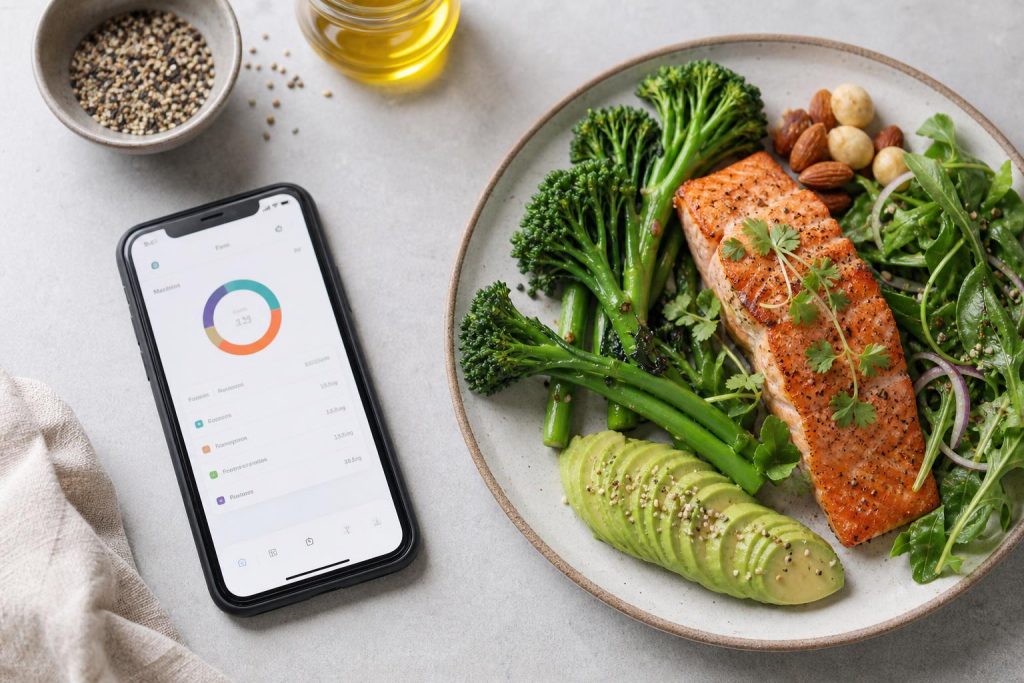
- Include 25–35% of calories from fat, emphasizing omega-3 sources (fatty fish, flaxseed, walnuts) and monounsaturated fats (olive oil, avocado).
- Fill remaining calories with whole-food carbs (vegetables, legumes, intact grains).
- Track protein intake religiously—appetite suppression often makes people undershoot protein, leading to lean mass loss.
Hormonal Mechanisms: How Fat Intake Amplifies GLP-1 Effects
When you consume fat:
- GIP receptor activation: Dietary fat stimulates glucose-dependent insulinotropic peptide (GIP) secretion. Tirzepatide is a dual GLP-1/GIP agonist, so adequate fat intake amplifies its signal.
- CCK and satiety: Cholecystokinin release slows gastric emptying and enhances fullness signaling—compounding GLP-1’s appetite suppression.
- Substrate switching: With GLP-1-enhanced fat oxidation, your body preferentially burns stored fat while sparing lean tissue.
Optimization strategy: Consume fat with protein and whole-food carbs at each meal. This synchronized nutrient timing maximizes hormonal synergy and prevents the energy crashes common in aggressive caloric restriction.
Practical Nutrition Framework: Eating on GLP-1 with Low Appetite
The biggest challenge GLP-1 users face: hitting protein and micronutrient targets when appetite is suppressed.
Sample daily framework (1,800 calories; 150g protein):
- Breakfast: 3-egg omelet with cheese + 1/2 avocado + whole-grain toast (480 cal, 38g protein, 26g fat).
- Lunch: 6 oz grilled salmon + 1 cup roasted vegetables + 1/4 cup olive oil-based dressing (520 cal, 42g protein, 28g fat).
- Dinner: 6 oz lean beef + 2 cups broccoli sautéed in 1 tbsp butter (420 cal, 45g protein, 22g fat).
- Snack: Greek yogurt (0% fat, 20g protein) + 1 oz almonds (10g fat) (280 cal, 25g protein, 12g fat).
Key principles:
- Eat calorie-dense, nutrient-dense foods (salmon, eggs, nuts, olive oil). You need fewer bites to meet targets.
- Prioritize protein first—it’s hardest to hit with suppressed appetite and most critical for muscle retention.
- Distribute fat across meals to optimize hormonal signaling and prevent energy crashes.
- Supplement micronutrients: Consider a multivitamin, omega-3, and electrolytes (GLP-1s can deplete electrolytes through GI changes).
Training, Recovery & Fat Intake: The Body Recomposition Blueprint
You’re in a caloric deficit on a GLP-1, but your goal is fat loss + muscle preservation. Training becomes non-negotiable—and so does matching fat intake to your activity level.
Protocol for strength training on GLP-1s:
- Resistance training: 3–4 sessions per week, 45–60 minutes. Focus on compound movements (squats, deadlifts, rows, presses) to maximize muscle stimulus in a deficit.
- Pre-workout nutrition: 20–30g carbs + 15–20g protein + minimal fat (fat slows digestion; you want quick energy). Example: banana + protein shake (45 min before training).
- Post-workout: 20–40g protein + 40–60g carbs within 2 hours. Include 10–15g fat to support hormone production and satiety.
- Daily fat baseline: 0.8–1g per pound of lean body mass. On heavy training days, increase by 10–15% to support anabolism and recovery.
Why this matters: Caloric deficits impair recovery and protein synthesis. Strategic fat intake (especially around training) blunts muscle loss by optimizing mTOR signaling and testosterone production.
Bottom Line: Fat Intake Strategy for GLP-1 Success
Fat isn’t the enemy—it’s your ally in metabolic health on GLP-1 medications. The science is clear:
- Consume 25–35% of calories from fat to optimize hormonal signaling and fat oxidation.
- Prioritize protein (1.2–1.6g per lb lean mass) because appetite suppression makes it easy to undershoot.
- Distribute fat strategically across meals and around training to maximize recovery and muscle retention.
- Focus on whole food sources: fatty fish, eggs, nuts, avocado, olive oil.
- Track intake for 2–4 weeks to understand your personal satiety and energy baseline—then adjust based on performance and body composition progress.
GLP-1 medications amplify fat oxidation and improve insulin sensitivity—but only if you support them with strategic nutrition. Undereating or adopting extreme low-fat diets negates the advantage. Fuel smart, train hard, and watch your body recomposition accelerate.
Want to maximize your GLP-1 results? Explore our comprehensive guides on GLP-1 muscle preservation protocols, peptide stacking for body recomposition, and micronutrient optimization on semaglutide. Science-backed strategies to build the physique you want while on medication.
Scientific References
-
Lustig, Collier, Kassotis et al. (2022).
Obesity I: Overview and molecular and biochemical mechanisms..
Biochemical pharmacology.
View on PubMed → -
Ravussin, Sanchez-Delgado, Martin et al. (2025).
Tirzepatide did not impact metabolic adaptation in people with obesity, but increased fat oxidation..
Cell metabolism.
View on PubMed → -
Hall, Farooqi, Friedman et al. (2022).
The energy balance model of obesity: beyond calories in, calories out..
The American journal of clinical nutrition.
View on PubMed → -
Kahleova, Petersen, Shulman et al. (2020).
Effect of a Low-Fat Vegan Diet on Body Weight, Insulin Sensitivity, Postprandial Metabolism, and Intramyocellular and Hepatocellular Lipid Levels in Overweight Adults: A Randomized Clinical Trial..
JAMA network open.
View on PubMed → -
Melin, Tornberg, Skouby et al. (2015).
Energy availability and the female athlete triad in elite endurance athletes..
Scandinavian journal of medicine & science in sports.
View on PubMed →