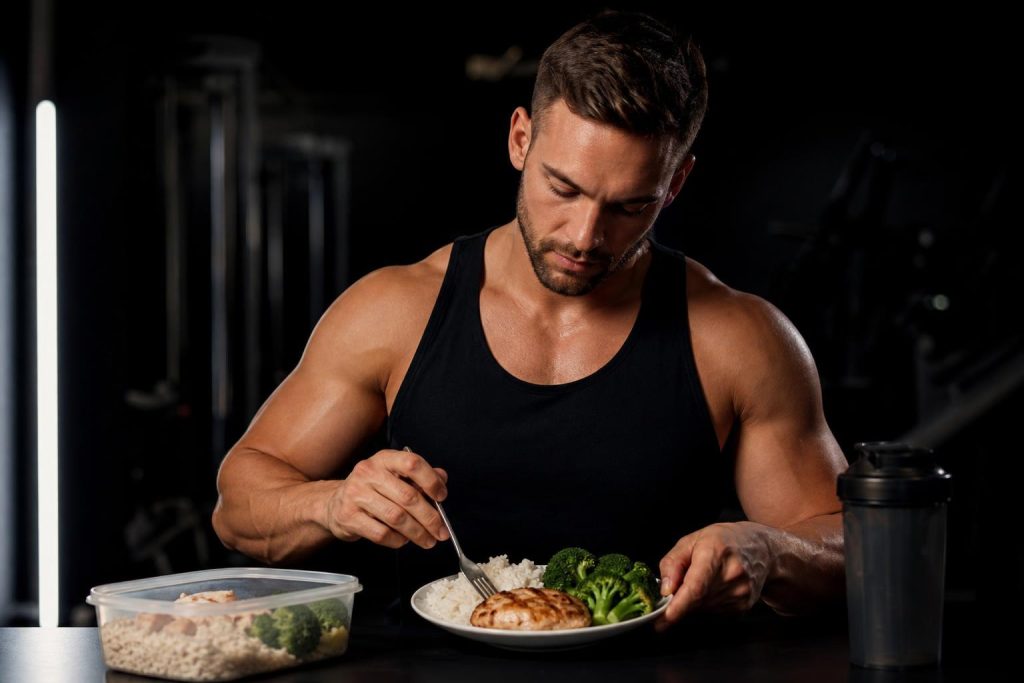
Introduction: The Muscle Loss Problem on GLP-1 Medications
Semaglutide and other GLP-1 receptor agonists are remarkably effective at promoting weight loss—users typically lose 15-22% of body weight within 68 weeks. But here’s the critical challenge: recent research from the SEMALEAN study shows that a significant portion of weight loss on semaglutide comes from lean mass, not just fat.
This is where most GLP-1 users stumble. Without a strategic nutrition and training approach, you risk losing muscle alongside fat—compromising your metabolic rate, strength, appearance, and long-term health. The good news: a 2025 review in Obesity Reviews outlines specific strategies to minimize muscle loss during incretin-mimetic therapy.
This guide breaks down the evidence-based nutrition protocol to preserve muscle, maintain strength, and achieve true body recomposition while on semaglutide.
Understanding Muscle Loss on Semaglutide: What the Research Shows
The SEMALEAN study found that semaglutide users experienced notable reductions in lean mass and changes in muscle function alongside fat loss. This occurs due to several mechanisms:
- Reduced total caloric intake: GLP-1 medications suppress appetite, creating a caloric deficit necessary for fat loss—but this can also trigger muscle catabolism if protein intake isn’t prioritized
- Decreased mechanical tension: Lower appetite may lead to reduced training intensity or frequency if nutrition doesn’t support performance
- Metabolic adaptation: Rapid weight loss signals the body to preserve energy, which can accelerate muscle breakdown
- Protein synthesis challenges: Reduced overall food intake can mean insufficient amino acids for muscle protein synthesis, even if protein percentage is high
A 2025 perspective in Diabetes on sarcopenic obesity notes this risk is especially pronounced in older adults and those with existing muscle loss, making proactive nutrition strategy essential.
Protein Strategy: The Cornerstone of Muscle Preservation on Semaglutide
Protein is non-negotiable for muscle preservation during GLP-1 therapy. Here’s the evidence-backed protocol:
Target Protein Intake
Mechanick and colleagues in their 2025 obesity review recommend increasing protein intake to 1.2-1.6 g per kg of body weight while on incretin-mimetic drugs—higher than the standard 0.8-1.0 g/kg for sedentary individuals, and even higher than typical fitness recommendations.
Practical example: A 200-pound person on semaglutide should target 110-145g of protein daily (on the lower end if sedentary, higher if resistance training 4+ days/week).
Protein Distribution Across Meals
GLP-1 medications reduce meal frequency and meal size. Rather than fighting this, work with it:
- Eat 3-4 smaller, protein-dense meals instead of 5-6 mini meals
- Aim for 30-40g protein per meal to trigger muscle protein synthesis (the minimum effective dose per eating occasion)
- Prioritize protein at breakfast (if appetite allows) or at your largest meal—this sets a strong anabolic tone for the day
Protein Source Prioritization
Quality matters. Prioritize complete, high-leucine protein sources:
- Lean meats (chicken, turkey, lean beef)
- Fish and seafood (especially fatty fish for omega-3s)
- Eggs and dairy (Greek yogurt, cottage cheese)
- Plant-based protein with complementary amino acids (legumes + grains)
- Whey protein isolate (when whole food isn’t feasible due to reduced appetite)
Resistance Training + Nutrition Timing: Creating the Anabolic Signal
Protein alone isn’t sufficient—you need the mechanical stimulus of resistance training to justify muscle preservation and trigger protein synthesis.
Training Frequency and Intensity
Mechanick’s review emphasizes that resistance training should be maintained or increased during GLP-1 therapy to offset lean mass loss. The protocol:
- Frequency: 3-5 days per week of resistance training (minimum 3 for muscle preservation)
- Intensity: Train in the 6-12 rep range with moderate-to-heavy loads (RPE 6-8 out of 10)
- Specificity: Include compound movements (squats, deadlifts, presses, rows) that engage large muscle groups
- Volume: 10-20 sets per muscle group per week
Fueling Around Training
Reduced appetite on semaglutide makes pre- and post-workout nutrition challenging but critical:
- Pre-workout (30-60 min before): Small, digestible carbs + protein (e.g., banana + 20g protein shake, or rice cakes + Greek yogurt)
- Post-workout (within 1-2 hours): Protein + carbs (e.g., grilled chicken + sweet potato, or whey + fruit)
- Practical tip: If appetite is suppressed, use liquid calories—protein shakes, bone broth, smoothies—since liquid is more tolerable than solid food on GLP-1s
Micronutrients, Hydration, and the Complete Nutrition Picture
Protein and training form the foundation, but the details matter:
Essential Micronutrients for Muscle Health
- Vitamin D: 2,000-4,000 IU daily (critical for muscle function and calcium absorption)
- Calcium: 1,000-1,200 mg/day (from dairy, fortified plant milks, or supplementation)
- Magnesium: 400-500 mg/day (supports protein synthesis and muscle relaxation)
- Iron: Monitor if female; reduced food intake increases deficiency risk
- B vitamins: Critical for energy metabolism; consider a B-complex supplement
- Zinc and selenium: Support immune function and protein synthesis (both compromised during rapid weight loss)
Hydration
GLP-1 users often report reduced thirst. Dehydration impairs muscle recovery and thermogenesis:
- Drink 50-75% of body weight in ounces daily (e.g., 100-150 oz for a 200-lb person)
- Pair with electrolytes (sodium, potassium, magnesium) to enhance hydration, especially if training in heat
- Monitor urine color—pale yellow indicates adequate hydration
Caloric Deficit: The Right Amount
Semaglutide creates appetite suppression, but total caloric intake still matters. A moderate deficit preserves muscle better than an aggressive one:
- Optimal deficit: 300-500 calories below maintenance (not 1,000+)
- Why: Aggressive deficits amplify muscle loss signals; moderate deficits allow fat preferential loss, especially with adequate protein and training
- Track baseline: Use a food scale and app for 1-2 weeks to establish actual intake, then adjust strategically
Common Questions GLP-1 Users Ask About Muscle Preservation
“I have no appetite on semaglutide. How do I eat enough protein?”
This is the #1 barrier. Solutions:
- Shift to liquid calories: protein shakes, smoothies, bone broth, lean soups
- Use high-protein, nutrient-dense foods: Greek yogurt, cottage cheese, canned fish, eggs (easy to consume in small amounts)
- Space meals 3-4 hours apart to maximize appetite at each eating window
- Consider a whey isolate or plant-based protein powder for convenient, low-volume protein dosing
“Should I reduce training intensity on semaglutide?”
No—but adjust for reduced energy. Research shows maintaining or increasing resistance training intensity is one of the few proven methods to minimize lean mass loss during incretin therapy. If energy is low, reduce volume slightly (sets/reps) but keep intensity (load) constant.
“What if I’m older or already have low muscle mass?”
A 2025 review on obesity pharmacotherapy in older adults emphasizes that protein needs may be even higher (1.5-2.0 g/kg) and resistance training frequency should increase to 4-5 days/week for this population. Sarcopenia risk is real—err on the side of more protein and more frequent training.
“Do I need supplements to preserve muscle on semaglutide?”
Whole food is priority #1. But evidence-backed supplements for GLP-1 users include:
- Whey protein isolate: Convenient, complete amino acid profile, rapidly absorbed
- Creatine monohydrate: 5g/day supports muscle strength and recovery; works synergistically with resistance training
- Vitamin D + calcium: Particularly important given reduced food intake
- Electrolyte blend: Sodium, potassium, magnesium for hydration and muscle function
Skip: HMB, BCAAs, and other expensive amino acid products—whole protein sources and consistent training are more effective.
Bottom Line: The Muscle Preservation Protocol on Semaglutide
Semaglutide is a powerful tool for fat loss, but it doesn’t preserve muscle automatically. Here’s your action plan:
- Protein: 1.2-1.6 g/kg body weight daily, distributed across 3-4 meals (30-40g per meal)
- Training: 3-5 days/week resistance training, moderate-heavy intensity, 10-20 sets per muscle group weekly
- Calories: Moderate deficit (300-500 below maintenance); let semaglutide suppress appetite naturally, but don’t chase aggressive restriction
- Micronutrients: Vitamin D, calcium, magnesium, B vitamins—either through food or targeted supplementation
- Hydration: 50-75% of body weight in ounces; pair with electrolytes if training frequently
- Timing: Eat protein around workouts; prioritize complete, high-leucine sources
This approach transforms semaglutide from a weight loss drug into a body recomposition tool—you’ll lose fat, preserve muscle, maintain strength, and build a faster metabolism for long-term success.
Next Steps: Optimize Your GLP-1 Strategy
Muscle preservation is just one pillar of maximizing semaglutide outcomes. Explore our complete GLP-1 guides on metabolic health, training protocols, and advanced peptide stacks to accelerate your body recomposition goals.
Questions about your specific situation? Work with a healthcare provider experienced in GLP-1 therapy and body composition optimization to tailor this protocol to your age, training level, and health status.
Scientific References
-
Alissou, Demangeat, Folope et al. (2026).
Impact of Semaglutide on fat mass, lean mass and muscle function in patients with obesity: The SEMALEAN study..
Diabetes, obesity & metabolism.
View on PubMed → -
Mechanick, Butsch, Christensen et al. (2025).
Strategies for minimizing muscle loss during use of incretin-mimetic drugs for treatment of obesity..
Obesity reviews : an official journal of the International Association for the Study of Obesity.
View on PubMed → -
Chen, Batsis et al. (2025).
Treating Sarcopenic Obesity in the Era of Incretin Therapies: Perspectives and Challenges..
Diabetes.
View on PubMed → -
Henney, Wilding, Alam et al. (2025).
Obesity pharmacotherapy in older adults: a narrative review of evidence..
International journal of obesity (2005).
View on PubMed → -
Bhandarkar, Bhat, Kapoor et al. (2025).
Effect of GLP-1 receptor agonists on body composition..
Current opinion in endocrinology, diabetes, and obesity.
View on PubMed →